Dodgers Lose Hernández to Hamstring Strain; Left Field Production Faces Week-Plus Gap
By Justin Erickson ·
Teoscar Hernández's early exit against Colorado signals an IL stint that reshapes Los Angeles's outfield depth and lineup construction.
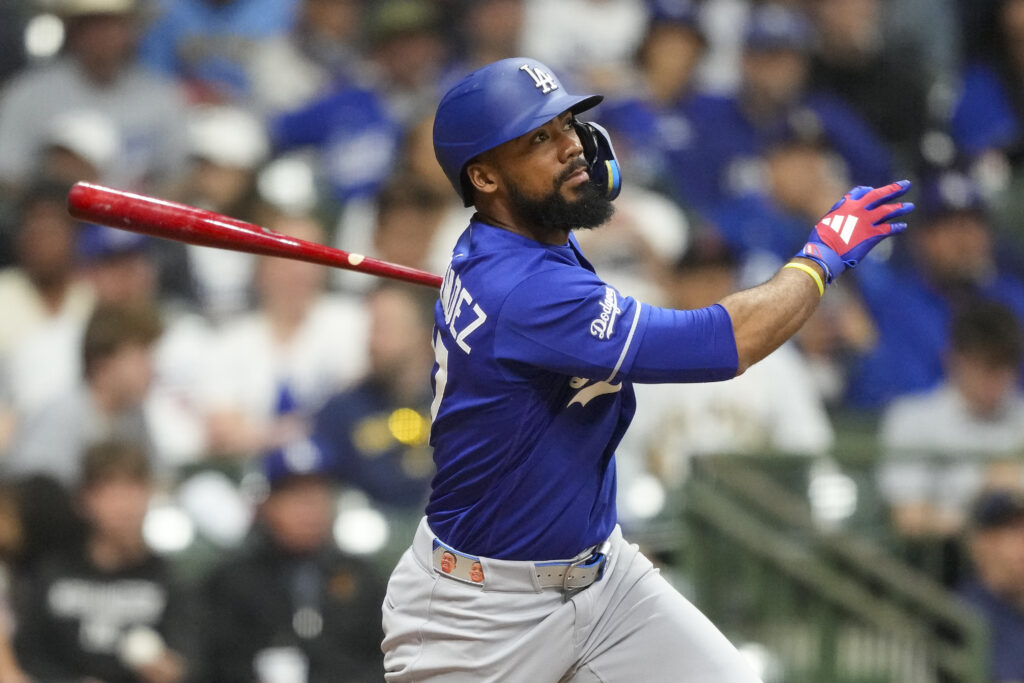
Teoscar Hernández left the Dodgers' game against Colorado in the second inning after straining his left hamstring on a ground-ball sprint to first base. The injury was immediate and visible—Hernández exited the field frustrated, and Hyeseong Kim entered as his replacement in left field. Per preliminary team assessment, the Dodgers expect to place Hernández on the injured list, removing one of their most consistent offensive producers from the lineup.
The timing compounds an already fragmented outfield picture. Hernández has carried offensive value throughout the season, and his absence forces the Dodgers into a depth shuffle at a position where Kim represents a significant step down in production. The IL placement also raises questions about Los Angeles's ability to maintain offensive consistency in a division race where every game carries playoff implications. Depending on the severity grading during imaging, a standard hamstring strain typically sidelines a player 10–14 days; more significant pulls can extend to three weeks or longer.
From a roster construction lens, this injury matters because Hernández has been neither injury-prone nor a recurring liability—he's a reliable performer. His forced absence means the Dodgers lose a player who has contributed both at the plate and defensively. Kim's deployment in his stead is necessary but represents a material downgrade in expected output per plate appearance.
For betting purposes, the immediate angle centers on team total exposure. The Dodgers' offensive ceiling contracts with Hernández sidelined; lineups built around his presence now lack that production floor. Games over the next 10–14 days should be viewed with caution on team-total overs, particularly against teams with competent starting pitching. Additionally, if Mookie Betts or another core position player assumes additional offensive burden to compensate, monitor their prop lines for short-term upticks in strikeout risk due to elevated pitch selection aggression. The Dodgers will attempt to manufacture runs through alternative sources—walks, stolen bases, small-ball sequences—but those strategies are lower-variance and harder to exploit profitably than standard offensive props.