Walker's Exit Signals Angels Still Searching for Rotation Stability
By Justin Erickson ·
A 33-year-old veteran's quick opt-out from a minor league deal exposes Los Angeles' ongoing struggles to build reliable starting pitching depth.
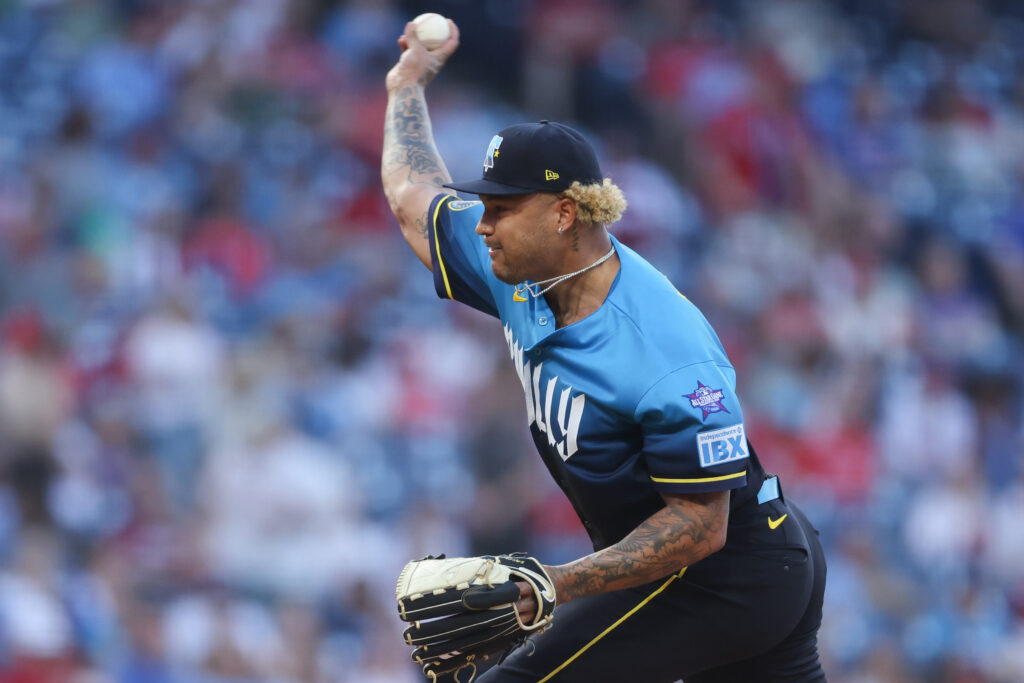
Taijuan Walker has exercised an opt-out clause in his minor league contract with the Angels, walking away from the organization just weeks after signing. The move—granted by Los Angeles without resistance—underscores a persistent organizational weakness: the Angels cannot retain veteran starting pitching talent, even on modest, prove-it deals. Walker, 33, signed the minor league agreement to rehabilitate his market value after injury cost him most of the past two seasons. The opt-out trigger suggests either the Angels' developmental plan didn't align with his expectations, or a competing offer elsewhere provided better immediate opportunity.
This is not an isolated stumble. The Angels have cycled through dozens of mid-rotation arms over the past three years, rarely converting short-term fliers into stable rotation fixtures. Walker's departure—painless as it may seem on paper—reflects a deeper issue: the organization's inability to craft a cohesive pitching infrastructure that even fringe veterans want to stay in. For a team banking on Tyler Anderson, Lucas Luetge, and a collection of question marks to eat innings, losing any arm with upside, however marginal, is a net loss.
From a roster construction angle, Walker's exit matters because it forces the Angels back into emergency-mode depth recruitment. The team will now scour waivers or sign another reclamation project, repeating a cycle that hasn't produced a sub-4.00 ERA starting staff in four years. This isn't a one-man story—it's structural. The Angels' pitching environment (coaching, recovery protocols, strategic alignment) is failing to retain or develop talent. When a veteran pitcher with years left in his arm chooses to leave mid-June, it's a referendum on the system itself.
For prop bettors, the immediate read is straightforward: Angels team totals should be viewed with skepticism in the near term. The pitching rotation just lost depth, meaning starting quality will be more uneven. In games where Los Angeles faces a top-tier starter, run expectation shifts downward—fewer quality outs against disciplined offenses, more stress on the bullpen. Bettors should expect Angels overs to trade at a premium to true value because the pitching matchup uncertainty just increased. Walker's departure doesn't move a single line on its own, but it deepens the book's justification for keeping Angels team totals tight and unders relatively attractive against stronger AL East and AL West opponents over the next 30 days.