MLB
Tigers' Pitching Depth Shines on West Coast; Market May Be Sleeping on Detroit's Playoff Window
A 7-2 road trip capped by a 10-inning gem over San Francisco signals that Detroit's pitching staff has absorbed the Skubal and Mize trades without missing a beat—and the books haven't fully repriced the Central race.
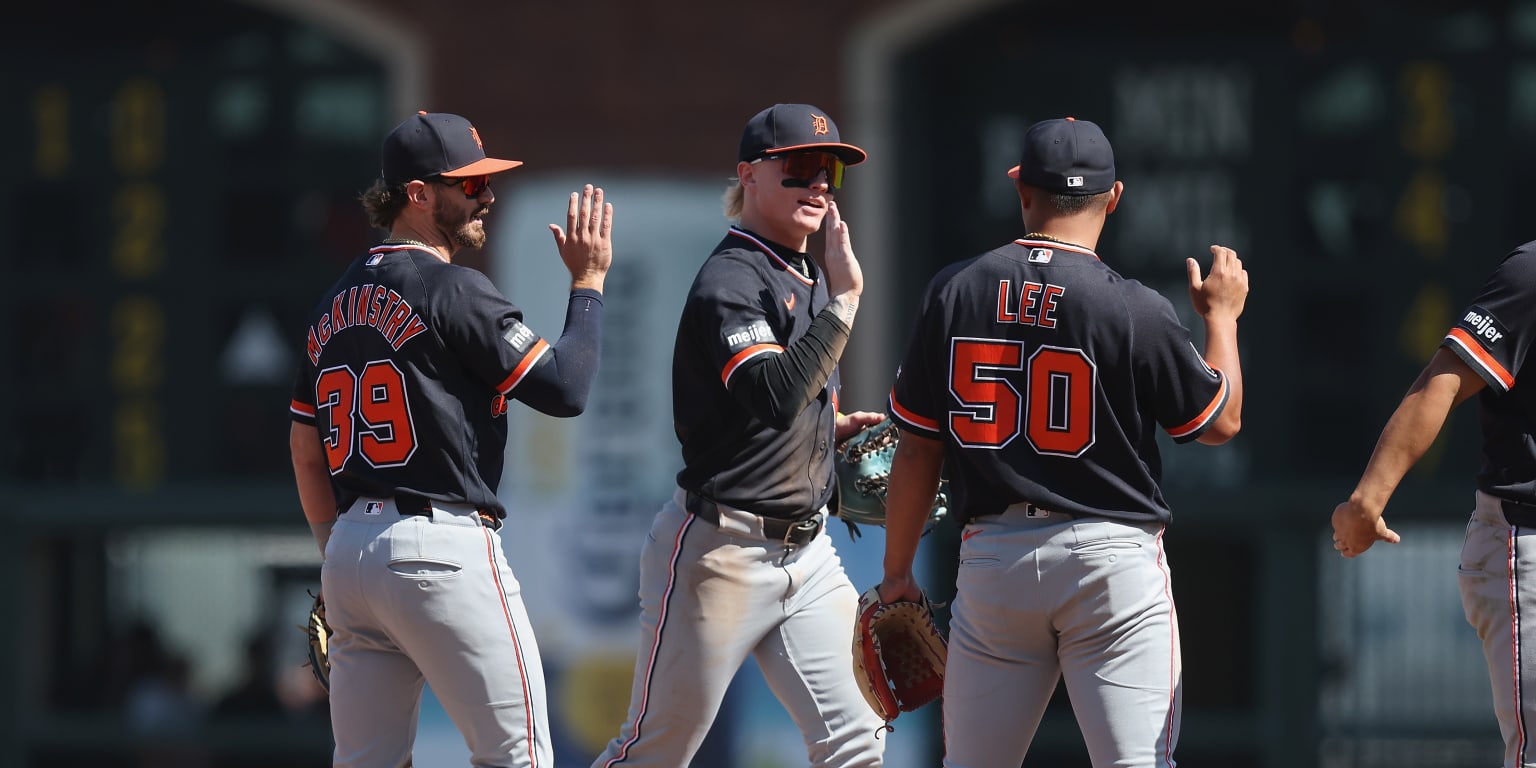
The Tigers return to Comerica Park on Tuesday, August 13, having closed the gap on the AL Central leader from six games to three in the span of nine games. That math alone tells you something is working. Per MLB, Detroit departed on a three-city West Coast swing on July 29 with Tarik Skubal still on the roster—he's gone now, traded away—and they came home Sunday having won the final game of the trip 3-1 in 10 innings against San Francisco. The margin of victory matters less than what it reveals: four shutouts in nine games and just 17 runs allowed across the entire road trip. That's a 1.89 runs-per-game average, a performance that doesn't happen by accident or luck.
The pitching mechanics here trace directly to organizational depth. Troy Melton matched Logan Webb (one of the game's premier starting arms) for six-plus innings, allowing one run on five hits. Neither pitcher was the story; the story was that Detroit had a credible answer ready to go. Webb is a future Hall of Famer candidate; Melton is a reclamation who was once buried in the minors. The relievers—Kyle Finnegan, Kenley Jansen, and critically, Drew Sommers—executed at the highest level. Sommers induced a double play with the bases loaded and one out in the eighth inning, the kind of moment that either deflates an offense or propels a team forward. Detroit chose the former. The only blemish was an unearned run in the seventh, a bobbled grounder by Colt Keith and an errant throw on a stolen base attempt; baseball noise, not systemic failure.
What's remarkable is that this performance came without Skubal and Mize, the two highest-leverage starters on the pre-July roster. The market had time to reset those expectations when the trades were announced, but the market had no frame of reference for how quickly Detroit's replacement arms would stabilize. Four shutouts in nine games is a three-month pace for an entire staff; sustaining it is impossible. But the underlying execution—the strikeout rates, the walk rates, the induced ground-ball outcomes—suggests that this isn't a mirage born from facing weakened lineups. The Giants offense is pedestrian but competent; the pitching staff gave them exactly one run across 10 innings.
For bettors, the implication is structural: Detroit's team total unders have been priced as if the offense is fragile and the pitching has aged out. The first premise is demonstrable—the Tigers are still two games below .500—but the second one is now demonstrably wrong. If pitching is going to hold opponents to sub-2.00 ERA rates, the team total under becomes a crowded trade. The Giants scored one run in a full game; the Tigers scored three, which is their usual output. Over the next 10-15 games, as the market recognizes that Detroit's pitching isn't a liability anymore, team total unders will compress. Early under bets at anything above 4.0 will face headwinds. Conversely, moneyline value on Tigers games shifts upward if the pitching staff remains this sharp. The edge exists now, before the public fully adjusts to the post-trade reality.
MLB Intelligence — Baseball intelligence beyond the box score. Open MLB Intelligence →