Suárez Explodes for Two Homers as Reds End Run-Production Drought
By Justin Erickson ·
A nine-game scoring slump snaps in Cincinnati, but the real question is whether Eugenio Suárez's outburst reflects a sustainable offensive correction or a single-night relief valve.
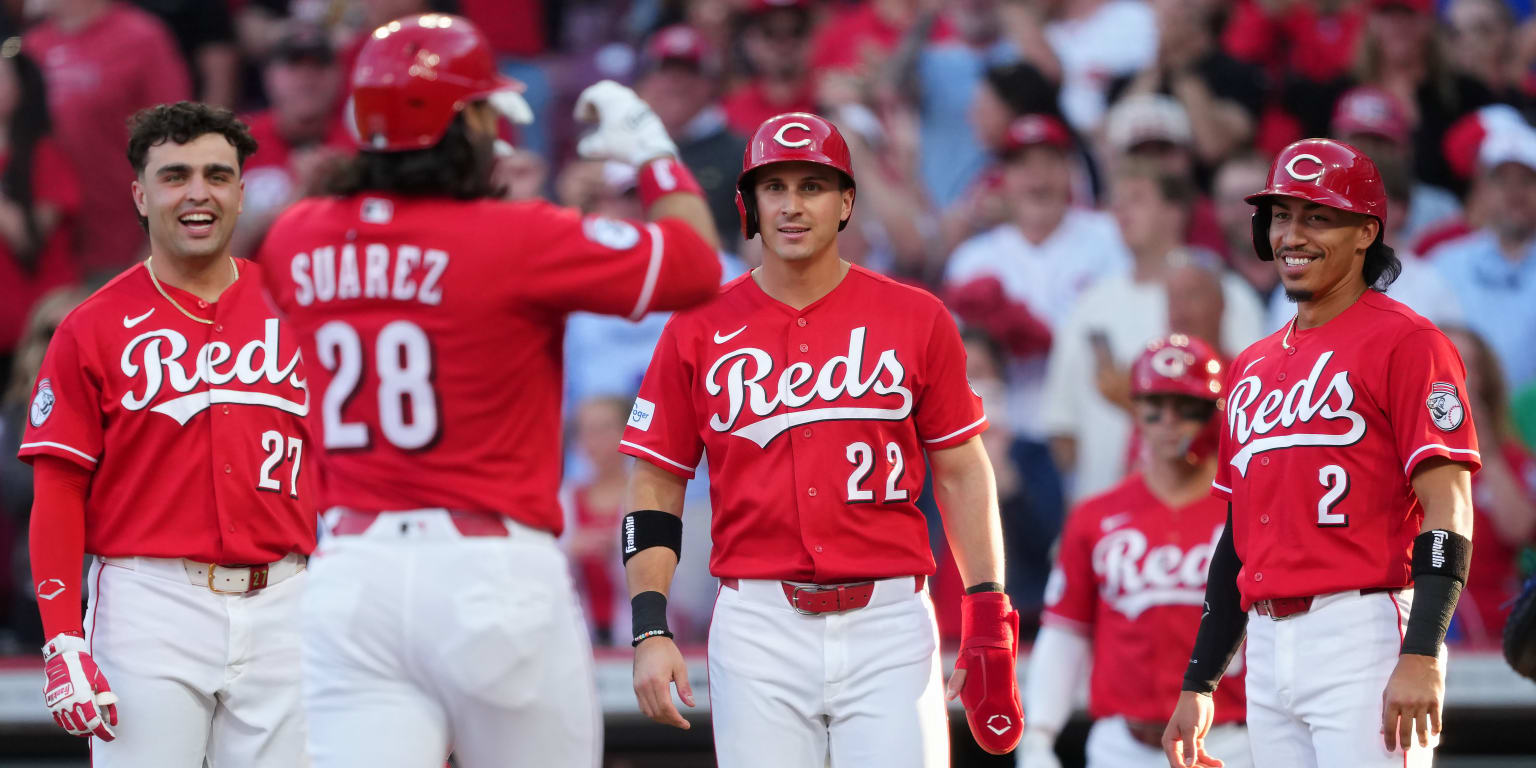
Eugenio Suárez delivered two home runs in his first two plate appearances Monday, including a second-inning grand slam, as Cincinnati routed New York 12-0 at Great American Ball Park. The performance arrived at precisely the moment the Reds needed it most: their offense had mustered only 3.1 runs per game across the prior 12 contests, posting a 3-9 record and creating mounting pressure on a pitching staff that had been solid but starved for support.
The context here matters as much as the box score. Cincinnati's offensive malfunction traces directly to a single injury: Elly De La Cruz strained his right hamstring on May 31 in a 6-4 win over Atlanta and landed on the injured list. That absence has gutted the middle of the lineup and the team's overall offensive energy. Suárez's eruption—particularly the full-count fastball into the left-field seats in the first inning followed by the clutch grand slam off reliever Jonathan Pintaro in the second—signals a player executing when the moment demanded execution, not a sudden unlocking of a new gear.
Chase Burns, the Reds' starter, benefited from the offensive firepower with five scoreless innings while striking out seven against four hits. Burns relied on slider work in critical moments, notably a strikeout of Brett Baty with runners loaded in the fourth inning. He threw 100 pitches total, 57 of them packed into the final two innings as he navigated two separate bases-loaded situations. The shutout was clean, the K rate respectable, but the workload—57 pitches in two innings—suggests Burns had to labor harder than the scoreline implies.
For bettors tracking Reds props, Monday's eruption carries a critical caveat: Suárez's 2 HR, 6 RBI performance was built almost entirely on fastball and cutter mistakes from Mets pitching. Myers and Pintaro served elevated strikes in full-count situations, and Suárez punished both. Suárez's season slugging percentage entering Monday sits at a reasonable but not elite .420, and his strikeout rate remains north of 26%. One dominant night doesn't reframe his profile as a consistent slugger, especially when De La Cruz's return timeline remains uncertain. The Mets' bullpen collapse—Myers was pulled after the second inning—provided an additional tailwind that inflates the single-game impact.
Where the betting angle surfaces: Cincinnati's run-production pattern entering the game (3.1 per contest over 12 games) reflected a dislocated offense, not a permanently broken one. If De La Cruz's hamstring strain proves short-term and the team stabilizes around a 4.5-5.0 run average once he returns, Monday's 12-run outburst functions as a one-off relief event, not the start of a sustained surge. Conversely, if Suárez sustains elevated contact rates on elevated fastballs over the next 5-10 games, that would indicate genuine plate-approach improvement rather than pitch-quality luck. Monitor Suárez's hard-contact percentage and barrel rate over his next 15 at-bats; a single grand slam rarely persists as predictive power.