Trevor Story's August Return Reshapes Red Sox Depth Chart and Lineup Construction
By Justin Erickson ·
The shortstop's rehab timeline compresses Boston's bench flexibility just as the team enters genuine postseason contention.
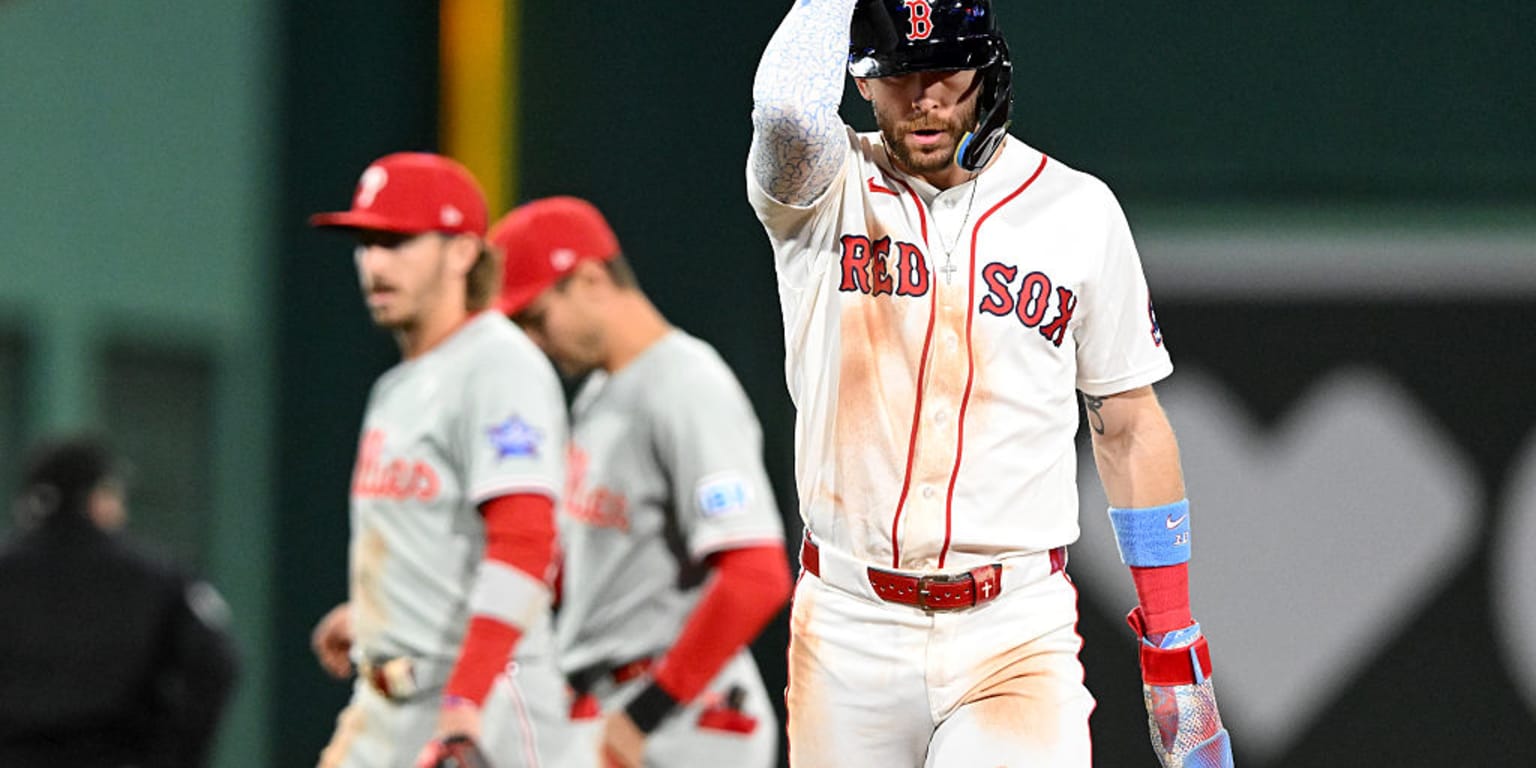
Trevor Story has been sidelined since May 14—67 days at current date—with a sports hernia repair, but the Red Sox shortstop is tracking toward a Minor League rehab assignment in August, likely within the next six weeks. That timeline matters because Boston has gone from franchise dead-weight to 18-2 over its last 20 games, vaulting back into playoff conversation while Story watched from the dugout. His return won't be a luxury add; it's a recalibration of how this lineup functions against postseason-caliber arms.
The Boston depth chart at shortstop has been a triage operation. Marcelo Mayer held the spot for six weeks before a bone stress reaction shelved him. Isiah Kiner-Falefa preceded Story onto the injury list with an identical ulnar nerve issue. That left Tsung-Che Cheng and Andruw Monasterio as the primary options—capable enough to not derail the season, but not the offensive profile Boston envisioned. Story's timeline is granular: he's further along in hitting (full batting practice, machine work this week) but lateral movement and sprinting remain the true tests. A maximum 20-day rehab window means August 20 is the practical floor for his return, probably later depending on how the body responds to live pitching and game intensity.
What's relevant to lineup construction is that Boston's run surge hasn't come from position-player depth. Willson Contreras has been the offensive fulcrum, and the pitching staff has carried the load. That means Story's insertion doesn't replace value—it compounds it. A healthy Story hitting in the middle of a team that's already found offensive rhythm and solid starting pitching makes the Red Sox a more durable playoff bet. The marginal gain here is continuity: Story's return means fewer at-bats for Cheng and Monasterio, which reduces strikeout variance in the lineup and adds a veteran bat against elite relievers in close games.
For bettors, Story's August-or-later window creates a bifurcation in team total props and run-line value. Through the rest of July and into early August—before Story can even be activated—the Red Sox lineup remains dependent on Contreras production and secondary bats that have proven streaky. Team totals in that window should reflect the current roster construction: efficient but not cushioned against pitching dominance. Once Story moves from rehab to active roster (likely late August), the team's offensive floor ticks up measurably. An over-4.5 run team total that looks tight at 4.0 odds in late July becomes genuine value at the same number in late August because the same Red Sox will have a higher operational ceiling.
The betting edge isn't in guessing his exact return date—the market will adjust to that announcement in real time. It's in recognizing that team total props have two distinct time horizons: the Contreras-dependent window through early August, and the Story-added window starting late August. The team's pitching quality won't change, but lineup construction volatility does. That's the mechanism that moves the needle on aggregate runs.