Stewart's Historic Rookie Season Reshapes Reds Win Totals and Prop Leverage for September
By Justin Erickson ·
The 22-year-old first baseman's dominance in August has locked the NL Rookie of the Year race and created an ancillary effect on team-total pricing that bettors should not ignore.
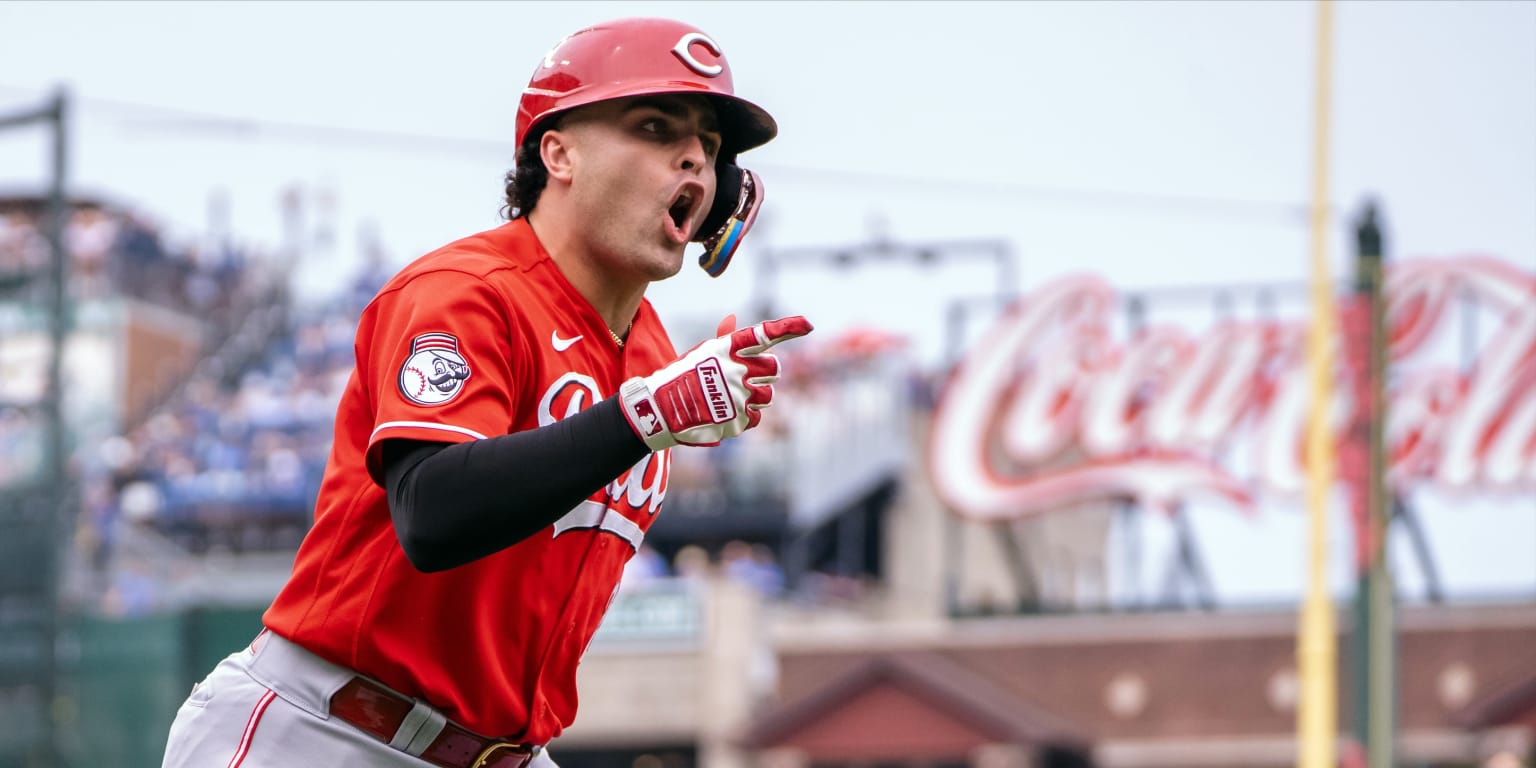
Sal Stewart has effectively ended the National League Rookie of the Year conversation. The Cincinnati Reds' 22-year-old first baseman entered Thursday with 31 home runs, 105 RBIs, and 143 hits across 140 games—all rookie-leading totals—and his August performance (31 homers, 105 RBIs, and a .879 OPS over 29 games) has created statistical separation that no competitor, including Cardinals rival JJ Wetherholt, can realistically close in the final month. Wetherholt's recent right wrist tendinitis removes any residual doubt.
Stewart belongs to an elite cohort of rookie sluggers. Of the nine rookies since 1947 to combine 30-plus home runs with 100-plus RBIs in a single season—Walt Dropo, Ron Kittle, Jose Canseco, Mark McGwire, Mike Piazza, Albert Pujols, José Abreu, Aaron Judge, and Pete Alonso—all nine won Rookie of the Year. Stewart has already surpassed Jim Greengrass's franchise RBI record for a Reds rookie (100 in 1953) and ranks second all-time in single-season homers by a Cincinnati rookie, behind only Hall of Famer Frank Robinson's 38 in 1956. He's the only Reds rookie ever to post a 30-homer, 100-RBI season. His 105 RBIs also lead all of Major League Baseball, positioning him to join Ted Williams (1939) and Walt Dropo (1950) as the only rookies in MLB history to finish atop the league's RBI leaderboard.
What separates Stewart from other monster rookie campaigns is durability and trajectory. He has played in every game—140 consecutive appearances—and remarkably, his production accelerated into the dog days when younger players historically wall. August was his strongest month; his at-bats appear sharper, not duller. Closer Emilio Pagán noted that improvement in real time, calling it "really hard for young players to do." With 21 RBIs over the past three months, Stewart is on pace for 120-126 total RBIs by season's end—territory occupied by only seven rookies since RBIs became official in 1920, and just Pujols (130) since 2000. A 40-homer season remains within reach; he needs seven homers to tie Frank Robinson's Reds rookie record and sits just nine shy of tying Cody Bellinger (39 in 2017) for the fourth-most by any rookie ever.
For prop bettors, Stewart's September surge has a direct leverage effect on Reds team totals. Cincinnati trails in Wild Card positioning and faces a mathematically steep climb for postseason berth, yet Stewart's presence in the lineup provides a floor on offensive output that the market may have underpriced relative to his actual run-creation value. His 105 RBIs represent roughly one-third of the Reds' runs scored over 162 games—a concentration rare even for All-Star caliber players. When one 22-year-old rookie is responsible for that much run production, team-total overs become sensitive to his availability and hot streaks. The gap between Stewart's August (.879 OPS) and league-average production widens the Reds' offensive range on any given night. Given that he played in all 140 games so far and shows no fatigue pattern, betting Reds team totals higher than 4.0 runs carries less downside risk than standard September calculations would suggest.
The Rookie of the Year race itself has zero volatility left; Stewart has won it in all but the ceremonial voting. The real angle is secondary: how much of the Reds' remaining offensive output flows through one player, and how does that asymmetry move team-total and game-total pricing in his upcoming appearances. If Stewart remains available and healthy, Reds overs in September and early October (if they sneak in) hold structural value that a public market focused on playoff probability alone will not capture.