MLB
Padres' Power Surge Reshapes Playoff Math—and Offensive Ceiling
Four home runs, a shutout bullpen stretch, and the return of star-level production reposition San Diego's October equation.
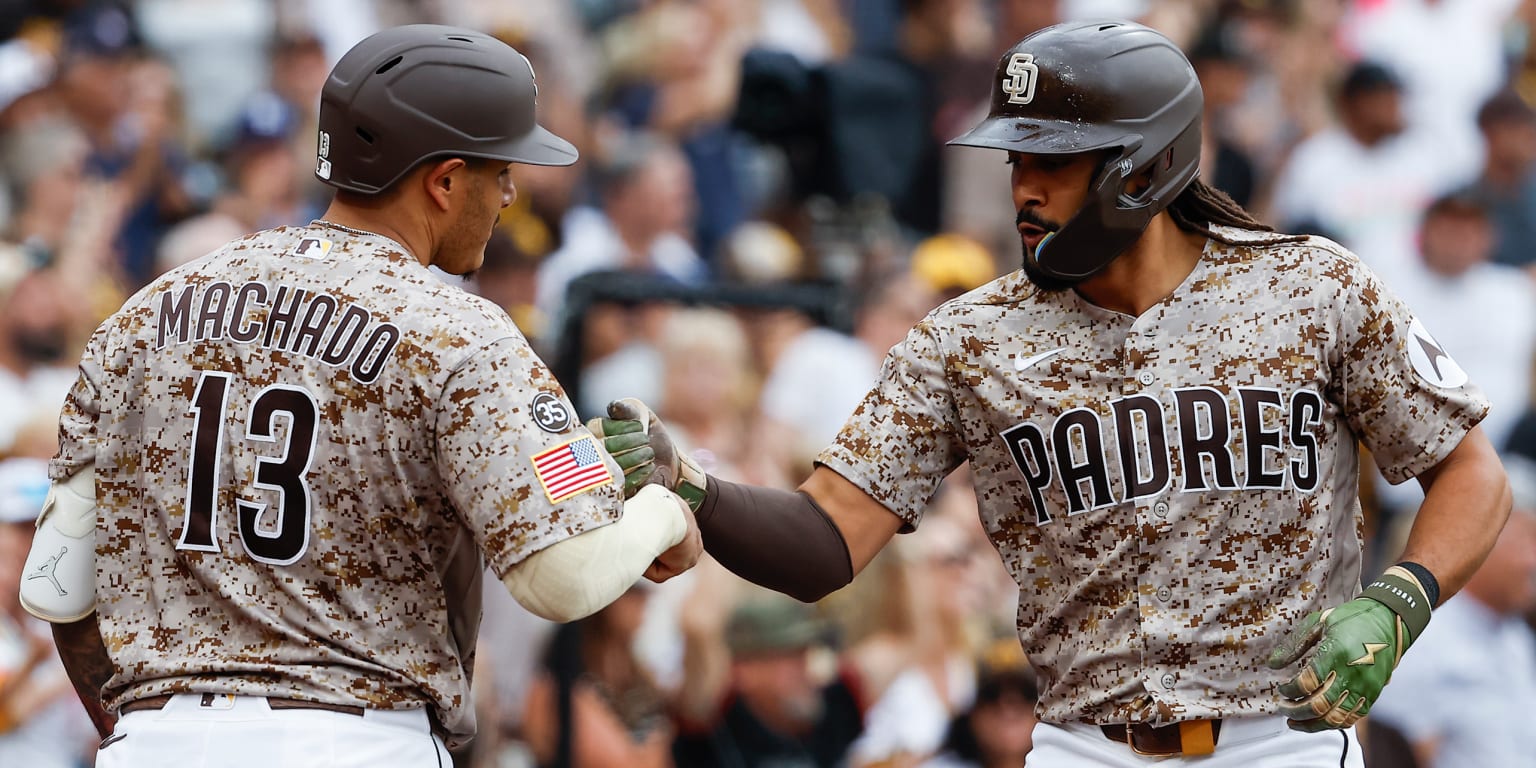
The Padres dismantled the Astros 7-2 on Sunday night, with Fernando Tatis Jr., Jackson Merrill, Gavin Sheets, and Austin Hays all going deep. San Diego stayed one game back in the NL Wild Card race while keeping pace with Arizona and Philadelphia—a standing that matters only insofar as the team's offensive trajectory supports it. What happened at Petco Park wasn't a one-night spike; it was confirmation that the power drought of the season's first 2.5 months has genuinely broken.
Tatis' three-run shot in the fourth inning gave the Padres the lead for good and marked his 163rd career homer, tying him with Nate Colbert for second on the franchise leaderboard. The significance here isn't historical—it's mechanical. Manager Craig Stammen noted what he's observed in Tatis' demeanor: the player is carrying himself with the confidence that comes from trusting his swing again. Merrill, slower to ignite than Tatis and Manny Machado, has been a second-half furnace. His solo shot to open the scoring on Sunday was his second consecutive game with a home run. When your three foundational hitters all operate in rhythm simultaneously, the downstream effect on lineup depth becomes exponential: Sheets, mired in a .155/.477 slump since July 1 and battling plantar fasciitis, cracked his first homer since June 30. That's not a hot streak—that's a pressure release, and in October baseball, those matter.
The bullpen dimension elevates the narrative beyond pure offensive eruption. Padres relievers retired 22 consecutive Astros, including a perfect sixth inning from Kyle Hart and six more outs from Bradgley Rodriguez, with Mason Miller and Adrian Morejon not needed. In a close game through the middle frames, that kind of depth dominance—weapons "top to bottom," in Stammen's phrasing—is how rosters peak at the right time. The Padres have been a top-five offense over the past two months. If Sheets stabilizes, if Hays continues as a reliable right-handed complement, and if the bullpen sustains this mix of depth and shutdown capacity, San Diego's ceiling suddenly occupies a different altitude.
For prop purposes, the inflection matters. Merrill and Tatis are now operating in their proven power bands. Merrill has been "red-hot through the entire second half"—that's not a single-game outlier; that's a multi-week pattern against which the market had likely underpriced him during the early-season collapse. Tatis' home run rate across the past 40 games should reflect a genuine return to form, not a reversion that needs pricing in. The market may still be discounting Padres team totals built on an assumption that the May-June offensive futility was structural. It wasn't. The correction is embedded in Sunday's box score and in five-plus weeks of top-five offensive production. Team totals for San Diego games should trend toward the higher end of the range as sharps reprice.
Sheets presents a different angle—higher variance, single-event recovery. One home run after a 10-week drought doesn't mean he's solved plantar fasciitis or regained his April-May form. Hays, a new addition still in his integration window, hasn't established enough recent sample to anchor a prop thesis. The edge, if it exists, lives in the Merrill-Tatis-Machado alignment: three of the six or eight best hitters in baseball, all swinging in unison, all priced as if one of them might slip any week. That assumption is fading. The Padres' offensive ceiling is no longer theoretical.
MLB Intelligence — Baseball intelligence beyond the box score. Open MLB Intelligence →