Springs' Hip Injury Ends Start Early; Oakland's Rotation Deterioration Accelerates
By Justin Erickson ·
The Athletics' ace-turned-anchor lasted one inning Sunday before right hip discomfort forced an exit, capping a catastrophic collapse that has Oakland's playoff odds moving in only one direction.
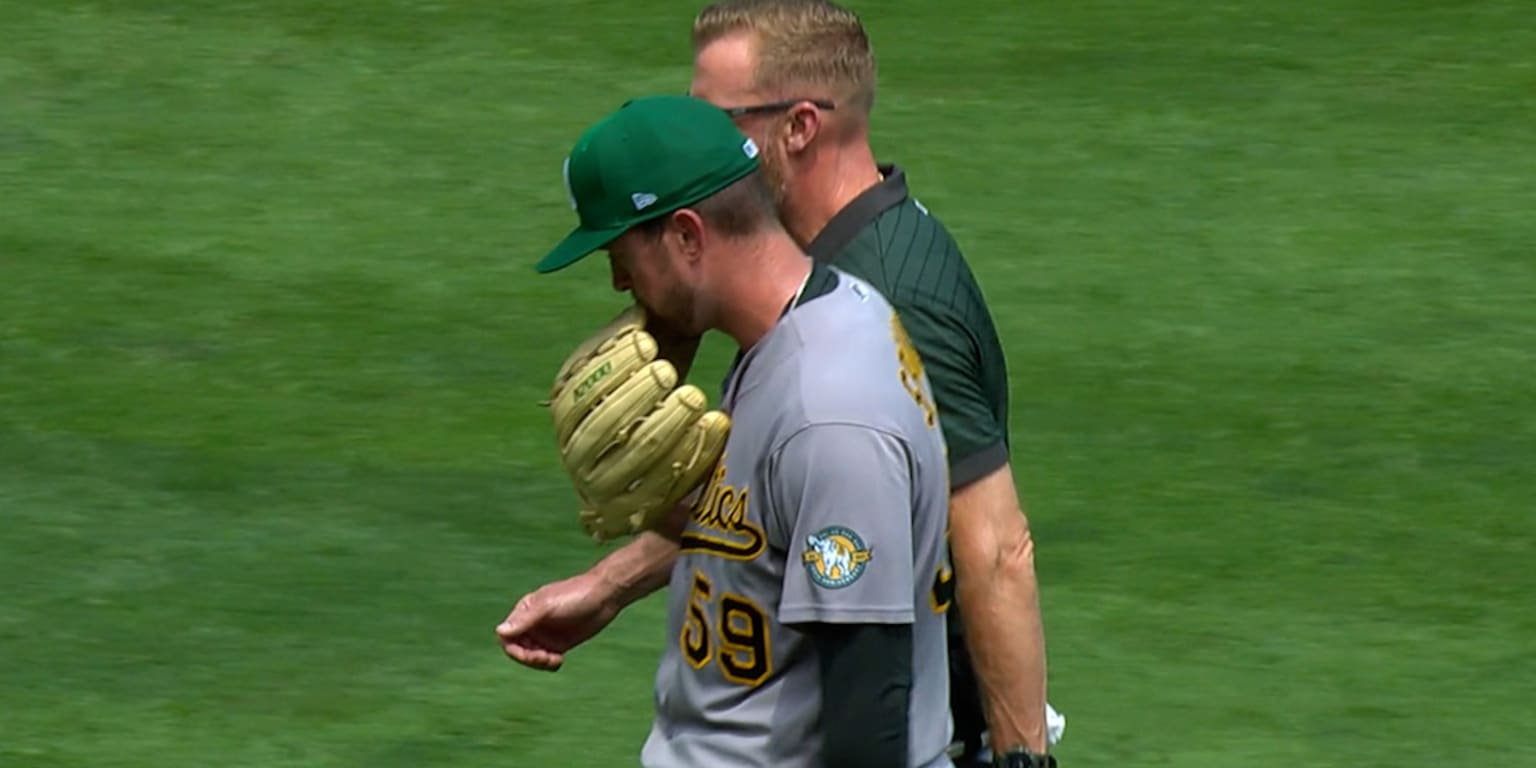
Jeffrey Springs departed Sunday's start against Minnesota after just 1.2 innings, motioning for the Athletics' trainer with right hip discomfort before the second inning was complete. The 33-year-old left-hander had already surrendered three runs in the first, and when he walked Brooks Lee to start the second, the decision to exit—without even testing the injury in warmup—signaled either genuine concern or a deeper loss of confidence in the pitch. Either way, Luis Morales took over and Oakland's rotation took another body blow.
Springs arrived in 2026 as a stabilizing investment. After going 11-11 with a 4.11 ERA in 2025, the club banking on a recalibrated season from a reliable arm. The first three weeks suggested that math might work: 3-0 with a workable ERA. Then the floor collapsed. Over his next 17 starts through Sunday, Springs went 0-9 with a 7.71 ERA, a performance that doesn't describe decline so much as systematic failure. Hip discomfort, at 33, is rarely an isolated event; it typically compounds into cascading mechanical breakdown, as the body compensates for pain and stride length erodes. An early exit mid-season with that injury profile suggests Oakland may have lost Springs' productive arm for the remainder of the year.
For Oakland's betting profile, this is one more nail in an already-sealed coffin. The Athletics' pitching depth was shallow before the hip flare-up; it is now thinner. Morales, a reserve reliever, is now the primary arm available in emergency rotation situations. Any Athletics starter prop that assumed Springs would eat innings or contribute quality starts at a discounted price needs immediate repricing. The team's bullpen, forced into larger workload roles, will fatigue faster than projected, increasing variance on late-innings reliever usage and game outcomes.
The practical implication for prop bettors: Oakland team totals should compress modestly over the next 7-10 days as the market digests both the loss of Springs and the likelihood that his absence extends beyond a single game. If you held any short-side exposure on Springs' strikeout or innings pitches (expecting regression after the 0-9 skid), reverse course immediately—a hip injury removes him from the variance pool altogether. More valuable is fading Oakland's Over on team total at 3.5 or higher in near-term matchups; without Springs eating starts cleanly, their run-scoring environment just got measurably tighter, and their bullpen just got measurably more vulnerable to late-inning collapses.