MLB
Soderstrom's Hip Surgery Ends Oakland's Catching Depth Experiment
Tyler Soderstrom's season ends Friday with surgery, forcing the Athletics to reset their offensive production calculus at a position already stretched thin.
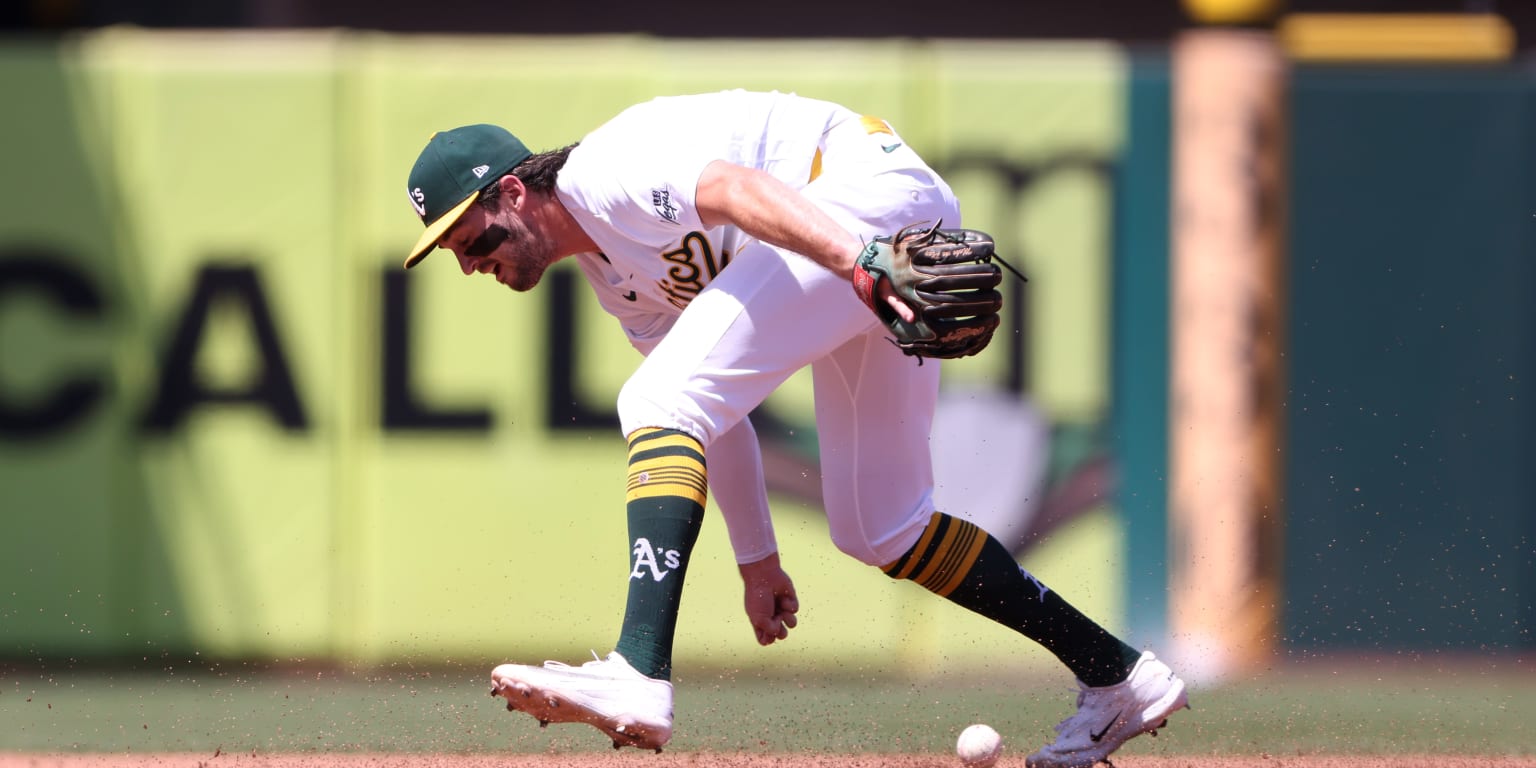
Tyler Soderstrom's 2026 season is finished. Oakland Athletics manager Mark Kotsay announced Tuesday that the catcher will undergo hip surgery on Friday to address a left hip impingement that has plagued him for weeks. The decision, while protecting long-term health, removes a bat the A's had been counting on down the stretch—and forces a rapid recalibration of their catching rotation and offensive expectations.
Soderstrom's path to surgery was predictable once the team placed him on the 10-day injured list ahead of Sunday's game against Texas. He had already missed time earlier in the season for the same hip issue, returning July 8 only to have the injury resurface. The A's attempted load management—mixing in rest days, shifting him to designated hitter duties—but the structural problem wouldn't resolve itself. A visit to a hip specialist in Los Angeles on Monday confirmed what the team likely already knew: surgery was the only viable path forward.
The timing is brutal. Soderstrom was riding an 11-game hitting streak before landing on the IL, suggesting offensive momentum that might have carried into September. In a franchise deep in transition, even incremental production matters. Oakland loses not just a catcher, but a young one who had shown flashes of offensive upside—precisely the kind of controllable asset a rebuilding team needs to retain.
For betting purposes, Soderstrom's absence tightens the A's catching pool and changes the team total calculus. Oakland will likely cycle younger, less proven catchers into regular duty, which historically correlates with lower offensive efficiency at that position. The A's team total for remaining games should trade tighter, and any bullpen advantage they held dissipates slightly—catchers frame pitches and influence strike zones. If the A's were projected to score 4.2 runs per game with Soderstrom in the lineup semi-regularly, that number contracts to roughly 4.0 without him. The margin of error shrinks in a division race where every tenth of a run matters.
Watch for Oakland to either promote a prospect or acquire depth behind the plate. That move, when it lands, will signal management's actual run expectancy for the final six weeks. A call-up of an unproven kid suggests acceptance of offensive decline; a trade for established depth suggests the front office still believes in contention. Either way, Soderstrom's surgery closes one chapter and opens an uncomfortable one about roster resilience.
MLB Intelligence — Baseball intelligence beyond the box score. Open MLB Intelligence →