Walker's Explosion Resets Cardinals' Extension Calculus
By Justin Erickson ·
Jordan Walker's 2026 breakout—capped by a historic Home Run Derby win—has tilted the team's leverage in contract talks, but the cost of locking in a star who's just arrived at his ceiling makes timing the deal trickier than it looks.
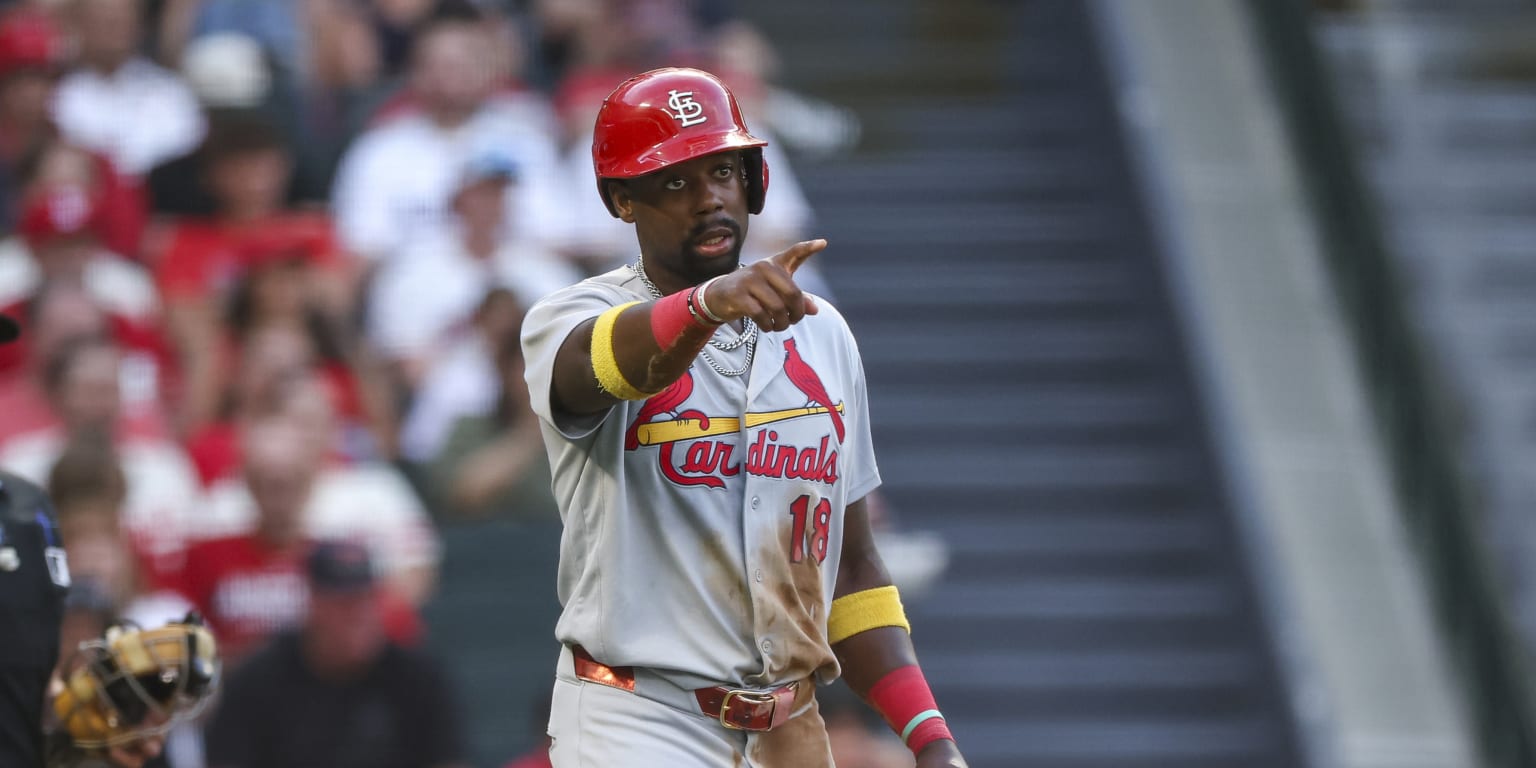
Jordan Walker has gone from organizational afterthought to untradeable cornerstone in a single season. After a disastrous 2025 that prompted genuine questions about his baseball future, the Cardinals' young right fielder has led MLB in RBIs in 2026, won the franchise's first Home Run Derby crown, and posted a 1.017 OPS through July—his best month yet. He's no longer a prospect proving his worth; he's a marketable star in his prime.
That acceleration creates urgency but also a valuation problem the Cardinals can't solve cleanly. Unlike teammate JJ Wetherholt, whom St. Louis already locked through 2034 on a multi-year extension deal, Walker arrived as a veteran prospect who spent time in the minors and briefly regressed. He doesn't hit free agency until after 2029—a timeline that sounds distant until you do the math. Walker, who turned 24 in May, sits arbitration-eligible for the 2027 season, meaning the team has roughly 14 months to negotiate before a neutral party sets his salary. Any long-term extension starting in 2027 would need to buy out four additional free-agent seasons (2030-2033), not three. That's structurally more expensive than Wetherholt's deal.
The comp market is thin and unconvincing. The Cubs' extension of All-Star Pete Crow-Armstrong—six years, $115 million, beginning in 2027 and covering two free-agent seasons for a 24-year-old—might seem relevant, but it's a lower floor for a player still proving consistency. Walker has already played at an elite power level across 2026; he's not gambling on future performance the way Crow-Armstrong was. Meanwhile, the Cardinals are competing for payroll space with other core pieces: Masyn Winn and Iván Herrera occupy the same timeline and may merit their own extensions. Bloom's front office can't extend everyone, even if they wanted to.
From a betting standpoint, Walker's RBI and home run props over the second half of the season warrant scrutiny now that he's locked in a power arc. July's 1.017 OPS reflects a hitter who's not just swinging harder but hitting with precision—his outs in play are harder, his angle management is superior, and his plate discipline has tightened. That's not a seasonal spike that evaporates; it's a mechanical correction that should hold. If he maintains a .280+ ISO and 40% hard-hit rate into the stretch run, his RBI pace stays north of 100 for the full year. That's a durable edge because it's rooted in repeatable mechanics, not good fortune. The Cardinals are unlikely to trade or bench a player this productive, so volume access remains guaranteed.
What the extension timeline doesn't change is Walker's mid-term value on the board. Whether the Cardinals sign him to a deal in the next 14 months or let him ride arbitration, his on-field performance—and therefore his prop totals—should remain stable. The organizational pressure to extend him is real, but it doesn't accelerate his performance. The narrative around job security might even relieve stress; a player who's won over an entire fan base doesn't need to prove himself further. That's a psychological edge for the bettor: Walker's props from August forward reflect a hitter who's arrived, not a hitter who's still desperate to secure his future.