Scherzer's Rehab Trudge: Toronto's Rotation Gamble Takes Shape
By Justin Erickson ·
Max Scherzer's second Triple-A start shows fastball velocity returning but command still fragile—and the Blue Jays' pitching depth remains the real problem.
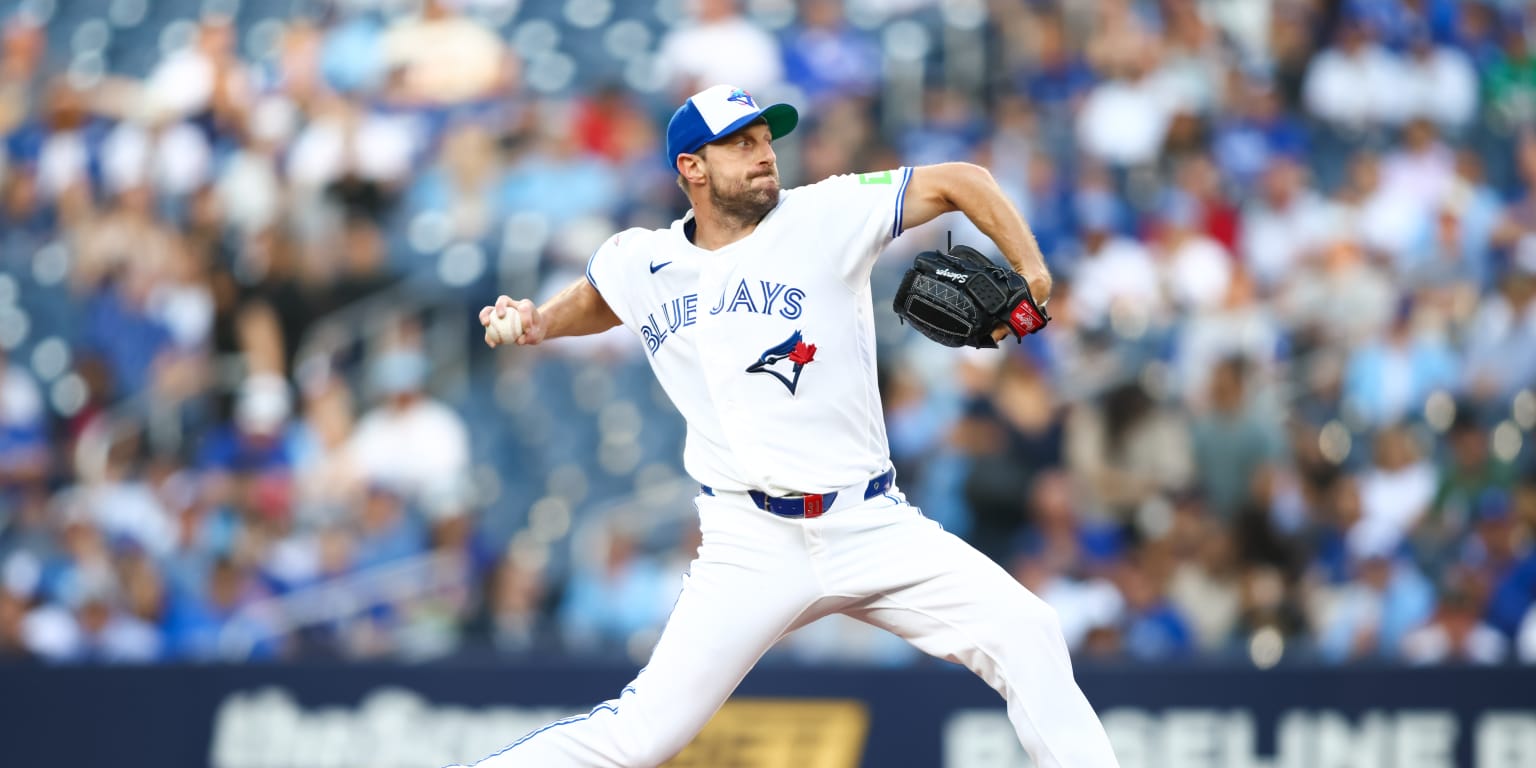
Max Scherzer took the mound for Buffalo on Wednesday night in his second rehab outing since Toronto shut him down with a back injury, and the early returns underscore both progress and persistent volatility. The future Hall of Famer surrendered five runs—four earned—on six hits over four innings against Scranton, including a three-run homer in the opening frame. He struck out five, walked none, and threw 72 pitches with his fastball sitting in the 92-94 mph range, topping out at 94.4. For a pitcher who has spent more time on the injured list than the mound this season, velocity holding is a positive signal. But the damage tells a different story: across two rehab appearances totaling seven innings, Scherzer has posted a 7.71 ERA with seven earned runs allowed.
The Blue Jays are hoping one more rehab start—likely during the All-Star break—will position Scherzer to rejoin the rotation as the team emerges from the midseason pause. On paper, that's the timeline that makes sense. In practice, Toronto needs Scherzer to do far more than show up; the club has gotten a 10.23 ERA over 22 innings from him this season, and the rotation has functioned without him filling a traditional starter's role. Manager John Schneider acknowledged the stakes plainly: Scherzer needs to execute with consistency, not just flash fastball velocity.
The cascading effect matters. If Scherzer stabilizes, Spencer Miles—who started Tuesday and limited hard contact despite allowing runs—slides back into multi-inning relief duty, freeing up depth the Blue Jays desperately need in the bullpen. If Scherzer stumbles again, Toronto either leans harder on Miles as a starter or rotates through lesser alternatives, each scenario fragmenting the team's ability to pitch deep into games. The Blue Jays have not enjoyed many "perfect world" outcomes this season, and that template applies here: Scherzer's return is conditional on proving repeatability, not just one clean outing.
From a prop perspective, Scherzer's strikeout market represents a live mispricing window. His velocity has returned to his 92-94 mph baseline, and his whiff rate on the current rehab assignment—5 strikeouts in 4 innings—tracks to a 11.25 per-nine rate, well above his season-long 10.23 ERA baseline. However, that's noise riding on a small sample and obvious selection bias in a rehab setting against lesser competition. The real angle surfaces if and when Scherzer returns to face major-league hitters: he's 12 strikeouts away from cracking the top 10 all-time, trailing Walter Johnson's 3,515 by that margin. Markets often underprice strikeout props for veterans chasing historical milestones because the narrative focus creates urgency and extended ABs. If Scherzer gets a green light to pitch deep into games post-All-Star break, his K props will likely carry value against initially conservative lines—but only if his command tightens and hard contact subsides. His current rehab outing doesn't yet support that confidence.
The Blue Jays' timeline is binary: Scherzer pitches his way back into relevance in the second half, or he becomes another roster complication. The market won't price the uncertainty fairly until we see how he performs against Triple-A hitters again—and then against actual major leaguers. That lag is where the edge exists.