Sasaki's Stanford-to-Miami Leap Signals Marlins' Long-Term Rebuild Play
By Justin Erickson ·
Miami lands Japan's home run king with an eighth-round pick—a franchise-altering talent acquisition that won't move the needle for years but reshapes organizational trajectory.
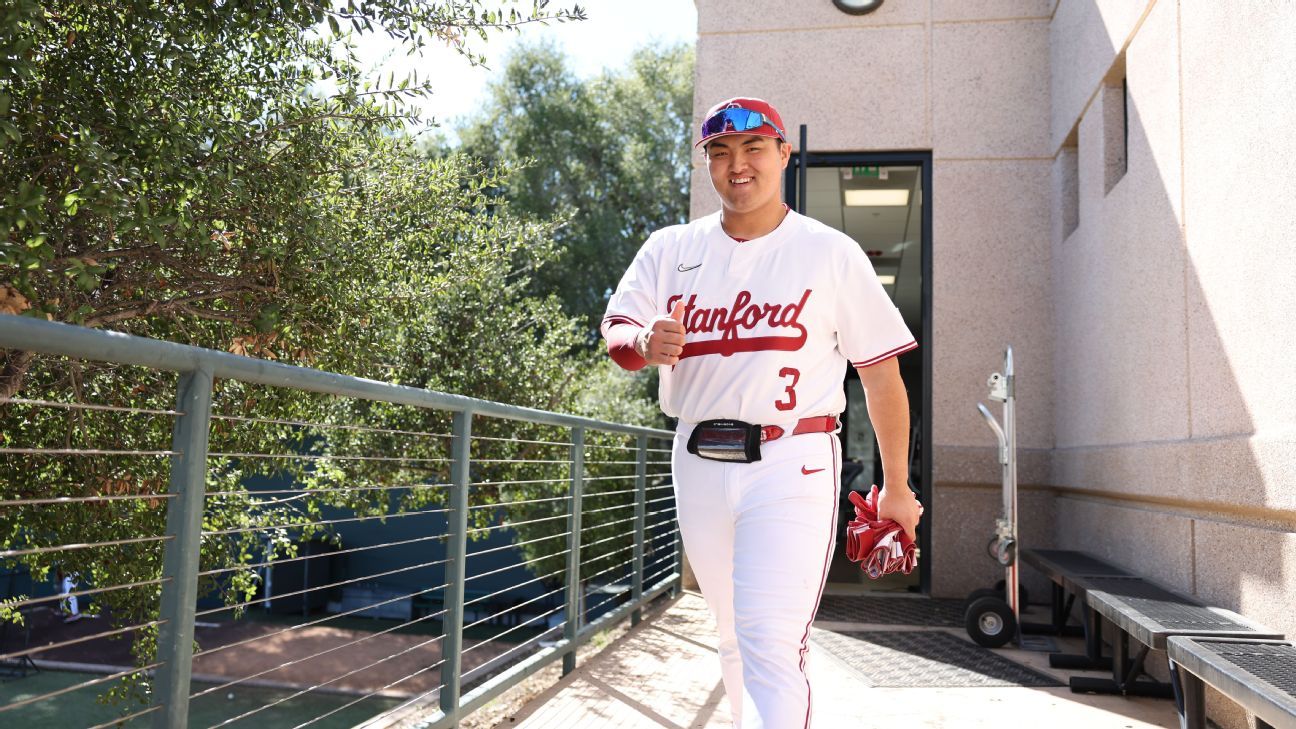
Rintaro Sasaki, Japan's all-time high school home run leader with 140 total, signed with the Miami Marlins on Sunday and formally rejected the Fukuoka SoftBank Hawks' first-round NPB offer. The 21-year-old first baseman—who played two seasons at Stanford, posting a .262 average with 16 homers and 47 RBIs as a sophomore—chose the American path over guaranteed NPB security. The emotional decision was announced in his hometown of Hanamaki, where Sasaki acknowledged the weight of the choice but framed it as an act of self-determination rather than baseball calculus alone.
What makes Sasaki's decision structurally notable is the leverage asymmetry. The Hawks drafted him in the first round, a vote of confidence that typically commands an institutional pull in Japan—especially for a generational slugger with established pedigree. That Sasaki passed on that security to accept an eighth-round Miami selection speaks to either exceptional confidence in his trajectory or a genuine conviction that the U.S. market offers developmental advantages the NPB cannot. At 21, he's old enough to play professional baseball but young enough that a two-year Stanford runway still makes sense as a finishing school for international talent. The Hawks' investment signals they valued him; Miami's willingness to gamble on an eighth-rounder suggests they see something in his raw tools that major-league development staffs can unlock.
Sasaki's Sony group pedigree—he trained under Shohei Ohtani's father, Toru—isn't nostalgia. It's a credentialing signal. Ohtani senior was a former pitcher and player developer; that Sasaki worked under him indicates exposure to high-level biomechanics and plate approach work. His 140 high school home runs represents elite bat speed and leveraged contact. The Stanford two-year window showed modest surface numbers (.262, 16 HR), but collegiate power output often compresses relative to high-level high school sluggers—ballpark and competition context matter. What matters more for the Marlins' timeline: Sasaki won't arrive in Miami as a finished prospect. He'll spend 2026 in Low-A, 2027 likely in High-A or Double-A. He's a 2029-2030 call-up scenario at the earliest, possibly 2031 depending on organizational depth charts and injury patterns.
For bettors, Sasaki's signing is organizational-health information masquerading as prospect news. The Marlins, perpetually rebuilding, just made a four-to-five-year capital commitment to a player with uncertain big-league translatable power. That's the opposite of a win-now move. It confirms Miami's front office is operating on a 2029+ playoff window. For the remainder of the 2026 season and all of 2027, the Marlins' win-loss record will remain a product of established roster assets, not Sasaki. Fade any narrative suggesting Miami's future is suddenly rosier; the market will do the same. Where the edge exists is in recognizing that any short-term Marlins rebuilding signals (June 2026 trade deadline fire sales, call-ups of young cost-controlled arms) are not regressions—they're confirmation of a multi-year patient build. Moneyline bets against Miami for the next two seasons become higher-confidence calls, because the organization has just signaled it's willing to sacrifice near-term record for long-term foundational talent. That's a market-neutral fact until Sasaki reaches affiliated ball and his actual performance emerges.