Sasaki's velocity dip and command decay signal caution on Dodgers rotation depth
By Justin Erickson ·
With Blake Snell and Tyler Glasnow sidelined, Los Angeles is betting its season on two unproven arms whose recent performance diverges sharply—and only one direction looks sustainable.
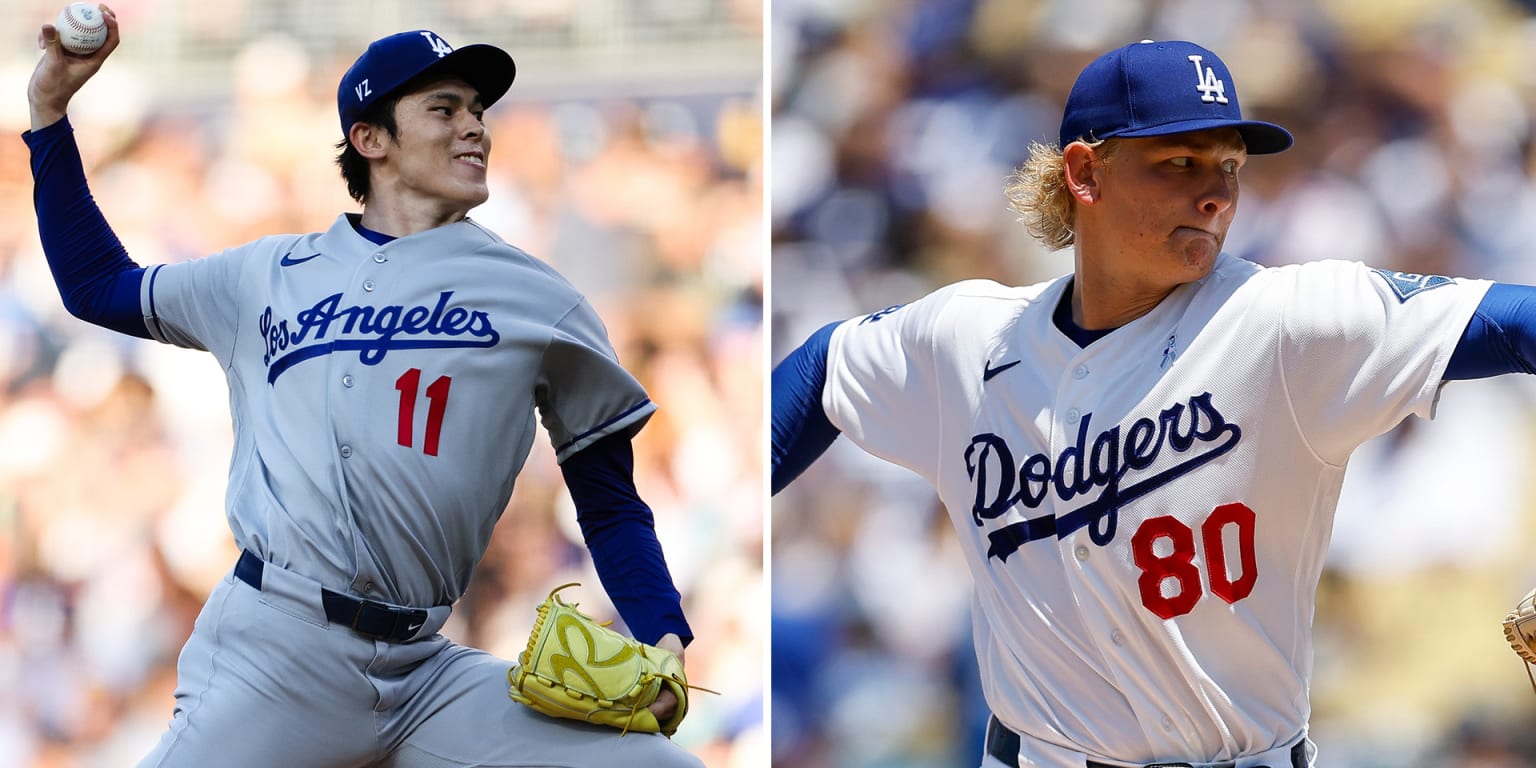
The Dodgers' rotation has devolved into a two-man audition. Roki Sasaki and Emmet Sheehan remain their only healthy regular starters, per recent reporting, while Blake Snell (elbow surgery recovery) and Tyler Glasnow (lower back issues) linger on the injured list with no imminent return. Snell is progressing through bullpen work and will eventually need at least four rehab appearances to build back to a five-inning workload. Glasnow is further back—his spine has repeatedly forced him to halt ramp-ups, though he's recently resumed light catch. That timeline puts both weeks away from meaningful contributions, leaving manager Dave Roberts no choice but to keep deploying Sasaki and Sheehan.
The problem is their diverging trajectories cut against each other's narrative. Sasaki enjoyed a dominant May-through-early-June stretch (2.55 ERA over six starts from May 2 through June 5) when his triple-digit fastball velocity returned and his splitter tightened. That window closed in his most recent four outings: 19 earned runs in 17 innings, with velocity declining and command deteriorating. Thursday's three-inning implosion against San Diego (six runs allowed) was the latest marker. Sasaki himself acknowledged the issue post-game—fastball intensity and command consistency are the levers he needs to pull. That's not an vague "stuff regressed" diagnosis; it's a fixable mechanical problem that also means it can recur.
Sheehan, by contrast, has built a cleaner recent trajectory. Sunday's outing (one run in 4⅓ innings) represents a step forward after a season-long struggle to convert elite stuff into results. His slider ranks in the 90th percentile for chase rate (35%) and 87th percentile for whiff rate (30.8%), but his fastball velocity has fluctuated enough to cost him margin for error. His own scouting report—fewer delivery thoughts, more pitch execution in the second half—suggests he's identified the lag between talent and outcome. One strong start doesn't erase four months of volatility, but the directional arrow matters.
For betting purposes, Sasaki's recent decay should influence how you size strikeout props and team total unders in his starts. His last four outings have correlated with shorter leashes and fewer innings pitched (his Thursday start lasted three frames), which naturally deflates his K volume and elevates bullpen usage—a hidden tax on Dodgers run prevention when elite relievers log extra work. If Sasaki's velocity doesn't restabilize by his next turn, expect books to apply a modest discount to his strikeout line relative to his season average, and rightfully so. Sheehan's ascending trend suggests the inverse: his whiff rates remain elite even when his fastball sat in the low 90s Sunday, which implies his slider is shouldering more of the work. As he regains command and fastball consistency, his strikeout ceiling rises without spike risk. The gap between the two—one regressing mid-season, one correcting upward—makes it a mistake to treat them as interchangeable depth arms.