MLB
Alcántara's Ninth-Inning Gamble: When Desperation Meets Usage Risk
Sandy Alcántara threw a save on 206 innings pitched—the most in baseball—and now faces a Sunday start, a workload collision that signals Miami's playoff mortality.
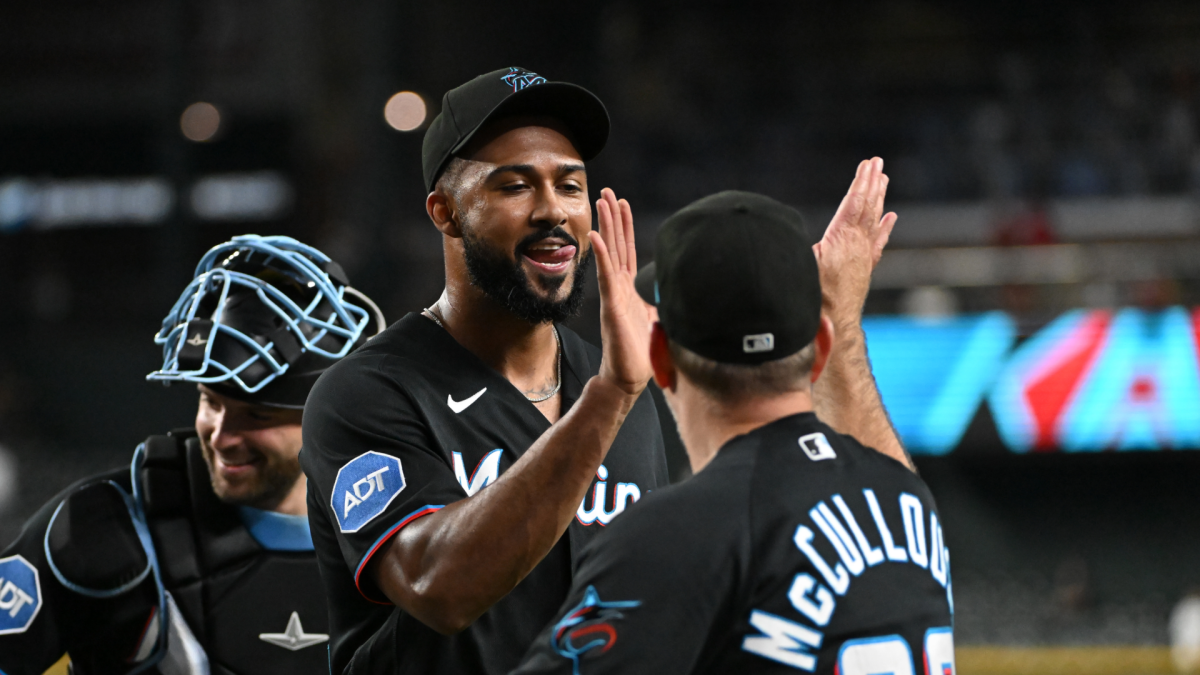
Sandy Alcántara picked up his first career save Wednesday against Arizona, stepping into the ninth inning with a one-run lead and the Marlins' postseason hopes hanging by a thread. The move was unconventional: Alcántara had logged 206 innings this season, leading MLB, and threw 101 pitches just 48 hours earlier. Manager Clayton McCullough brought him in anyway, and Alcántara delivered—one inning, two outs, a crucial strikeout-adjacent sequence—to secure Miami's 4-3 win. The save itself is a statistical oddity: Alcántara became the first pitcher since Orel Hershiser in 1987 to record a save while holding at least a share of the league's inning-pitched lead. The rarity underscores the desperation.
Miami sits 7½ games behind San Diego for the final National League wild-card slot with fewer than two weeks remaining in the regular season. That gap is functionally insurmountable at this calendar point. The Padres would need to completely collapse while the Marlins win every remaining game—mathematically possible but behaviorally improbable. Alcántara's willingness to pitch on short rest in a high-leverage situation reflects organizational clarity: this team is out of margin for error. There is no strategic reserve. McCullough managed the middle innings with Alcántara available, a game-within-the-game that saved other arms but committed a premium asset to a single inning.
The structural problem is Alcántara's next scheduled start: Sunday, just four days after the save. No starter logging north of 200 innings typically pitches on three days of rest mid-September. Alcántara has been worked harder than any pitcher in baseball—206 innings, 3,140 pitches thrown, 33 starts. The save appearance adds 25 pitches to a usage total that was already in the upper echelon of modern workload. His fastball velocity, spin rates, and command metrics will warrant monitoring in that Sunday start against a division opponent. If Miami's front office has committed to using its ace in multiple roles, that's a statement about the team's belief in its own viability.
From a prop perspective, Alcántara's dual usage pattern (starter + reliever) compresses his recovery window and raises injury volatility. Over-unders on his strikeout totals for Sunday should reflect fatigue mechanics, not his season baseline. He's recorded 7.8 K/9 over 206 innings, a career-average rate, but three-day rest historically correlates with a 0.4–0.6 K/9 decline for high-volume arms. Bettors should fade strikeout props if the Sunday matchup opens at his full season rate (e.g., 5.5+ Ks); that number doesn't account for the structural cost of midweek save usage. The Marlins are fighting for their organizational life, and that desperation has measurable consequences for individual pitcher prop construction.