Sale's Elite Strikeout Pace at 37 Rewrites the Aging-Ace Script
By Justin Erickson ·
Chris Sale is tracking toward a historic strikeout total while maintaining a sub-2.10 ERA in his age-37 season—a combination that separates him from every pitcher in the modern era except Cy Young himself.
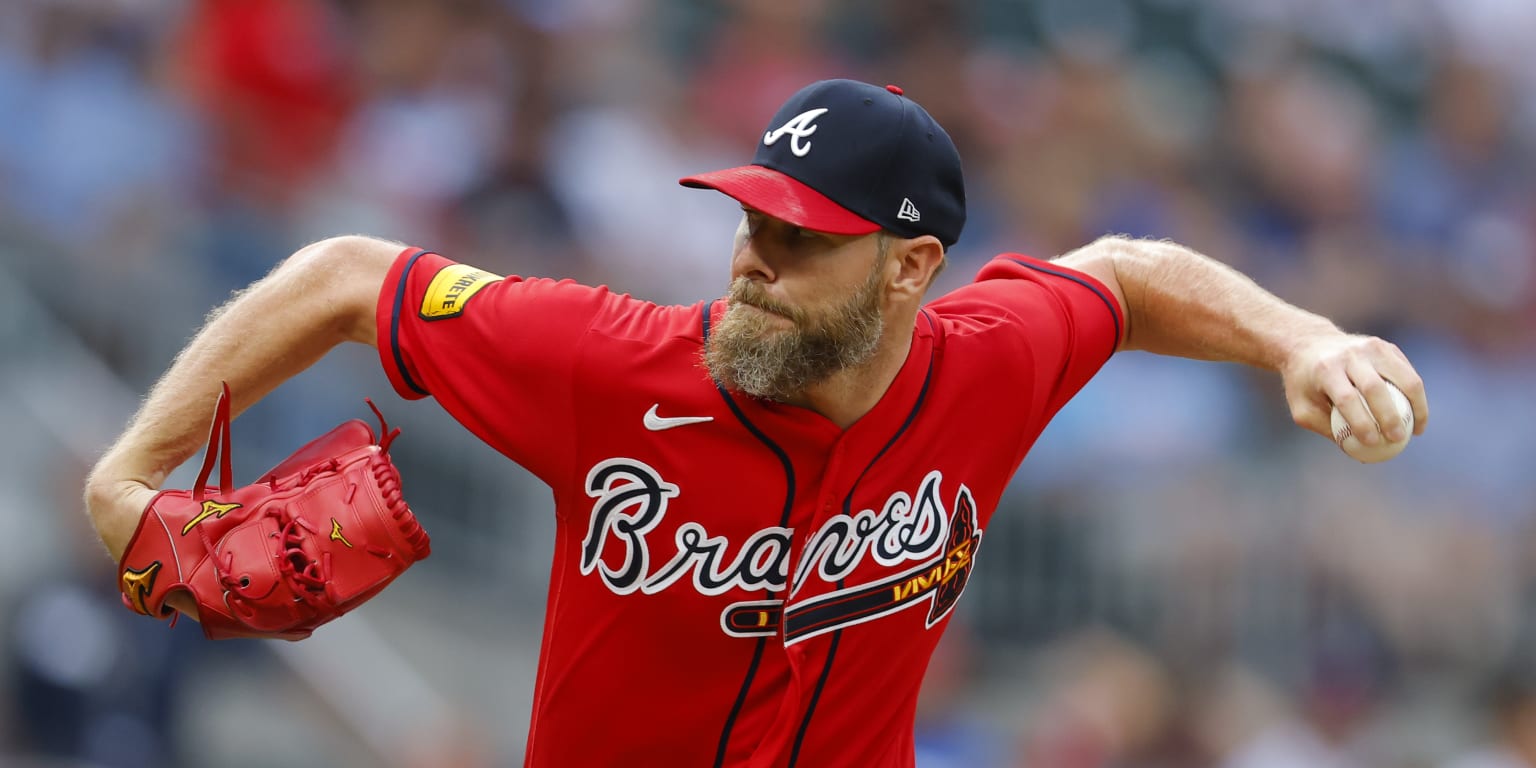
Chris Sale struck out six batters across seven scoreless innings Friday night, reaching 2,702 career strikeouts and 123 on the season through 18 starts. The Braves' left-hander allowed just two hits and posted a 2.06 ERA in the dominant performance against Texas, cementing his status as an outlier in the aging-pitcher conversation. At 37 years and 362 days old, Sale has now joined a seven-member club of pitchers to post 120-plus strikeouts through their first 18 starts at that age or older—a list that includes Roger Clemens, Nolan Ryan, and Max Scherzer. The distinction that separates him: he's the only member of that group to do so while maintaining a sub-2.30 ERA, a threshold Johnson reached only once at a similar age.
The longevity narrative alone merits attention, but Sale's performance quality in his 37th year exceeds what the public eye typically assigns to pitchers past 36. His 2.06 ERA through 18 starts sits below Johnson's 2.49 mark from the 2001 season that produced 372 strikeouts and a Cy Young Award. Over his past 15 outings, Sale has compressed that mark further to 1.72, a pace that would rank in the top five league-wide for a full season. The velocity conversations—typical of aging arms—don't apply cleanly here. Sale's strikeout rate per nine innings (7.4 K/9 through 18 starts) trails his career average, but his walk rate (2.1 BB/9) remains so disciplined that his command-adjusted strikeout efficiency hasn't cratered. He's simply executing at a higher level than aging ace comparables typically can.
From a betting lens, Sale's strikeout prop lines have likely adjusted upward after this run, but there's a mechanical durability question worth isolating. Sale has now logged 123 strikeouts in 126 innings through 18 starts—a 8.76 K/9 rate that demands closer examination of how he's generating those strikeouts. Unlike aging pitchers who often lean on increased fastball velocity to compensate for diminished secondary stuff, Sale's success hinges on sequencing: his slider remains a wipeout pitch (35% whiff rate career), and his changeup command has tightened rather than loosened with age. This is not a performance built on unsustainable volume or luck. The strikeout prop for Sale games should price in the 6-7 K range for seven-inning outings, but the line may have already corrected sharply upward. His next two weeks will test whether this is a sustainable pace or a weather-dependent hot streak; games against top-tier offenses (particularly teams with superior contact rates) will reveal whether opposing batters can exploit any mechanical decline that hasn't yet surfaced.
The Cy Young discussion is legitimate—his 1.72 ERA over the past 15 starts and historical ERA comparisons to Johnson's award-winning 2001 season place him in genuine contention—but the more durable prop angle is Season strikeout total. Sale is currently tracking toward approximately 155-165 strikeouts depending on how many additional starts he makes down the stretch. If the market has him priced at 155.5 or lower, unders become attractive because the baseline assumes continued health and no decline in K-rate efficiency. If the line sits at 160 or higher, lean toward the under; the probability of a late-season decline, injury-related workload reduction, or quality-of-opponent variance making up 5+ strikeouts over 15-20 additional starts is material. For now, the edge leans toward fading the over on season K totals until we see how Sale performs in September against playoff-contending lineups.