MLB
Veen's Minor League Surge Forces Rockies Hand—But Majors Aren't Built for Hot Streaks
A 24-year-old prospect's two-week tear at Triple-A demands a call-up, yet his skill set and the Rockies' crowded outfield create a prop-betting paradox.
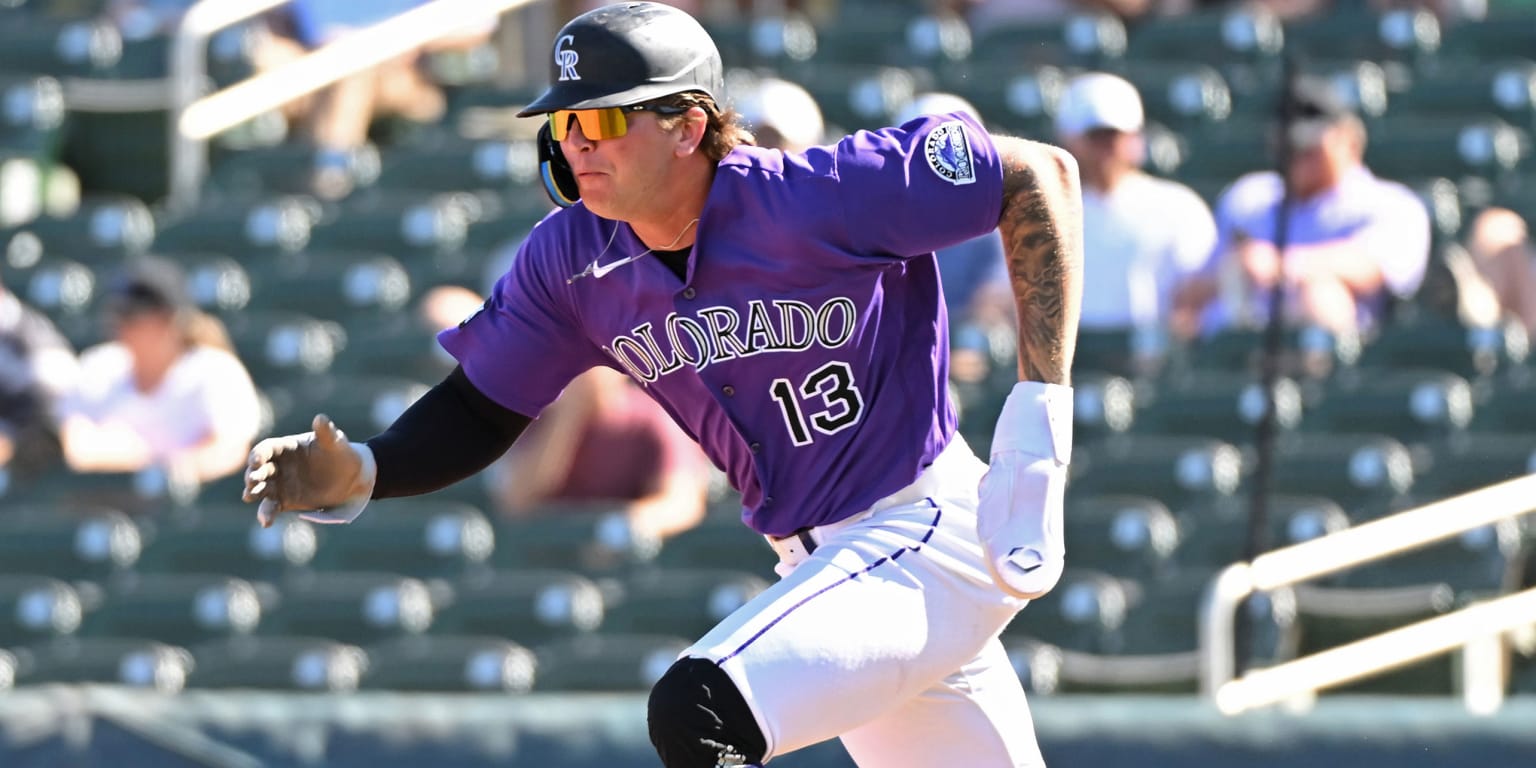
Zac Veen is heading back to the Majors. Colorado called up the 24-year-old outfielder on Tuesday after a 12-game stretch at Triple-A Albuquerque in which he hit .462 with eight home runs and a .873 slugging mark—numbers so explosive they demanded action. His Saturday line alone (5-for-5, 3 HR, 17 total bases) ranks among the most productive single games in Minor League history since 2005. The Rockies had little choice but to promote him, designating infielder Edouard Julien for assignment in the corresponding move.
Context matters, though. Veen arrived at Triple-A this season as a reclamation project. The 2020 ninth-overall pick had cratered in his 2025 MLB debut—4-for-34 in 12 games—and tumbled from prospect consensus (No. 27 overall in 2023) into doubt. He spent the offseason rebuilding his body and approach, and the cumulative results are real: through 100 games, he carries a 1.037 OPS with 24 home runs, 65 extra-base hits, and 18 stolen bases. That .327/.402/.635 slash line ranks fourth among full-season Minor Leaguers with 300+ plate appearances. The two-week spike is explosive, but it sits atop a foundation of sustained production.
For betting purposes, Veen's call-up presents a timing trap. Yes, he's coming off the hottest stretch of his minor league career. Yes, he's a talent the organization clearly values—a top-100 draft pick doesn't get promoted for luck. But the Coors Field effect and the Rockies' roster construction introduce friction. Colorado's outfield already features established players with defined roles, and Veen will likely shuffle in as a bench piece or platoon starter rather than a full-time lineup fixture. Hot streaks at Triple-A, even spectacular ones, compress rapidly when a hitter faces big-league velocity and depth-chart competition for at-bats.
The prop angle is counterintuitive: fade early totals on Veen's major-league counting stats (hits, RBIs, home runs) until the market has priced in several games of actual MLB service. Sportsbooks will naturally juiced his numbers upward following a call-up on the heels of a 5-for-5 night. That's recency bias, and it's profitable to oppose. A prospect arriving with a 12-game hot streak from the minors typically sees his initial major-league prop lines inflated by 10-20% relative to his true expected output over his first week. That inflation corrects within 72 hours once real at-bats accumulate. Veen's underlying talent is present, but the specific environment of his arrival—limited playing time, fresh competition, a short-term bump in market sentiment—creates a fade window rather than a play window.
Watch his actual plate-appearance pace and usage rate over his first three games before committing to any of his individual props. The story here is prospect trajectory and organizational investment, not immediate major-league production.
MLB Intelligence — Baseball intelligence beyond the box score. Open MLB Intelligence →