Riley's Two-Extra-Base Blueprint: Atlanta's Dormant Slugger Follows the 2023 Playbook
By Justin Erickson ·
Austin Riley's hot-start pattern in 2023 mirrors his early stumble this year—and history suggests that Sunday's two-extra-base performance could ignite a sustained power surge.
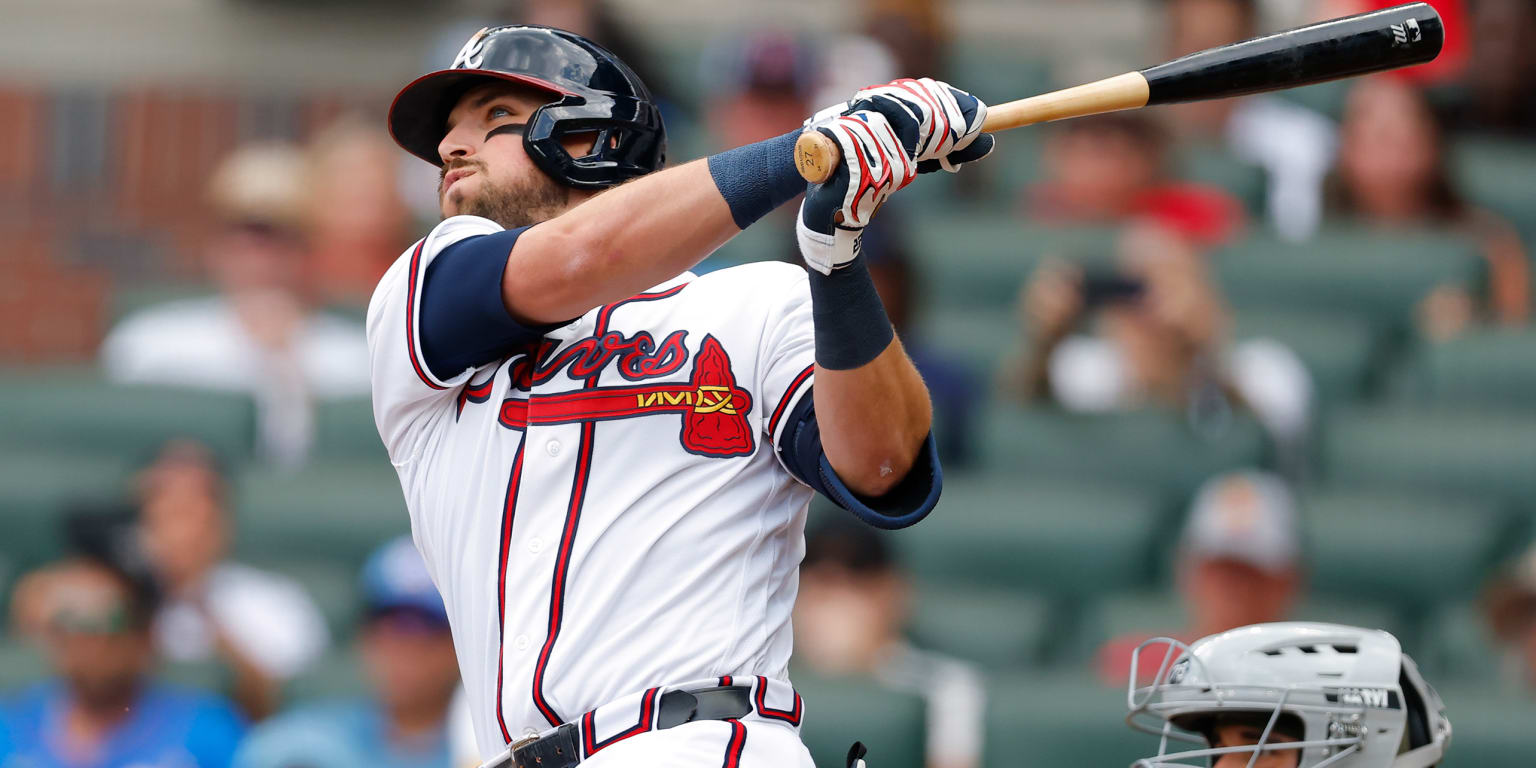
Austin Riley homered and doubled in Atlanta's 8-1 rout of Boston on Sunday, marking just his third multi-extra-base game of the season. The three-run shot off Brayan Bello in the first inning and his fifth-inning double arrived at a moment when Riley's offensive profile needed a jolt—he's hitting .220 with a .671 OPS through 47 games, a stretch that mirrors almost exactly the same 47-game window in his breakout 2023 campaign.
Here's what makes this worth tracking: Riley carried identical early struggles into the 2023 season. Through the Braves' first 47 games that year, he posted a .256 average and .746 OPS with seven homers. The rest of that season told a different story entirely. From game 48 onward, he exploded—finishing with a .281 average, 37 total homers (meaning 30 in the final 115 games), and an .861 OPS. A two-extra-base night preceded similar bursts on April 15 and April 17 this season, though neither sparked the prolonged tear his pre-game profile suggested they might. But the 2023 precedent carries weight: when Riley heals up and gets into rhythm, the offensive ceiling shifts dramatically.
The Braves' organizational patience with both Riley and Mike Yastrzemski through their respective downturns reflects confidence in sample-size recovery. Yastrzemski demonstrated the volatility at play this past homestand—he moved his OPS from .516 to .643 in six games, including go-ahead hits against the Cubs and a game-ending double on Friday. That's not sustainable performance; it's variance. But it does signal that Atlanta's lineup isn't structurally broken. When Riley's bat wakes, the team's already league-leading run-scoring (249 through 47 games, second in baseball) could push into genuine offensive dominance territory.
For prop purposes, Riley's profile resembles a coiled spring. His barrel rate and exit velocity haven't fallen off a cliff—the issue is contact quality and timing. Two extra-base hits in a single game historically precede sustained production upticks for him, not one-off noise. The market likely hasn't fully repriced his home-run total for the season (standing at +100 or better to exceed season-total thresholds around 28-32), because the narrative remains anchored to his current .220 average rather than the 2023 precedent. If Riley's next week produces even league-average contact rates, his hit total and extra-base-hit props become undervalued relative to the conditional probability that he mimics his 2023 backend trajectory.