Reynolds' Three-Week Hot Streak Carries Pirates Past Athletics in Ninth-Inning Comeback
By Justin Erickson ·
Bryan Reynolds extended a .358 batting run with two home runs as Pittsburgh rallied from four down to beat Oakland, signaling a sustained offensive inflection rather than a single-game spike.
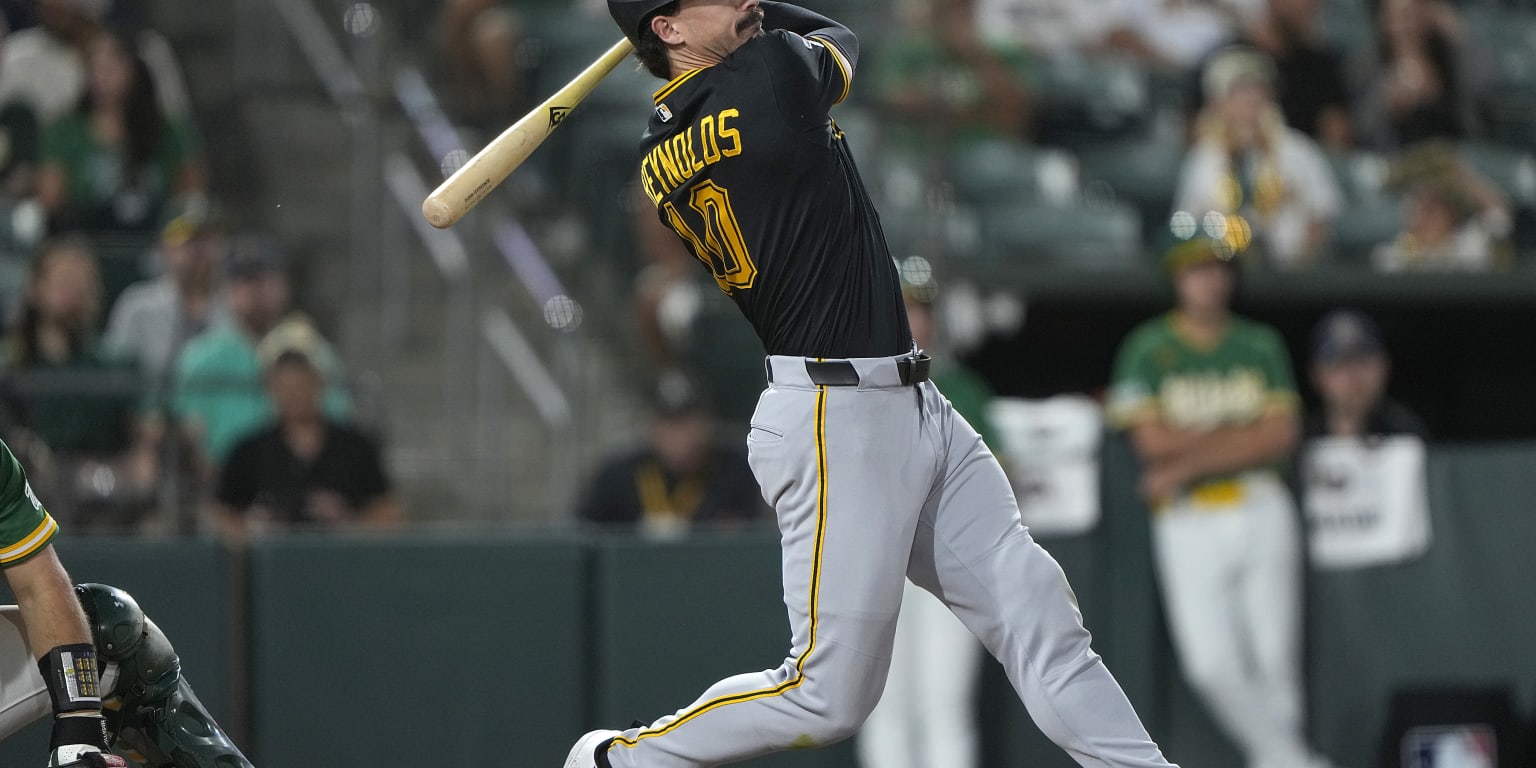
Bryan Reynolds did what he's been doing since late May—driving the ball hard and on time. In Tuesday's 6-5 win over Oakland, he went 4-for-4 with two homers and extended his on-base streak to 23 games, the third longest of his career. Brandon Lowe added the decisive blow in the ninth, a solo shot that broke a 5-5 tie. Pittsburgh's comeback from a four-run first-inning deficit was built on patience and execution; the Pirates combined 13 strikeouts as a staff, extending their streak to 22 consecutive games with seven or more K's—the longest such run in baseball's Modern Era.
The real story isn't Tuesday's win. It's Reynolds' three-week offensive window. Over his 23-game on-base streak, he's hit .358 (29-for-81)—a clip that, if sustained over a full season, would rank among the league's elite. This isn't a hot three-game stretch or a favorable park factor; it's a multi-week pattern anchored in approach consistency and barrel control. Mitch Keller's five-inning, seven-strikeout outing added ballast—he moved to seventh all-time on the Pirates' strikeout ledger with 902—but the offense is the narrative that matters.
Pittsburgh sits at 37-37, back to .500 after winning its third game in its last 11. That record hides the recent offensive lift. Over Reynolds' 23-game on-base window, the Pirates' lineup has compounded output with disciplined plate management. The Athletics' four-run first—built on an infield single and fielding error that collapsed into a three-run play—proved unsustainable against a pitching staff that's now strikeout-heavy and, more recently, limiting hard contact.
For prop bettors, Reynolds' .358 clip over 81 plate appearances is the key signal. Market overreactions to single-game power displays (two homers, back-of-the-card highlights) often miss the mechanical foundation underneath: Reynolds' on-base streak ties to improved selectivity and timing, not randomness. His home run prop lines—likely priced on season average (roughly one every 22-25 plate appearances)—haven't fully adjusted upward to reflect his recent frequency. Over his three-week window, he's homered roughly once every 20 PA. If sportsbooks are still anchoring to his full-season baseline, his HR prop carries edge on the over side when matched against Oakland or similar quality-of-contact pitching environments.
The team total context matters as well. Pirates team totals at 4.0-4.5 runs may be undervalued if Reynolds' streak persists and Keller's recent form (solid command, high strikeout volume) holds. The 22-game K-streak signals effective stuff, but effective stuff that generates ground balls and weak contact, not strikeouts alone, is what suppresses opposing offense—the exact profile needed to sustain low team totals. However, when your primary offensive engine (Reynolds) is hitting .358 over three weeks, team overs at reasonable numbers shouldn't be dismissed.