Franco's Elbow Exit Complicates Reds' Deadline Math With Rotation Depth Now Questionable
By Justin Erickson ·
Cincinnati's emergency pitching option leaves the clubhouse injured six days before the trade deadline, forcing hard decisions on starter retention.
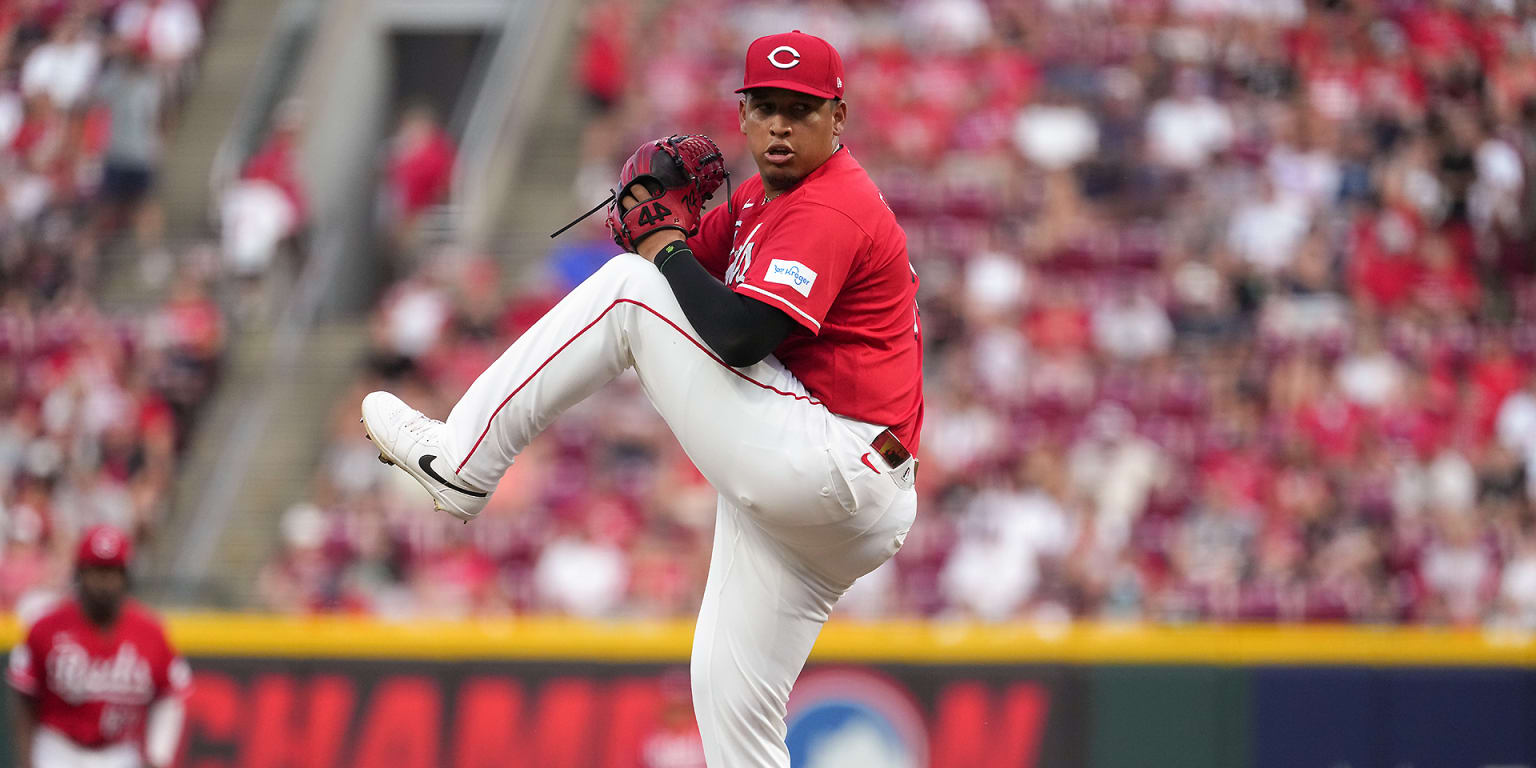
The Reds salvaged Game 2 of their doubleheader against Cleveland with a 2-0 win Tuesday night, but the victory came with a cost that reaches far beyond the box score. Jose Franco, a 27th-man callup summoned from Louisville specifically to handle bulk innings in the nightcap, exited in the seventh inning with right elbow discomfort and did not return. For a front office staring down the Aug. 3 trade deadline with playoff odds sitting at 1.6 percent, the injury creates immediate roster friction—Franco was functionally the organizational insurance policy if Cincinnati moved a rotation piece before next Monday.
The Reds entered Tuesday at 50-56, having won seven of their last 11 games and clawed within 4.5 games of the final National League Wild Card spot. That recent run, however shallow the playoff probability, has given the front office genuine options. Brady Singer, an established starter who becomes a free agent after the season, represents the obvious trade chip—a controllable arm teams will actually bid for, not a rental. But losing Franco to injury removes the obvious internal replacement. Under MLB rules, a 27th-man callup is ineligible for the injured list, meaning Franco's roster spot is now functionally dead weight until the September expansion window. The Reds cannot simply stash him on IL and call up another arm.
This creates a cascading decision tree that extends through the next six days. If Singer stays, the Reds preserve rotation depth but waste the deadline opportunity to upgrade the position player group, where they are thinner. If Singer moves, they need another callable starter from Louisville—and one capable of handling playoff-race innings, not a stopgap. The calculus just tightened. Cincinnati's willingness to use an unconventional opener-plus-Franco approach in Game 2 (Gavin Williams struck out 12 over seven innings for Cleveland despite the Reds scraping together just three hits) suggests the organization is comfortable with creative usage. That flexibility vanishes when the emergency arm gets hurt.
From a betting standpoint, this injury reshapes Reds team totals over the next week and their ability to stay competitive in close games. Franco threw 3 2/3 scoreless innings with a 1.35 WHIP in a matchup where Cincinnati's offense was clearly overmatched. His loss means the bullpen absorbs more workload in future doubleheaders and critical games, and the Reds' bullpen ERA (4.21) ranks 18th in baseball—no margin for expanded duty. The roster strain also signals to the market that Cincinnati's playoff window is closing operationally, not just mathematically. Teams sense desperation in roster construction; it often precedes a seller's pivot. Reds unders have modest value over the next 5-6 days if the team pivots to deadline fire sales rather than pushing forward.