MLB · injury
Burns' Groin Strain Ends Reds' Cy Young Conversation and Reshuffles Cincinnati's October Rotation
Chase Burns' season-ending IL placement removes the franchise's most dominant starter from playoff rotation planning with just 11 days left in the regular season.
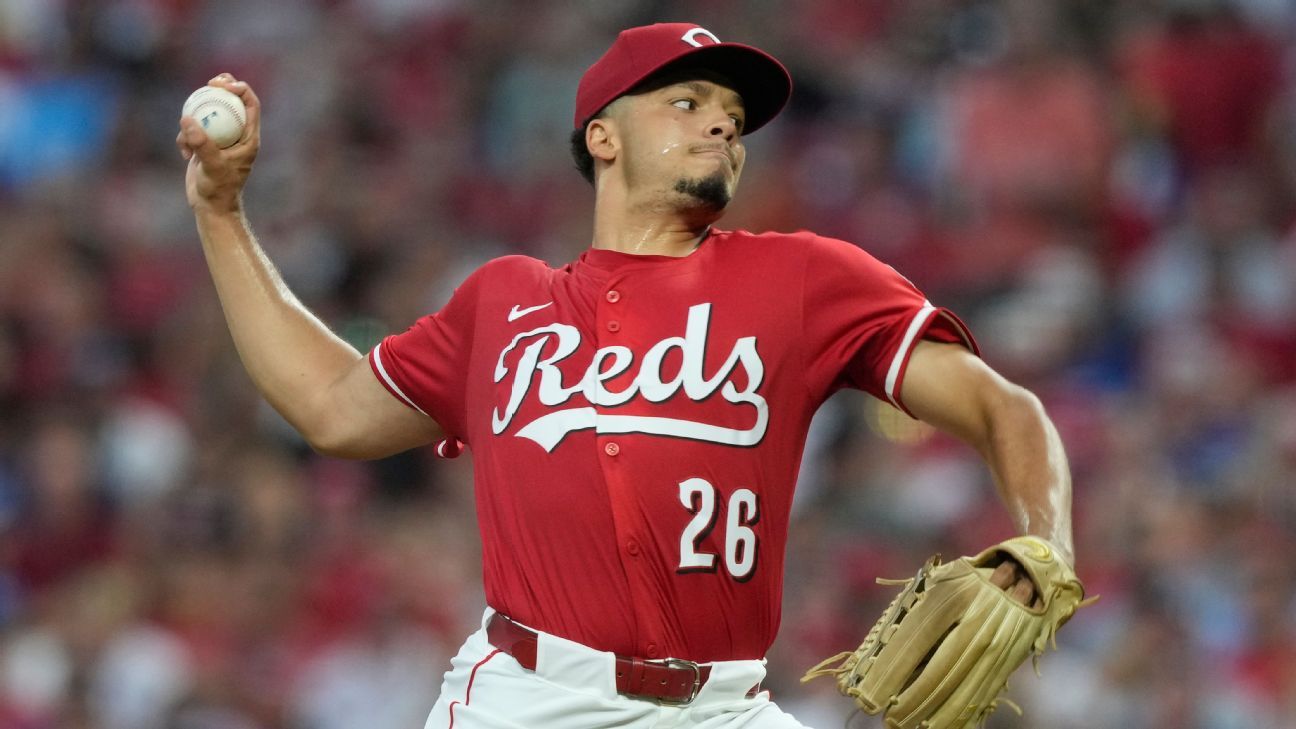
The Reds placed right-hander Chase Burns on the 15-day injured list Sunday with a right groin strain, effectively ending his All-Star season and forcing Cincinnati to realign its postseason pitching depth. Burns, 23, had worked through a nagging bilateral groin issue throughout 2026 but aggravated his right side after pitching Friday. Manager Terry Francona announced the move was retroactive to Saturday and emphasized the team's cautious approach to a second-year arm that has already logged 154⅓ innings—nearly three times his 2025 rookie workload.
Burns' season erasure represents a significant blow to a Reds rotation that had positioned him as its ace. The right-hander finished 15-3 with a 2.86 ERA, 185 strikeouts, and a 1.166 WHIP across 29 starts—the kind of peripherals that typically anchor a contender's October rotation. His 238 strikeouts through 36 career starts rank third in Reds franchise history since 1900, a credential that underscores how quickly he'd ascended. He was named to the NL All-Star team earlier this summer but didn't pitch due to the same groin concern that ultimately ended his availability. Francona had already begun protecting Burns' workload, limiting him to three-inning stints in each of his past three starts to preserve durability into October—a strategy that failed to prevent the breakdown.
The underlying injury pattern deserves scrutiny. Burns dealt with bilateral groin issues at various points this season, suggesting the problem isn't a single acute incident but rather a structural limitation or training load mismatch that accumulated. A 23-year-old pitcher shouldn't be managing chronic groin strain in the same way a veteran dealing with age-related fragility might. This raises questions about whether his explosive workload increase—from 43 innings in 2025 to 154 in 2026—exposed an oversight in ramping-up protocols. The Reds now have 11 days to finalize a playoff roster without their most reliable starter, forcing them to lean on the secondary tier of their rotation or gamble on mid-rotation starters who hadn't been counted on for postseason reps.
From a betting perspective, Burns' absence reshapes Reds pitching props and team total angles heading into October. Any pre-playoff strikeout or ERA projections built around Burns' workload are now defunct; sportsbooks will need to recalibrate Cincinnati's rotation strength relative to division rivals and potential first-round opponents. Bettors who had locked in Burns props or keyed Reds team totals to his presence should expect significant line adjustments as books reprice Cincinnati's offensive support requirements without their ace. The removal of a 15-win, sub-2.90 ERA arm from playoff consideration typically shifts unders on Reds game totals into stronger value zones, as remaining Cincinnati starters carry higher ERA profiles and will face hitter confidence boosts. For the next 11 days, any Reds pitching props should be treated with caution—Francona's rotation decisions now become reactive rather than proactive, and that volatility erodes the reliability of advance numbers.