Greene's Return Reshapes Reds Rotation Calculus—And Playoff Equity
By Justin Erickson ·
Hunter Greene returns from elbow surgery Saturday with a fastball that still hits 101, and a Cincinnati rotation that suddenly looks capable of holding ground in a tight wild-card sprint.
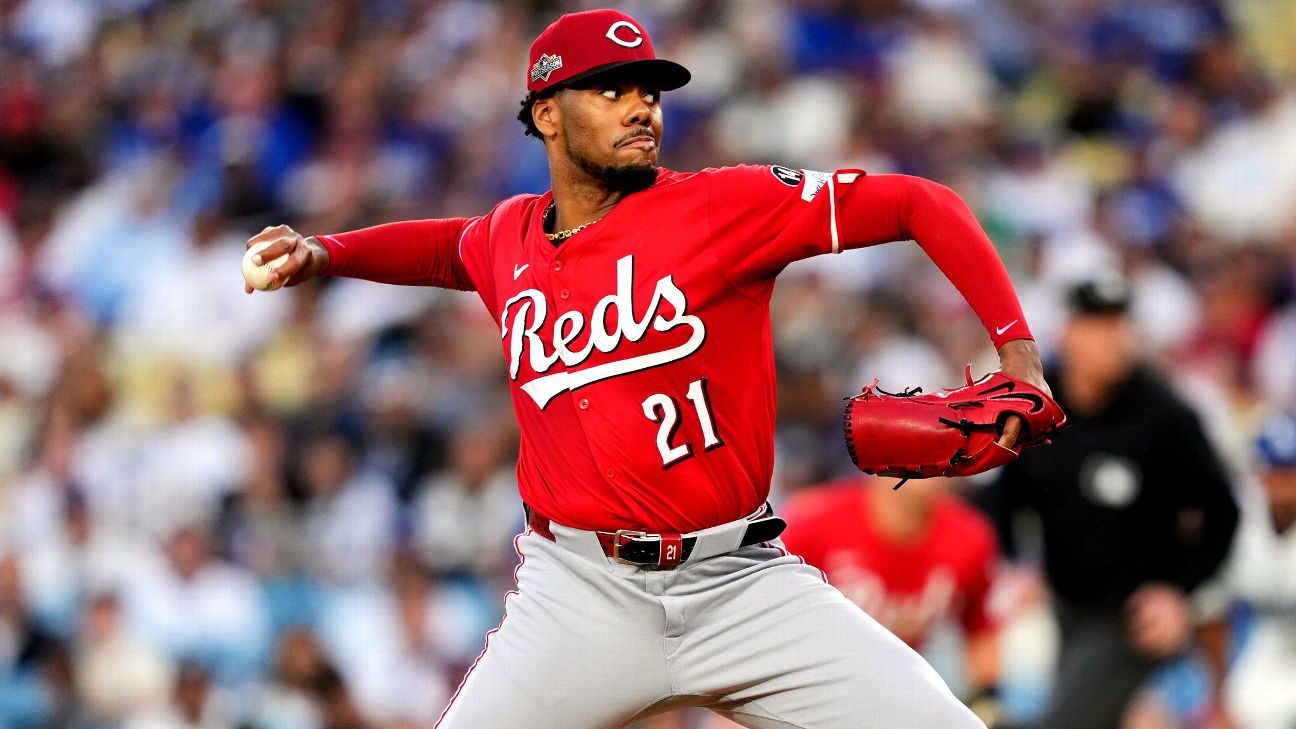
The Cincinnati Reds will activate Hunter Greene from the 60-day injured list Saturday night against Baltimore, marking the All-Star's first appearance since undergoing bone-chip removal surgery on his right elbow in late March. Greene's rehab was surgical in its own right: three minor-league starts, 14 1/3 innings, 13 strikeouts, one hit allowed. His final tune-up—6 1/3 innings, four strikeouts, 82 pitches at Triple-A Louisville—signaled a pitcher ready for major-league innings immediately, not one being eased in on a pitch count.
The timing could not be sharper for a Reds team sitting 40-46, four games out of the wild-card picture as of Friday. Cincinnati's rotation had been operating with one genuine ace in 23-year-old Chase Burns (10-1, 2.40 ERA), a prospect whose youth and durability remain uncertain. Greene, at 26, is a known commodity: an All-Star in 2024 who has posted a 2.76 ERA over 107 2/3 innings when healthy. The issue, always, has been health. Durability has been Greene's ceiling rather than his floor—he has never exceeded 26 starts in a single season across four major-league campaigns. His right elbow has been a recurring problem; the groin strain that cost him time earlier this year suggests the fragility runs deeper than one joint.
What matters now is Reds manager Terry Francona's explicit signal that Greene will not operate under a pitch-limit management scheme. "We're going to get him back, not just in name only, but in production also," Francona said Friday. That's not just an asset allocation choice—it's a statement about expected durability. The Reds are betting Greene's surgery and rehab protocol have genuinely reset the arm. If that wager proves correct, Cincinnati gains 150-170 innings of All-Star-caliber velocity from a pitcher whose fastball still reaches 101 mph. If it fails, the Reds absorb another IL stint and the rotation collapses back into mediocrity.
For prop bettors, Greene's reinstatement reshuffles the strikeout market across Cincinnati's September slate. Burns (617 career strikeouts in 91 starts) will see increased leverage in later innings—the Reds can deploy him in higher-leverage spots rather than asking him to carry innings out of necessity. Greene's own strikeout prop will carry elevated variance in his first few weeks as the market reprices his health status and workload reality. His fastball velocity during the first 3-4 starts will be the canary: if it remains in the 98-101 range across 80+ pitches per start, the durability case holds. If it dips to 95-97 or Francona quietly introduces pitch limits, the injury narrative reshapes.
The wild-card implication is more durable. A healthy Greene adds roughly 1.5-2.0 projected wins to Cincinnati's September outlook, depending on durability assumptions. That could be the difference between a 40-46 team that finishes 82-80 and sneaks in, versus one that stalls at 78-84. The Reds are 7.5 games back of a playoff spot with roughly 55 games remaining; Greene's health trajectory will likely determine whether that gap closes.