Suarez Returns, Hayes Sidelined: Cincinnati's Third-Base Shuffle Reshapes Offensive Balance
By Justin Erickson ·
The Reds activate Eugenio Suarez from an oblique injury while Ke'Bryan Hayes lands on the IL with a lumbar disc issue, triggering a lineup reconfiguration that will materially reduce Cincinnati's right-side power output.
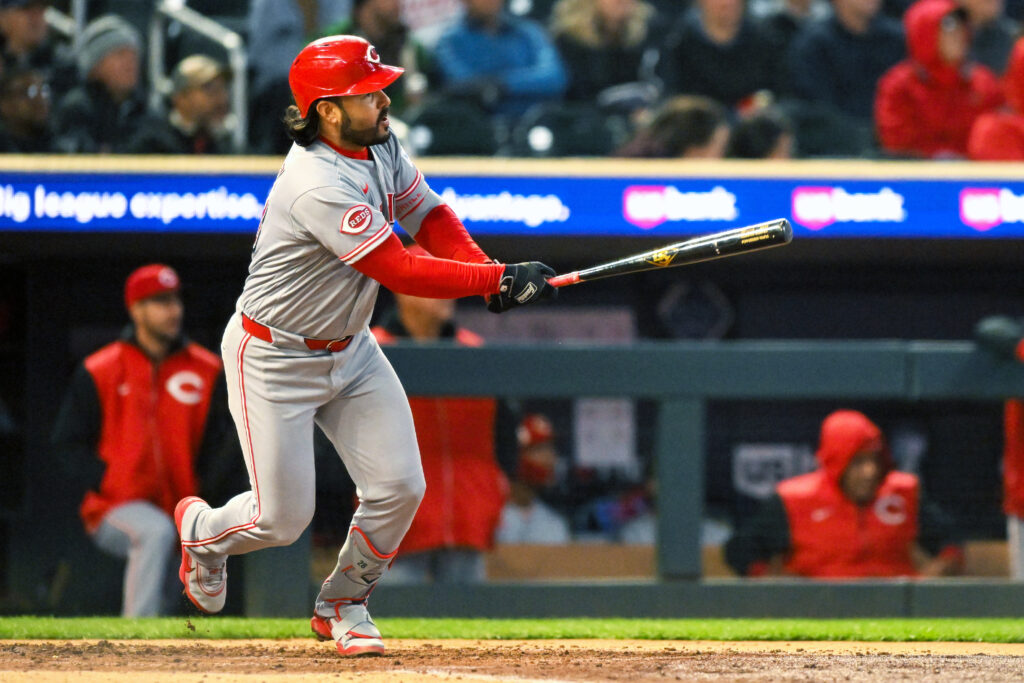
The Cincinnati Reds activated third baseman Eugenio Suarez from the 10-day injured list yesterday, ending a month-long absence stemming from an oblique strain. The timing coincides with a corresponding blow: Ke'Bryan Hayes, Cincinnati's primary third baseman, was placed on the 10-day IL retroactive to May 21 with a lumbar bulging disc. The roster move is procedurally clean—one infielder in, one out—but the offensive implications are not.
Hayes has been Cincinnati's most consistent power threat at the position, carrying an elite defensive pedigree that provides cover for a bat that has underperformed relative to draft expectations. His exit velocities and barrel rates suggest genuine gap power, even if his strikeout rate has kept overall batting average suppressed. A lumbar disc injury is not a one-game setback; it typically sidelines players for 2-4 weeks minimum and carries recurrence risk once activity resumes. Suarez, by contrast, is returning from a soft-tissue strain—lower injury severity—but he's also 35 years old and hasn't played meaningful baseball since late April. His early-season numbers were middling: a .235 ISO and sub-40% hard-hit rate in limited at-bats before the injury.
The Reds' run differential entering this stretch suggests their lineup cannot afford offensive leakage. Cincinnati ranks 14th in runs scored over the past two weeks, heavily dependent on the combination of Hayes's power and Suarez's veteran at-bats in high-leverage spots. With Hayes sidelined and Suarez ramping up after a month away, the team will likely slot a backup infielder—potentially one with below-average power metrics—into regular third-base duty. This creates a measurable downside to Cincinnati's offensive ceiling for the next 2-3 weeks: fewer home runs from the position, fewer RBI opportunities in the middle-of-the-order, and reduced slugging on nights when Cincinnati needs to trade power for depth.
Bettors should treat Cincinnati team totals with caution in the near term. The Reds' implied run production will contract when Hayes remains unavailable, a deficit Suarez's return cannot immediately offset. Early-season Suarez performance will likely lag his season pace as he returns to game speed after a month of rehab. If Cincinnati opens as a favorite in upcoming games, siding with unders on their team total becomes attractive—not because the lineup lacks talent, but because the specific configuration of available bats in this window carries lower aggregate production than the full-strength roster. This effect persists for 2-3 weeks, after which Hayes's return should normalize the team's offensive profile.
The broader context matters too: Cincinnati's pitching staff has been solid (ERA around 3.80 league-wide), so games won't be determined by run inflation. Closing games against moderately-ranked opponents with a temporarily degraded offense is a profitable fade on Reds team totals in the 4.0-4.5 range. The edge is not permanent—it expires once Hayes returns to action and Suarez's integration into the lineup stabilizes—but it is durable for the duration of the injury window.