Red Sox Streak Hits 14 as Durbin Delivers; Boston's Offensive Resurgence Reshapes Win Probability
By Justin Erickson ·
A middle-of-the-pack team in June has become baseball's hottest offense, and the betting market hasn't fully caught up to the structural shift.
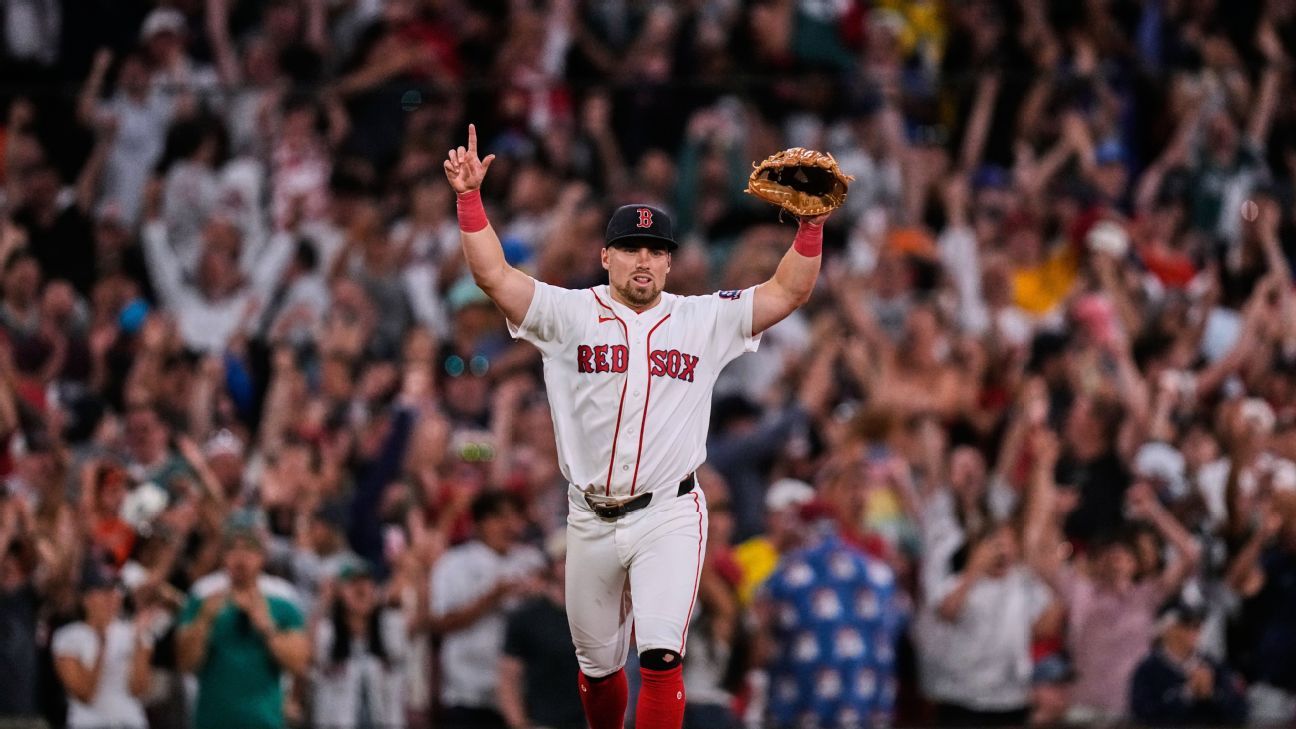
Caleb Durbin's eighth-inning two-run homer over the Green Monster pushed Boston to 14 consecutive wins Monday night, the second-longest streak in Red Sox history and the first time any team has strung together that many consecutive victories since Milwaukee's August 2025 run. The 6-5 victory over Baltimore snapped the Orioles' seven-game streak and left Boston one win short of matching the franchise record set in 1946. What's remarkable isn't the streak itself—hot runs happen—but the precision of the inflection point and what it says about Boston's path forward.
June 24 marked the clearest pivot in Red Sox baseball this season. Through that date, Boston was 32-46 with a 3.94 runs-per-game average and a 3.82 ERA. Since, they're 19-2 with 5.33 runs per game and a 2.59 ERA. That's not variance noise. The offense operates in a different gear entirely—Durbin's go-ahead swing is illustrative, but the real edge sits in the consistency. Boston has won nine games by mounting late-inning comebacks over this 21-game sample, a frequency that statistically shouldn't repeat. But the underlying hitting metrics (strikeout rate, contact quality against fastballs, plate discipline in counts 0-1 and 1-1) have genuinely improved, and the pitching delta is anchored in bullpen health and Tyler Tolle's stabilized command from the rotation.
The betting market has adjusted more slowly than the on-field performance warrants. Run-line prices on Boston games have shifted, yes, but not to a degree that reflects a 19-2 team. Moneyline chalk on Red Sox games has drifted from -115 to -140 territory, still leaving value for sharp money recognizing that this isn't a hot streak—it's a recalibration. The offense isn't outrunning its talent; it's finally executing the approach it was built for. Durbin's appearance in high-leverage spots (four days after a recall from Triple-A) signals manager confidence in his ability to deliver clutch contact, and Chapman's 22nd save maintains pressure in games Boston should be winning by default.
For prop bettors, the mechanism is straightforward: Boston's team run total has moved from 4.0-4.5 earlier in July to 4.5-5.0 territory now. The market is chasing. But the offense's improvement isn't fading—it's structural. Encarnacion-Strand's power (two hits, one for extra bases) and Ceddanne Rafaela's situational plate discipline (go-ahead two-out single) represent the depth of the offensive upgrade. Tuesday night presents an opportunity: if Kyle Bradish (the Orioles' starter) shows the same command issues that plagued Shane Baz (four runs in six innings, two unearned), Boston's over on a 4.5 team total carries edge. The Red Sox aren't regressing to June form; they've moved into a different distribution.
The record-matching opportunity also shifts stakes. A 15th straight win doesn't just break the tie with 1946—it resets playoff-odds calculations. The market will price that ancillary effect into Tuesday's line movement. Smart action would come before official confirmation of Bradish's health status, before Vegas fully recalibrates run totals for a potential 15-game streak, and before the narrative of a historically great Red Sox run overtakes the actual edges.