Raleigh's Return Window Tightens: Seattle's Offense Faces Real Depth Test Until June
By Justin Erickson ·
Cal Raleigh's oblique strain is entering its final rehab phase, but the Mariners' backup catching tandem has kept Seattle's offense competitive—a dynamic that rewires team total pricing until the all-world catcher returns.
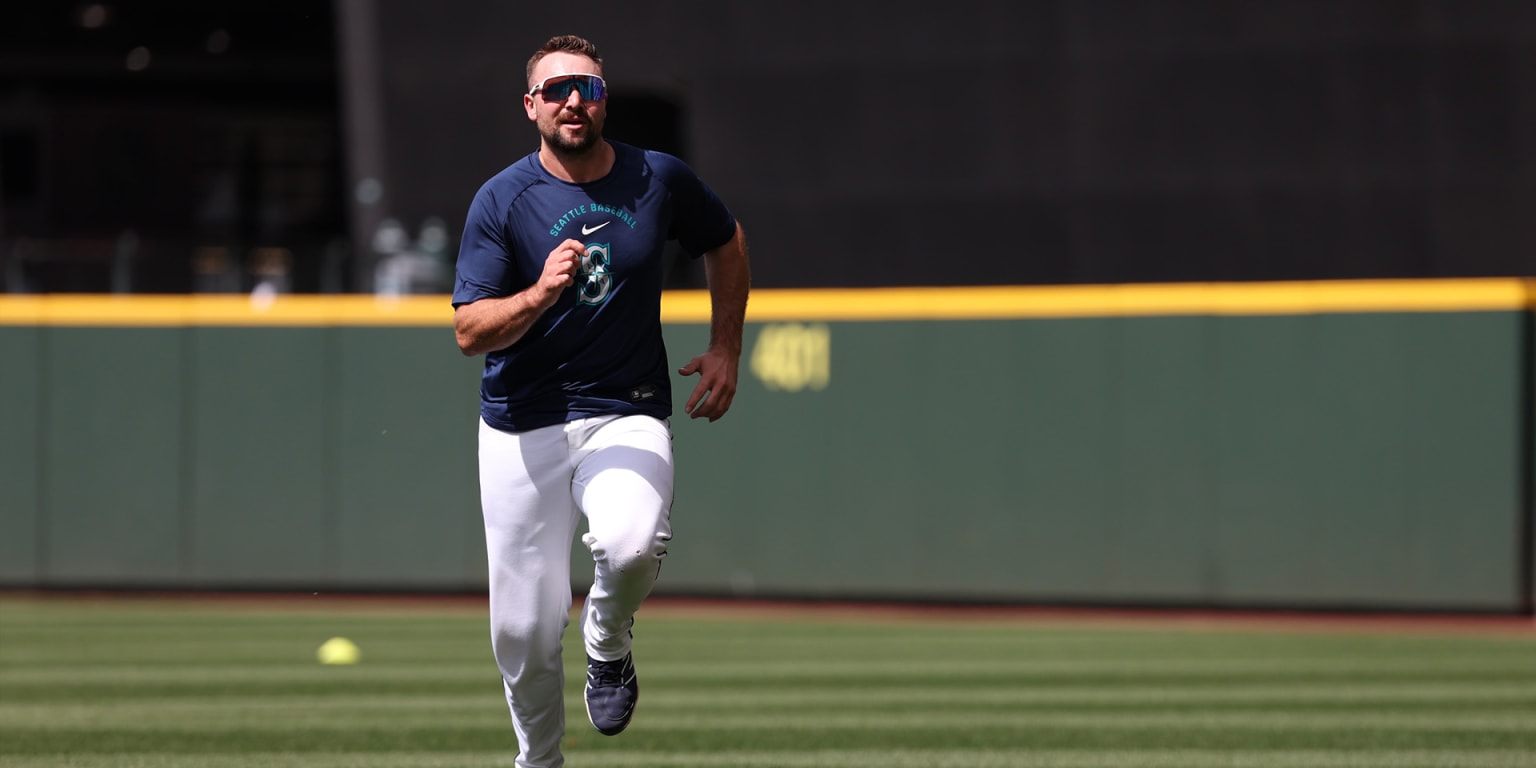
Cal Raleigh will begin his Minor League rehab assignment Sunday at High-A Everett as a designated hitter, then move to Triple-A Tacoma on Tuesday for a full week before the Mariners reassess his activation timeline. The club is targeting his return during Seattle's June 16 homestand, roughly two weeks out. Raleigh landed on the 10-day injured list May 14 after a right oblique strain, the kind of torso injury that requires careful progression through swinging intensity before a catcher can absorb the demands of framing, throwing, and blocking. Manager Dan Wilson emphasized the club is "taking it carefully just to be sure," a phrase that signals this isn't a fast-track situation—obliques punish abbreviated ramps.
What makes Raleigh's absence noteworthy isn't the player being sidelined; it's the baseline the Mariners are leaving. Raleigh entered May as one of baseball's most electric offensive forces, a catcher who routinely produced plus slugging and run production. Instead, he's carrying a .560 OPS into his layoff—a genuinely poor start by his standards. The injury may have masked mechanical breakdowns or approach issues, or he may have simply needed time. Either way, a reset with pain gone is the Mariners' implicit bet.
The backup arrangement has paradoxically worked. Mitch Garver and Jhonny Pereda have combined for a .763 OPS across 67 plate appearances while the Mariners have gone 12-6 in Raleigh's absence. That's not elite production, but it's functional—enough to keep Seattle's lineup breathing. Pereda delivered a crucial homer Tuesday in an eight-game winning streak. This isn't a situation where the Mariners have limped; they've managed. Once Raleigh returns and presumably finds his timing, Seattle's offense will shift from treading water to operating at the velocity the club constructed the roster to achieve. The near-term calculus flips dramatically: team totals and run lines carry material uncertainty while Raleigh is in Arizona or Tacoma, and significant upside once he's back in the lineup.
For bettors, the timing matters acutely. Seattle's next 10-14 games before the June 16 homestand will be priced without Raleigh's typical run-production load. Any backup catcher, no matter how competent, creates offensive drag compared to a .280+ ISO tier talent. Team totals in this window—before the market reprices for Raleigh's return—are trading at depressed true talent levels. The Mariners have shown they can win without him, but they can't play to their constructed ceiling. Once the June 16 date arrives and Raleigh is back, expect a 0.3–0.5 run swing upward in team total consensus, a market adjustment that's already baked into early-June pricing for teams that understand Raleigh's trajectory. Sharp books are already modeling his return; casual markets may not be.
The secondary note: Josh Naylor returned less than 48 hours after a back spasm, a sign that Seattle's injury management is either conservative (Raleigh) or aggressive (Naylor) depending on the severity and player role. Naylor's quick turnaround suggests the spasm was low-grade, not structural—a positive for positional stability but a minor point relative to Raleigh's multi-week absence.