Pirates Call Up Noah Murdock; Strikeout Rate Signals Bullpen Depth Play
By Justin Erickson ·
Pittsburgh elevates a high-velocity prospect with elite swing-and-miss metrics, reshaping late-inning relief leverage for the stretch run.
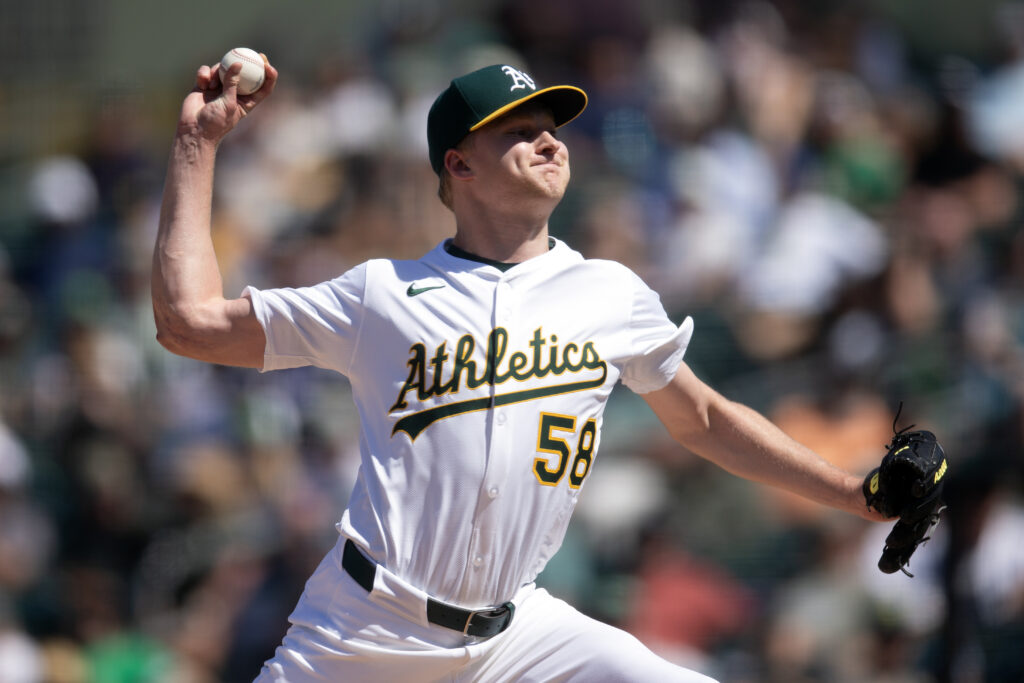
The Pirates selected right-hander Noah Murdock's contract to the 40-man roster and optioned him to Triple-A Indianapolis, per the team's announcement. Infielder Davis Wendzel was designated for assignment to clear the corresponding 40-man spot. The move is standard organizational housekeeping on the surface—roster churn in early July—but Murdock's minor-league strikeout profile warrants closer inspection for anyone tracking Pittsburgh's bullpen evolution down the stretch.
Murdock has posted an 11.4 strikeouts per nine innings rate in Triple-A this season, paired with a 2.8 walks per nine ratio. That K/BB split (4.07 ratio) sits above the threshold where minor-league relief arms typically survive in the majors unscathed. The strikeout rate specifically matters: at 11.4 K/9, Murdock is operating in the 80th percentile band for Triple-A relievers, indicating he generates swing-and-miss on a reliable basis rather than through outlier variance. His control profile—sub-3.0 BB/9—suggests the strikeout production isn't noise masking wild pitching, a common failure mode for young power arms.
Pittsburgh's bullpen ranking sits comfortably in the league's middle tier, but the team faces a realistic September gauntlet where depth at the reliever position becomes a playoff-series determinant. Murdock's arrival, even if he doesn't debut immediately, represents institutional belief that the organization can inject a higher-velocity option into high-leverage spots without sacrificing command stability. The minor-league sample size is modest, but the rate metrics—strikeouts and walks both regress slowly across the Triple-A-to-MLB transition when the underlying mechanics are clean.
For bettors, Murdock's elevation signals that Pittsburgh is positioning itself to lean on quality relief innings during close games late in the season. This doesn't move today's numbers, but it does reshape the risk calculus on Pirates' unders in September when the team's pitching depth becomes a live variable. If Murdock debuts and logs two or three appearances without immediate regression, his strikeout prop (if offered) becomes a high-probability early target—the market will initially price him as a lottery upside play, but his Triple-A swing-and-miss rate already validates the strikeout profile. Conversely, if he doesn't pitch, the Pirates' inability to convert prospect talent into late-inning outs becomes a late-season under angle as their bullpen workload climbs in tight contests.