Post-All-Star Schedules Create Real Windfalls: Which Hitters Exploit the Reset
By Ty Whitney ·
Baseball's mid-season break ends Thursday, but not all teams face equal workload pressure—and the market hasn't fully repriced the hitters who benefit from stretched schedules and favorable opponent rotations.
Baseball resumes Thursday night with the Mets visiting Philadelphia, and daily-league players already have a scheduling edge: Tampa Bay and Boston play a Friday doubleheader, giving both clubs an extra game while the rest of MLB sits idle. That's not happenstance. It's a fixture imbalance that sustains higher plate-appearance volume, longer benches, and measurably better depth into the weekend. The fantasy waiver wire rewards volume, but the prop market hasn't internalized this asymmetry yet—which means hitters in compressed schedules are being underpriced relative to their actual usage.
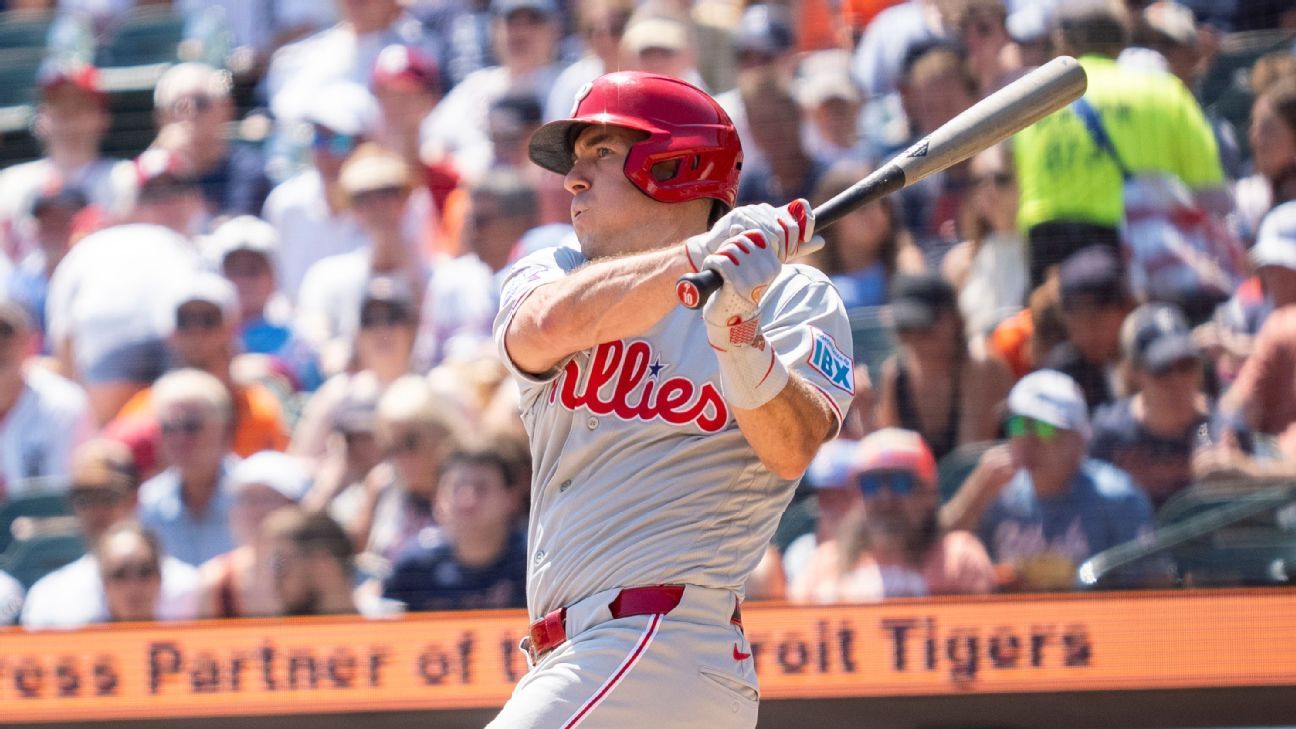
Aaron Nola enters Thursday's matchup against the Mets off a two-start stretch in which he fanned 15 over 12 innings with just two walks. The Mets rank sixth-worst in runs per game league-wide, though their July pace was tightening before the break. From a betting angle, Nola's strikeout prop sits at a narrow margin of safety; the Mets' improved contact discipline erodes his traditional edge. But the real angle isn't Nola—it's his opponent's offensive response. J.T. Realmuto entered the break on a hard-contact tear: 55.6% hard-hit rate over his final four games, with four exit velocities exceeding 100 mph. His seasonal hard-hit sits at 38.9%, meaning the recent surge is material, not noise. The Phillies face immediate schedule relief—Cristopher Sanchez and Zack Wheeler don't start until next week—and Realmuto's elevated exit velo against post-break arms (which historically show lower spin rates and command in their first outings) creates a collision course. Realmuto's batting average and RBI props stand vulnerable to positive variance; the market has tagged him at 14% rostered, which means his over-lines on contact metrics haven't adjusted upward yet.
Caleb Durbin represents a different vector: working with Aaron Judge's hitting coach since June 17, he's posted a .325/.400/.613 slash with five stolen bases since that date. The Red Sox's Friday doubleheader against Tampa Bay compounds his opportunity—extra at-bats, lighter pitching workload per game, and a team desperate for offensive output in a critical series. Durbin's home-run and RBI props should see downward pressure from casual bettors (doubleheader fatigue, cold bats), but his elevated productivity rate and extended playing time actually favor the over side. His absence from major-league rosters until recently means national books haven't fully modeled his new coach-driven skill bump.
On the return horizon, Gavin Lux awaits activation for the Rays after rehabbing left-shoulder inflammation. His multi-position eligibility suits Tampa Bay's roster constraints, and his pre-injury offensive profile was solid. However, activation probability this weekend remains contingent on workload decisions; the Rays won't rush a multi-injury returnee into a crucial series against Boston without live at-bats. His prop lines—if available—will carry compressed availability juice (limited games played risk) until he takes consistent DH or bench reps. The edge here is a fade for now; real volume doesn't arrive until next week at earliest.
The meta-angle: daily-league and week-long formats reward schedule-advantaged teams, but single-game MLB prop markets are still pricing Thursday and Friday as a typical two-game slate. Bettors who target Realmuto and Durbin before the Red Sox-Rays doubleheader tips off Friday are exploiting a gap between volume reality and line construction. The market will correct once box scores land, but early Thursday and Friday morning numbers should still carry edge.