MLB · lineup
Phillies-Braves Game 3: Experience and Pitching Depth Meet Desperation in Winner-Take-All Wild Card
Philadelphia's starting pitching advantage and playoff pedigree face Atlanta's lineup firepower in a single-elimination contest where bullpen depth becomes the hidden variable.
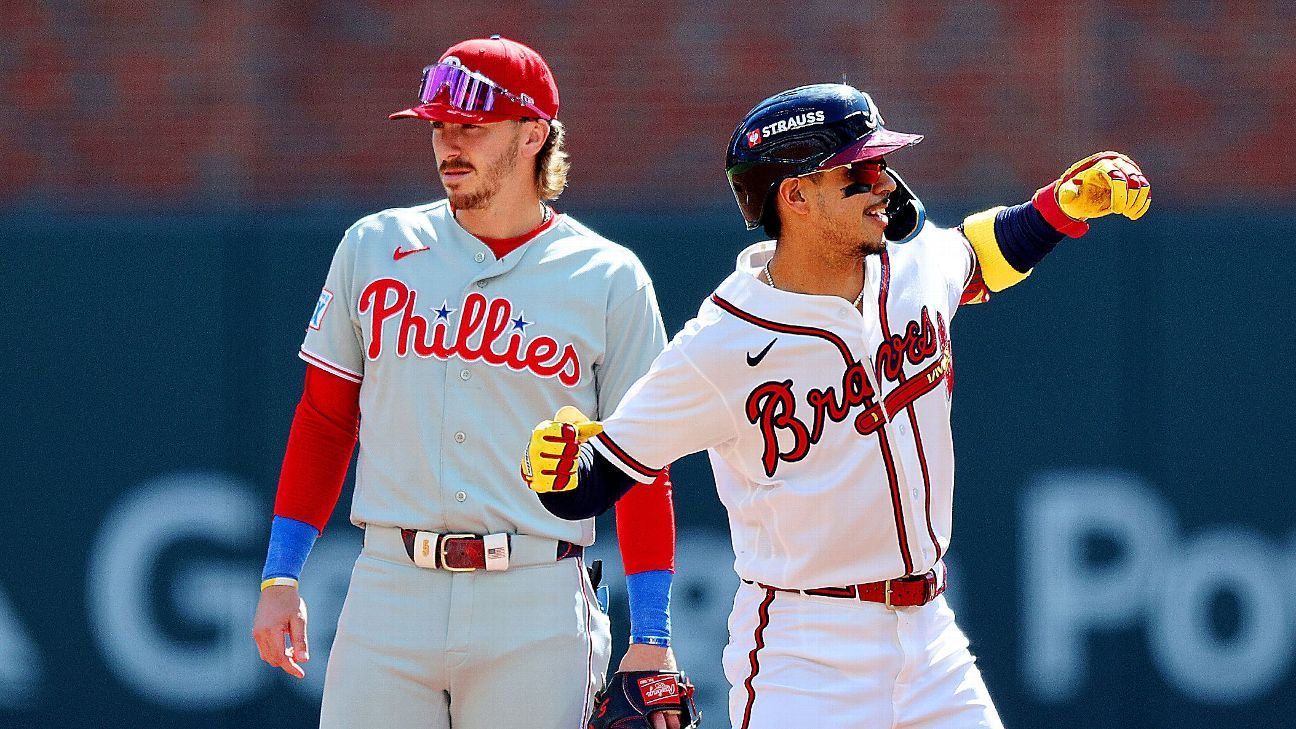
The Phillies and Braves will play the only wild-card elimination game on Thursday after three other series ended in sweeps—the White Sox, Yankees, and Padres all disposed of their opponents in two games. Philadelphia and Atlanta have each won once, forcing a Game 3 decider with a Division Series berth on the line. The matchup hinges on pitcher quality and whether the Braves can manufacture production from a lineup without guaranteed length on the mound.
Philadelphia's edge in Game 3 starting pitching is structural and measurable. The Phillies will deploy a starter with demonstrable recent form, while Atlanta appears likely to go with Grant Holmes in a bullpen-heavy arrangement—a tactical concession that limits their margin for error. Holmes gives the Braves control and workload flexibility, but it surrenders the kind of six-plus-inning anchor that can stabilize a one-game outcome. The Phillies' core, led by Bryce Harper's 40 playoff games in a Phillies uniform, has absorbed multiple postseason pressure situations and responded. That experience matters in dead-ball scenarios; it's the difference between panic adjustments and patient at-bats against relief pitching.
Atlanta's counterweight is lineup talent. Aaron Nola, the Phillies' presumed Game 3 starter, carries a hittability profile notably softer than Cristopher Sanchez or Jesus Luzardo, two of the season's most dominant arms. The Braves scored the kind of late-inning, home-cooked runs in Game 1 that define wild-card memory—and that script can repeat. Their offensive ceiling is real enough to overcome Holmes's innings limitation. The tension between bullpen vulnerability and lineup pop will determine the outcome.
For prop players, the Phillies' Game 3 starter becomes a critical variable in strikeout total construction. If Nola takes the ball, expect his K-rate props to settle below his season average; Atlanta's lineup chases aggressively in tight spots and generates contact that limits strikeout volume. Conversely, the Braves' reliance on Holmes (or a comparable bullpen option) elevates strikeout probability for the entire Phillies lineup if Atlanta's relievers work deeper into the game—a secondary effect that compounds if the Braves fall behind early. Team total overs on Philadelphia carry elevated appeal in this spot: the Phillies' batting order struck at the heart of Atlanta's pitching rotation in Game 2's extra-inning win, and facing relief-heavy pitching across additional innings amplifies their run-generation probability. Atlanta's team total under becomes the contrarian lean if the pitching matchup remains bullpen-centered, as relievers typically suppress offensive rhythm relative to full-game starters.
The experience imbalance also whispers at moneyline construction. The Phillies have anchored themselves in pressure moments before; the Braves are gambling on lineup heroics without traditional starter stability. That's not a guarantee, but it's a measurable architectural flaw that markets may not yet have fully punished. Early money often underweights pitching depth disparities in wild-card games, focusing instead on raw talent. By Thursday's first pitch, sharper closing numbers should reflect the Phillies' structural advantage more accurately than opening lines did.
MLB Intelligence — Baseball intelligence beyond the box score. Open MLB Intelligence →