Judge's Walk-Off Timing Ends Drought at the Plate but Masks a Deeper Yankees Problem
By Justin Erickson ·
Aaron Judge snapped an 11-game power drought with a ninth-inning two-run homer, yet the Yankees' reliance on clutch heroics to win 2-0 games reveals an offense that's struggling to generate consistent run support.
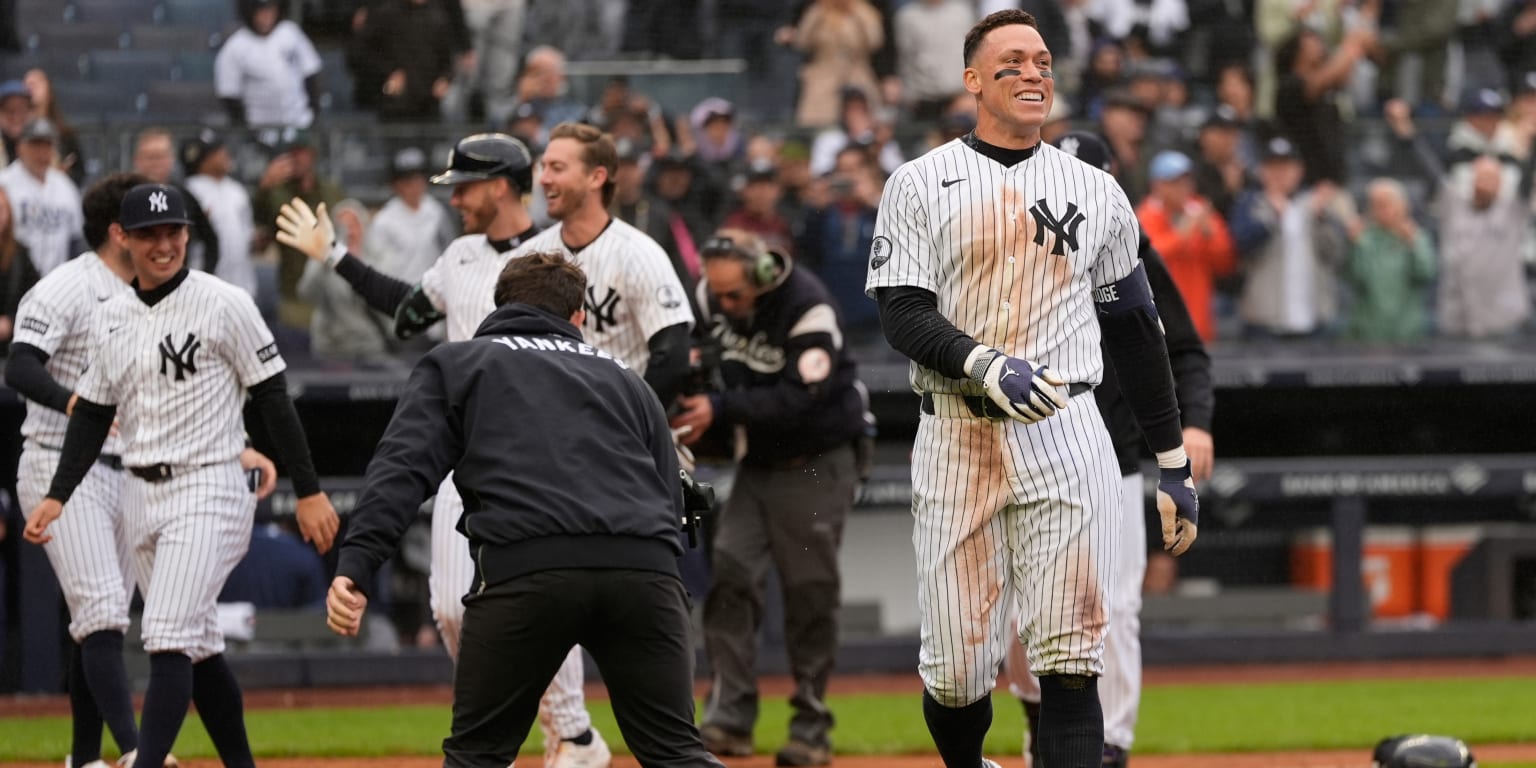
Aaron Judge crushed a two-run walk-off home run off Rays reliever Kevin Kelly in the ninth inning Sunday, ending an 11-game homerless stretch and handing the Yankees a 2-0 victory at Yankee Stadium. It was Judge's fourth career walk-off blast and the eighth walk-off hit of his career—dramatic timing that masks a more troubling narrative for New York's lineup.
The setup tells the real story. Yankees starter Ryan Weathers and Rays right-hander Drew Rasmussen combined for 14 scoreless innings through eight frames. Weathers, in his first season with the Yankees, allowed four hits and three walks while striking out four. The left-hander has now pitched into run-support purgatory five times this season—quality starts that produced wins only because Judge summoned his ninth-inning deus ex machina. Judge entered Sunday 4-for-35, a brutal 11.4% hit rate that extended across his power outage. The homer was clutch; the context is alarming. A team that paid for premium offensive talent shouldn't be winning 2-0 games because one player finally broke out in the ninth.
Rasmussen's performance against New York compounds the issue. The Rays right-hander extended a stunning career split: 0.93 ERA across eight starts against the Yankees, 54 strikeouts and only 10 walks in 48 1/3 innings. Sunday's seven-inning, four-hit effort fits that pattern perfectly. The Yankees generated zero earned runs off a pitcher with a documented weakness against them—a split that suggests either terrible pitch recognition or a systematic inability to sit on elevated fastballs. Judge's walk-off was necessary because the offense couldn't manufacture runs off a pitcher who historically underperforms against New York's lineup.
For prop purposes, this game creates a false comfort. Judge's walk-off will compress his 11-game power drought into a single narrative arc: dormant, then explosive. Books may briefly inflate his home run and slugging props, treating the ninth inning as a reset. But the underlying dynamic—an offense that requires clutch, high-leverage heroics to break through—suggests his odds on team totals and run-production lines should tighten, not expand. If Weathers represents a routine, competent start that still demands a walk-off to produce a win, Judge's individual power metrics are masking team-level inefficiency. His next 4-5 games will likely show elevated strikeout rates and lower on-base opportunities as pitchers attack more aggressively, knowing the Yankees' middle lineup can't generate pressure.
Monitor Judge's at-bat quality in his next 10 games closely. A single walk-off doesn't repair a 4-for-35 slump; it only delays the correction. The market will price the dramatic ninth inning heavily, inflating his next slate of props. The smart angle is fading any uptick in his slugging or team total projections until the broader offense—not Judge alone—demonstrates it can score runs in the first eight innings.