Peralta's Rays Debut at Coors Tests Correctable Mechanics, Not Pure Talent
By Justin Erickson ·
A mid-season trade to Tampa Bay gives the former All-Star a chance to reset his delivery and prove evaluators right about fixable flaws, not broken stuff.
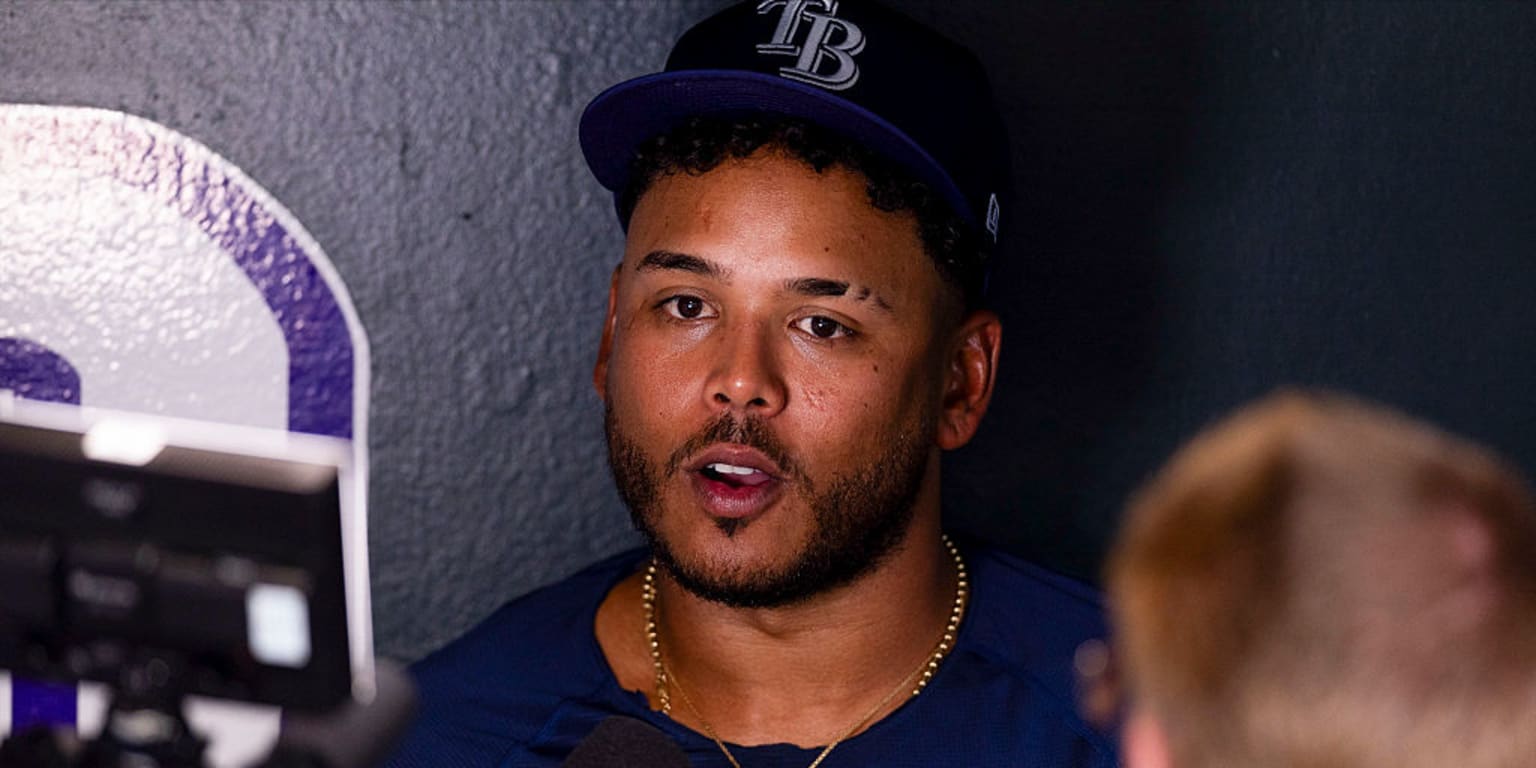
Freddy Peralta takes the mound at Coors Field on Tuesday night in his first start as a Ray, 24 hours after Tampa Bay acquired him from the Mets. The trade represents a vote of confidence in a pitcher whose 2026 season collapsed despite a dominant 2025—a gap wide enough that rival scouts attributed his struggles to mechanical drift rather than talent erosion. Peralta finished last season fifth in NL Cy Young voting with a sub-3.00 ERA and dominant strikeout rates. This year, pitching for New York, he compiled a 5-9 record with a 4.99 ERA across 22 starts, posting negative WAR. The culprit, per evaluator consensus: his arm angle dropped from 38 degrees to 33 degrees, rippling through his delivery and extension. It's correctable. It's also, for a 30-year-old entering the final two months of his contract year, a confidence test wrapped in a mechanical one.
Tampa Bay's pitching infrastructure—Kyle Snyder at coach, Erik Neander running the front office, a track record of extracting performance from reclamation projects—structures the narrative as a reset rather than a gamble. The Rays sacrificed meaningful prospect capital to land Peralta, suggesting they've already separated signal from noise. Peralta himself acknowledged he underperformed with the Mets but declined to ruminate on what went wrong, instead emphasizing his preparation and self-belief. "I know who I really am," he said. That clarity matters. Pitchers who internalize mechanical blame rather than talent doubt tend to respond faster to coaching adjustment.
Coors Field is the worst possible laboratory for testing Peralta's arm-angle correction, which compounds the pressure. The ball carries at elevation, strikeout rates compress, and contact quality punishes extension loss more severely than at sea level. If Peralta locates through a tighter plane despite the home-run winds, it signals genuine mechanical progress. If he gets hammered—predictable at Coors for a pitcher mid-adjustment—the market will overweight the venue and underprice his outlook for the 20-game stretch ahead in more neutral environments.
For bettors, Peralta's strikeout total becomes the fulcrum of his Rays-debut prop slate. His 2025 mark: 10.2 K/9 with the Brewers. His 2026 mark with the Mets: 9.1 K/9—a real decline tied to arm slot and extension loss. At Coors, books will price his strikeout prop tighter than usual (likely 5.5 to 6.5 Ks across 5–6 innings depending on the book's projection), already discounting the elevation effect. The edge lies in whether Snyder's early work with Peralta has restored his arm slot closer to the 2025 baseline. If it has, Peralta's strikeout rate should settle around 9.8–10.0 K/9 by month's end, making tonight a volatile data point in a longer sample. Fade the strikeout under on debut; the Coors variance is real, but Peralta's stuff hasn't abandoned him. The mechanical fix, not a talent crisis, is what the Mets missed. The Rays are betting on the difference.