Painter's Hamstring Exit Tests Phillies' Rotation Depth Just When Dombrowski Said It Couldn't
By Justin Erickson ·
Andrew Painter lasted four innings Wednesday before hamstring tightness forced an early exit, exposing the exact vulnerability Philadelphia's front office downplayed at the Trade Deadline.
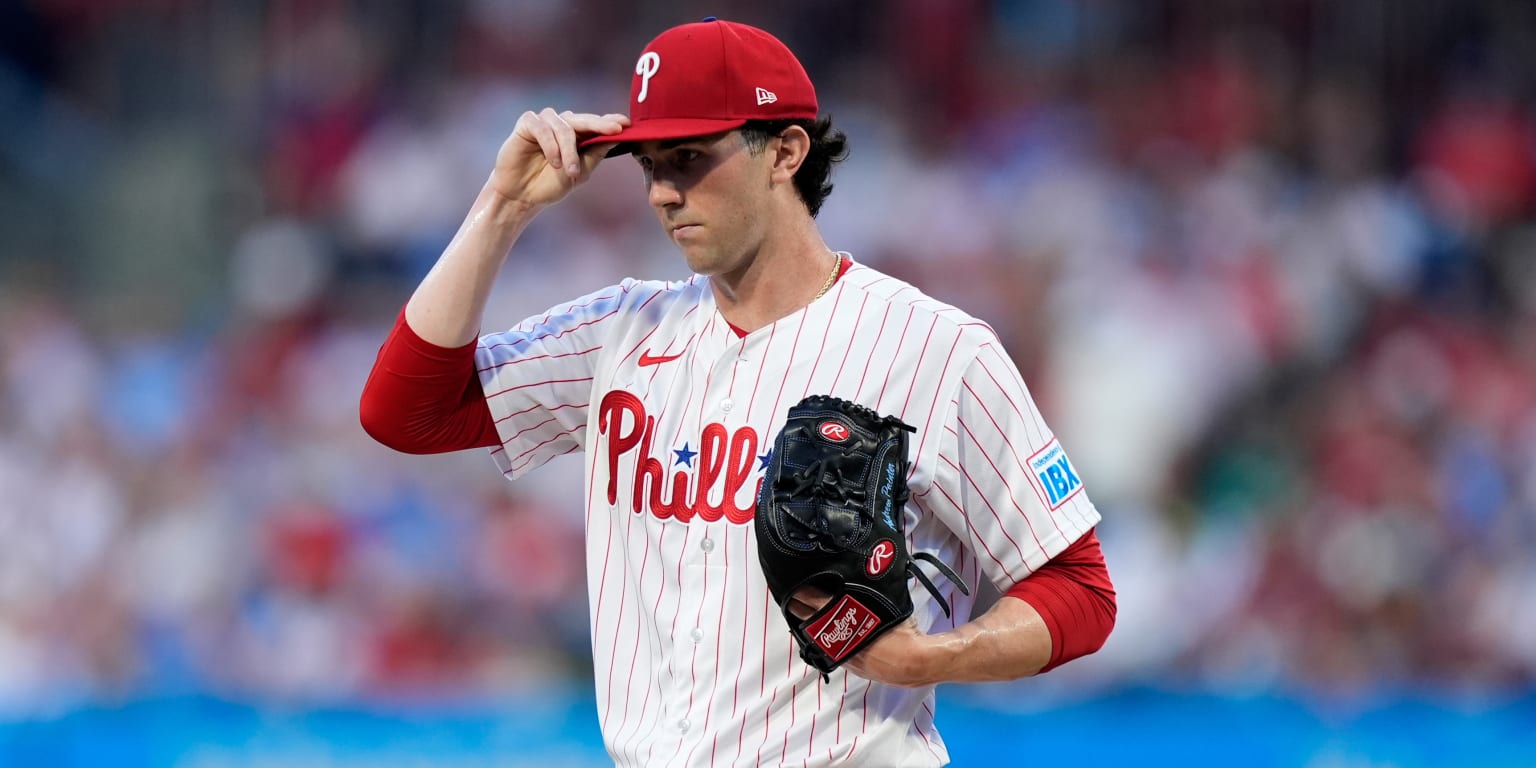
Andrew Painter exited the Phillies' Wednesday night game against Washington after four innings with left hamstring tightness, departing in the fifth inning when Tim Mayza took over. The rookie right-hander had been sharp through his opening four frames—one run allowed, three hits, four strikeouts, eight of nine retired to close the inning—before the injury cut short what looked like a second consecutive solid outing. The timing couldn't be worse for a rotation already operating on borrowed health.
The injury likely occurred during the first inning when Painter's foot stuck awkwardly as he spun off the mound after striking out Nationals left fielder Daylen Lile on a 96 mph fastball. Catcher J.T. Realmuto checked on him immediately, but Painter battled through three more innings before the hamstring pulled him out. His velocity dipped noticeably—averaging 95.6 mph on his four-seam fastball versus his 96.6 mph season mark—a telltale sign something was mechanically compromised. This is Painter's second start since the Phillies recalled him from Triple-A just days before the Trade Deadline; he'd spent six weeks in the minors after his June demotion, when a 7.06 ERA through 14 early-career starts dropped him out of the rotation entirely.
Philadelphia president of baseball operations Dave Dombrowski publicly stated confidence in the rotation's postseason readiness, noting the team didn't need to pursue a high-impact starting pitcher acquisition at the Deadline because Painter and the group were "in really solid shape" if healthy. The caveat matters now more than it did Tuesday. The Phillies patched the fifth starter spot during Painter's minor-league absence using Alan Rangel and Brian Keller, often fronted by an opener—a contingency plan that works fine during the regular season but becomes a liability in October. A hamstring injury to a young pitcher carries inherent uncertainty: Painter could miss his next turn or miss two weeks depending on severity and how the Phillies choose to manage it. Either way, the margin for error on a rotation that Dombrowski himself said was viable only if "all five starters stay healthy" just evaporated.
For betting purposes, Phillies starting-pitcher starters lines should face immediate compression. If Painter is unavailable for his next turn (scheduled roughly eight days out), expect either Rangel or Keller to slot into that spot against a likely inferior opponent. Pitcher strikeout props tighten in value when replacement-level arms replace upper-tier talent; the replacement pitcher will generate fewer strikeouts and face shorter outing lengths. Conversely, team-total unders gain appeal if the Phillies' run-generation shifts to offset subpar starts from lesser arms. The moneyline impact depends on matchup and opponent quality, but a front-office contingency plan moving from hypothetical to active is a real rotational vulnerability bettors will price as soon as the Phillies confirm Painter's absence window.