The Peralta Deadline Sprint: How a Seller's Market Reshapes NL West Pitching Leverage
By Justin Erickson ·
With the Padres and Diamondbacks now officially scouting Freddy Peralta, the Mets' right-hander has become a three-team NL West chase—and that competitive interest directly tilts the leverage equation for contenders shopping at the deadline.
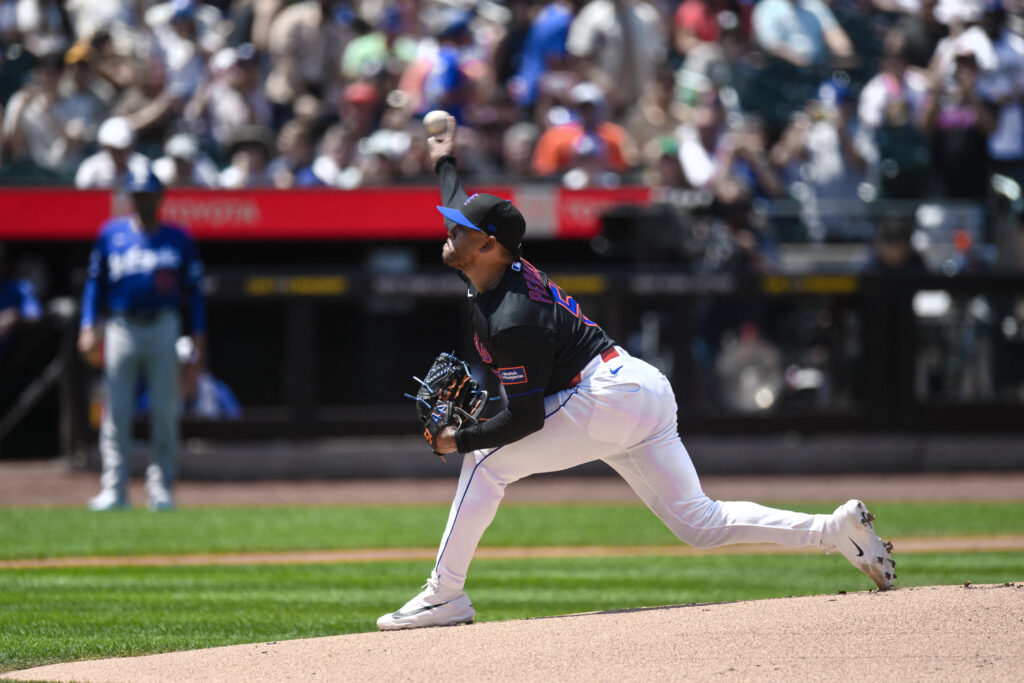
The Mets' Freddy Peralta has moved from speculation to active scouting assignment. Both the San Diego Padres and Arizona Diamondbacks had representatives at Citi Field on Sunday to watch the right-hander face the Dodgers, per reports from The Athletic. That adds two heavyweight regional rivals to an already crowded buyer list that includes the Rays, Brewers, and Phillies—each with their own deadline windows and payroll flexibility.
This isn't noise. Multi-team pursuit, especially within a single division, accelerates the price floor in any deadline deal. The Mets front office now holds chips it didn't have 72 hours ago: two NL West competitors actively bidding, which means the cost to land Peralta jumps for every other suitor. The Padres, in the thick of a Wild Card race and desperate for rotation depth, can't ignore Diamondbacks interest. Arizona, sitting 4.5 games back in the West and with legitimate October odds, won't be outbid by San Diego without friction. That tension benefits the Mets' negotiating posture considerably. The Rays and Brewers, meanwhile, operate from a position of reduced leverage—if Peralta ends up staying in the division, either the Padres or D-backs can absorb his salary and swap prospects with less pain than an out-of-division trade partner.
Peralta's performance profile makes him a legitimate starter prize, not a ceiling-raiser for a last-place team. His strikeout rate and velocity command position him as a 2-3 starter on a contender's playoff roster, not a fourth or fifth arm. That ceiling value matters in a thin market: there aren't five other "Peralta-tier" arms available at the deadline this year. Supply scarcity + intra-division demand + genuine October utility = a dramatically higher asking price than the market implied two weeks ago.
For bettors tracking playoff rotations and team total volatility, this matters directly. If Peralta lands in San Diego, the Padres' team total and run-line leverage shift meaningfully—a top-three starter entering a suddenly deeper rotation buoys both. The Diamondbacks face a similar calculus: adding Peralta stabilizes their playoff pitching on a team whose rotation depth has been uneven. The bidding intensity itself is a tell: both teams see Peralta as a missing piece, not a luxury add. When organizations commit scouts and negotiate earnestly, they've already priced him into their playoff ceiling. The market hasn't fully baked in either the likelihood of Peralta moving or which West contender lands him—that's where the prop sensitivity lives. Rotation anchors move the needle on playoff run probability, and run probability moves team totals and moneyline pricing.