Orioles Lock in Bradish Through 2031: Stability Signals Pitching Depth for Contention Window
By Justin Erickson ·
Baltimore's five-year, $90 million extension to Kyle Bradish removes injury volatility from a core starter and anchors postseason rotation planning through the decade.
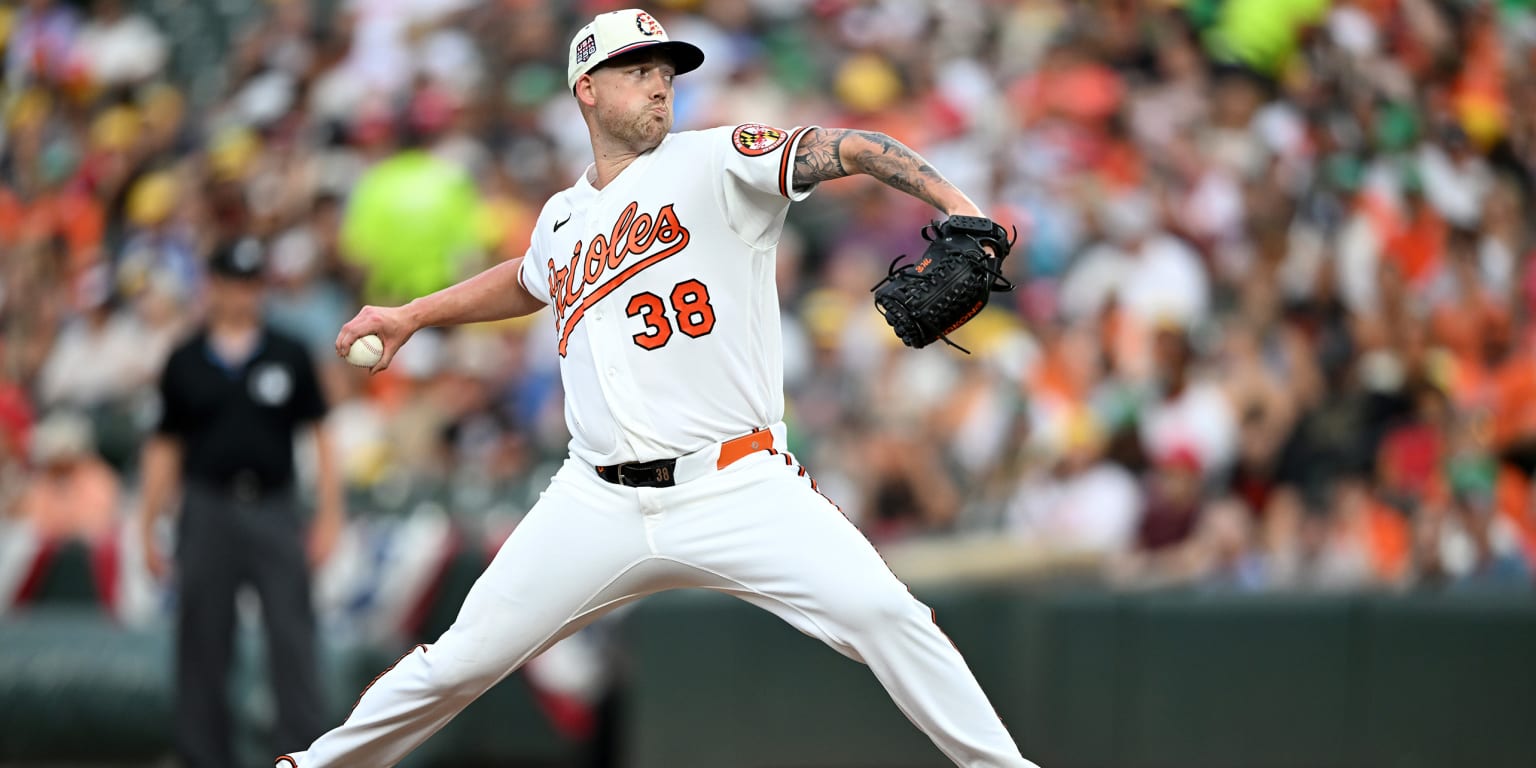
The Orioles announced a five-year, $90 million contract extension with right-hander Kyle Bradish covering the 2027–31 seasons, locking in the 29-year-old for the prime years of the franchise's current contention window. The deal—structure covering years when Bradish will be 31–35—reflects Baltimore's confidence in his durability after he missed much of 2024 and 2025 with shoulder injuries that threatened to derail an otherwise promising trajectory. By removing the arbitration lottery and injury-driven uncertainty, the Orioles signal they view Bradish as a cornerstone rotation piece rather than a depth gamble.
Bradish's recent performance justifies the commitment. In 2023, he finished fourth in AL Cy Young voting after posting a 2.83 ERA—the best by an Oriole since Mike Mussina in 1992—while anchoring a 101-win team. Among pitchers with at least 300 innings pitched since 2023, he ranks 11th in ERA at 3.03, positioning him squarely in the upper-echelon starter tier. This season, despite the shoulder complications limiting his innings, he's maintained a 3.61 ERA across 19 starts with 106 strikeouts in 107.1 innings, evidence that his stuff remains intact once healthy. His career 485 strikeouts in just 86 starts (all with Baltimore) underscore the high-leverage ceiling the organization is backing.
For wagering purposes, Bradish's health status becomes the key variable. The extension eliminates future trade-deadline scenarios where an Orioles rebuilding moment might force his sale; Baltimore is now institutionally committed to running him out in October. That commitment—combined with the team's stated ownership focus on sustained contention—should move the needle on Orioles postseason equity. If Bradish pitches 150+ innings in 2026 and stays healthy into the playoffs, the Orioles' rotation depth in elimination games strengthens considerably. Conversely, a repeat shoulder flare-up would expose the deal as premature, capping his innings and forcing Baltimore to lean harder on secondary starters in the postseason.
The contract's financial profile ($18 million average annual value) sits below market for a front-line starter, partly because Bradish absorbed the injury risk and partly because Baltimore's payroll constraints limited the premium the team could offer. That discount underscores what the market may have already priced: namely, that Bradish's injury history introduces durability risk that offsets his 3.03 ERA foundation. Bettors pricing Orioles rotation depth or team postseason odds should weight Bradish's actual availability (health logs, workload management) rather than his nominal salary commitment. A healthy Bradish pitching in 25+ games lowers team totals and improves playoff moneyline value; an injured or usage-limited version shifts those edges to the fade.