MLB
Olson's Clutch Power Rescues Braves in Series Finale; Elder's Durability Remains Key
Matt Olson's seventh-inning three-run homer halted a dangerous Arizona rally and extended his MLB-leading extra-base hit pace, but Atlanta's path to October hinges on whether Bryce Elder can sustain his workload despite ongoing knee management.
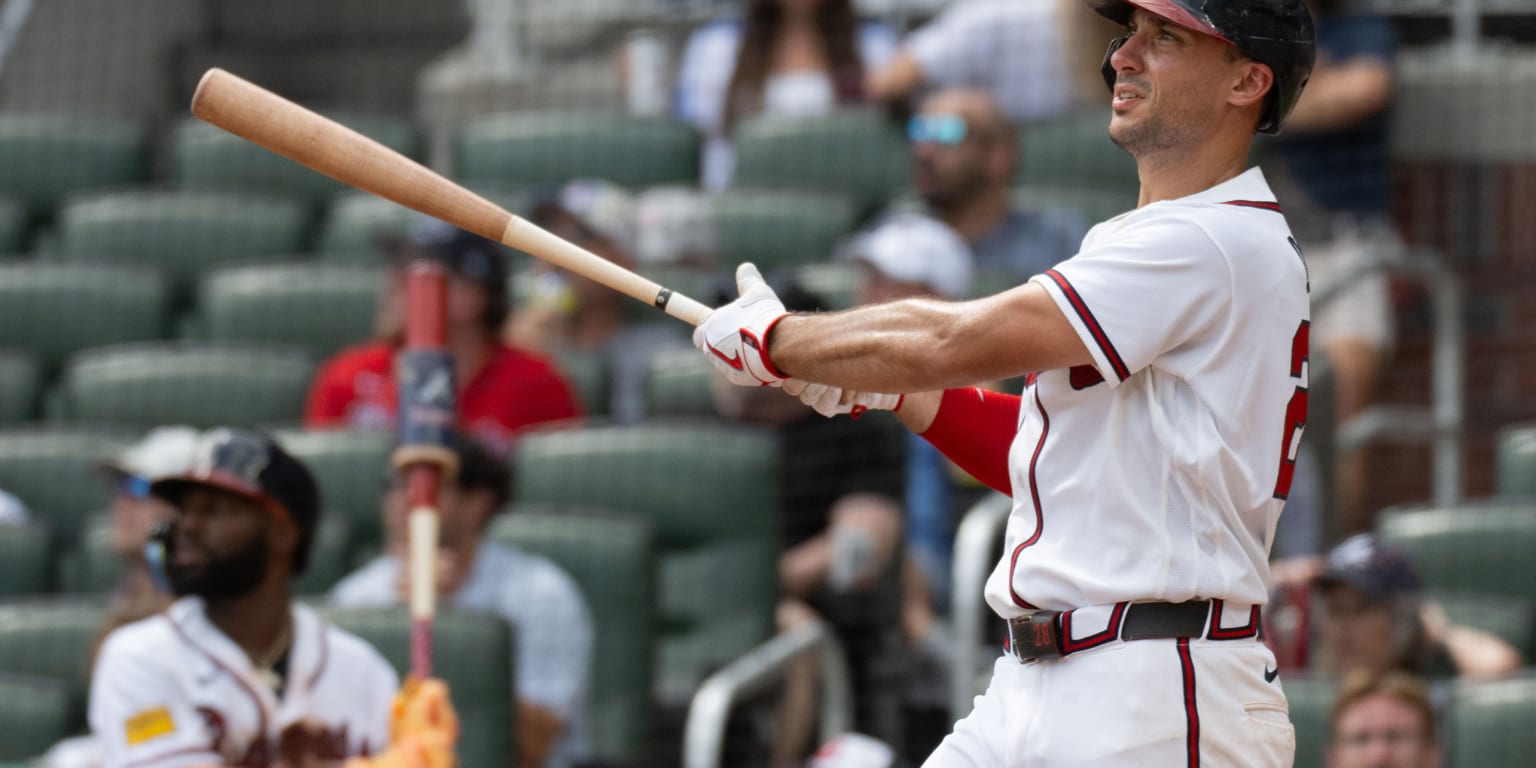
Matt Olson swung on a 3-0 count against reliever Brandyn Garcia on Sunday and drove a 95.8 mph sinker into the center-field tunnel at Truist Park, a three-run blast that proved the difference in Atlanta's 5-3 win over Arizona and prevented a second consecutive home-series sweep against the Diamondbacks. The 36th homer of his season ties him for the NL lead in extra-base hits with 66 total—a statistic that reflects both the volume of his hits and their leverage. Olson is now chasing his third 30-home-run season and second with the Braves, placing him in rare company among franchise history: only Austin Riley and Ozzie Albies have recorded the feat more than once in an Atlanta uniform.
Manager Walt Weiss offered a telling observation after the game: roughly half of Olson's home runs have either tied games or given the Braves the lead. That's not accidental variance—it speaks to Olson's ability to deliver in high-leverage at-bats, a trait that compounds his regular counting value. Since joining Atlanta before the 2022 season, Olson's 367 extra-base hits lead the National League, a three-year stretch that has made him the franchise's most valuable power hitter. Against that backdrop, his continued health and lineup consistency become central to any postseason calculation.
Breyce Elder's performance Sunday—six innings, one run allowed, 75 pitches—was efficient but shadowed by durability concerns. The Braves' innings leader at 137⅔ pitched through left-side knee discomfort that Weiss characterized as manageable but present. Elder is chasing a 10-win season for the first time since his 2023 All-Star campaign (12-4 record), and every start he remains healthy pushes Atlanta's rotation depth closer to October readiness. His velocity was noticeably down Sunday, yet his command held; he struck out five with just one walk. Weiss explicitly cited the knee concern as the reason Elder did not pitch the seventh, opting instead to hand the ball to Didier Fuentes—who promptly coughed up a tie-breaking solo shot to Ildemaro Vargas.
For prop purposes, Olson's leverage profile makes him a live candidate for high-contact, go-ahead at-bat situations as the Braves enter the final weeks of the regular season. His home run rate sits at roughly one per 10.8 at-bats over the past 60 games, placing him among the league's most consistent power producers. More specifically, his 3-0 count aggression reflects both a disciplined hitter who recognizes pitcher vulnerability and a lineup with enough depth that opposing bullpens are forced into high-leverage spots early. Betting his homers over the next two weeks should factor in the leverage skew—Atlanta's need to win games down the stretch means more close contests and more plate appearances with runners in scoring position, the exact context where Olson delivers. His prop line for home runs will likely reflect recent surface-level production; the edge lies in recognizing that his highest-impact homers cluster in tight games, not blowouts, and September baseball will deliver no shortage of those.
Elder's knee situation carries inverse implications for Braves team totals and first-five innings betting. If Weiss continues to protect his star pitcher by limiting late-inning exposure, Atlanta's bullpen absorbs more high-leverage spots and innings totals shift down. Conversely, Elder's presence in the rotation—even at reduced velocity—remains a stabilizing force for Atlanta's ceiling. Monitor his workload game-to-game; a sudden skip in the rotation or shortened appearance should immediately trigger caution on Braves overs for the affected series, as it signals either escalating injury or load management heading toward playoffs.
MLB Intelligence — Baseball intelligence beyond the box score. Open MLB Intelligence →