Carrigg's Debut Triple Signals Rockies' Willingness to Play Young, Aggressive Baseball
By Justin Erickson ·
The Rockies' 24-year-old prospect turned a routine single into a sprint to third in his first MLB game, offering a glimpse of the athletic upside Colorado is banking on to reverse its recent trajectory.
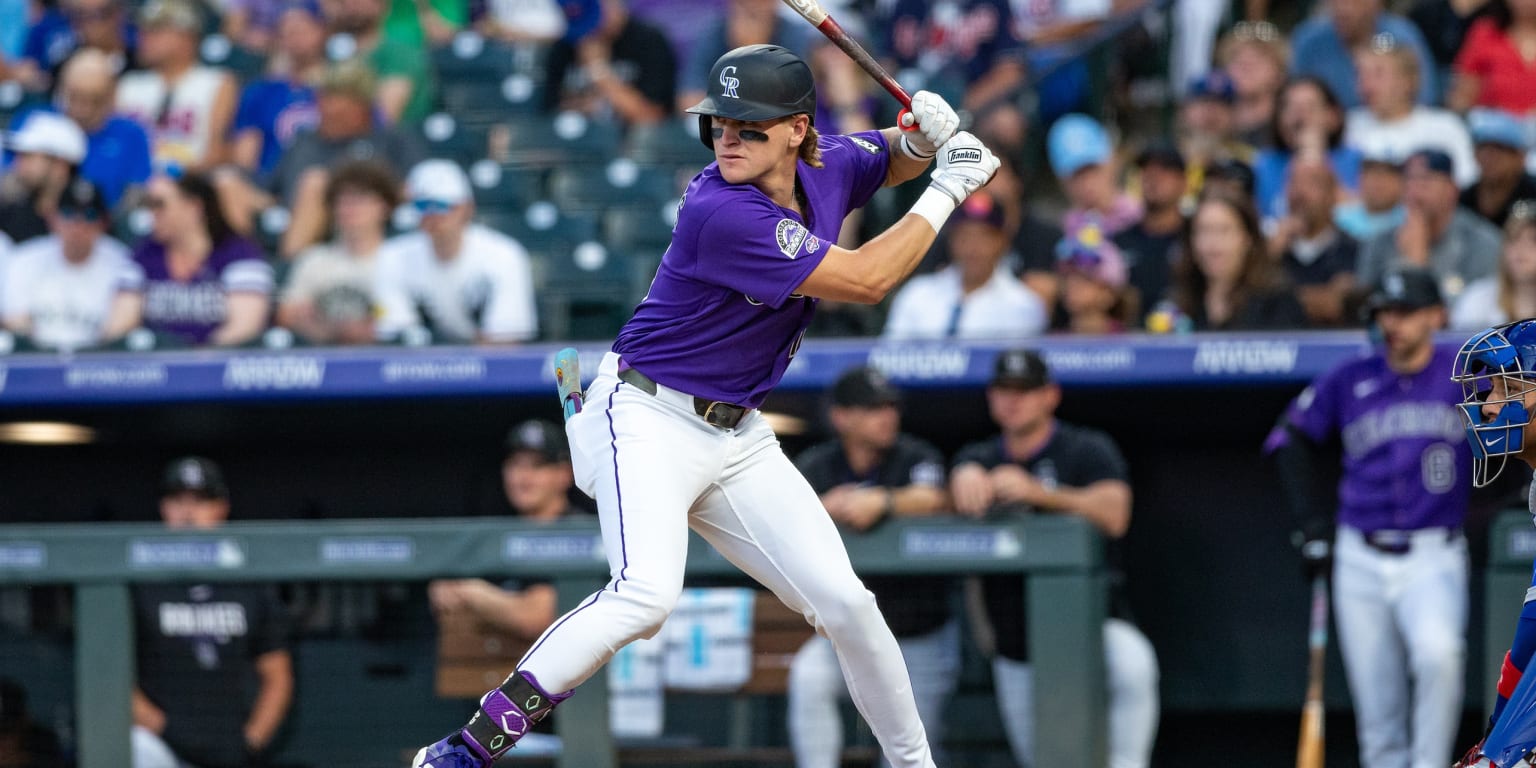
Cole Carrigg arrived at Coors Field on Tuesday night as a prospect with measurables, not a name. The Rockies' No. 6 ranked prospect, drafted 65th overall in 2023, had proven he could generate plus-plus exit velocity in minor league competition—but debut performances in Denver have a way of humbling the most tooled-up players. Instead, Carrigg's first hit became his first highlight: a fifth-inning ground ball that bounced past first base and into the right-field corner, which he turned into a triple in 11.26 seconds. That time ranked fourth-fastest among Rockies triples this season and 12th-fastest across the majors, a reflection of the kind of elite athleticism that convinced Colorado to invest a pick in his profile at the draft.
What matters most about Carrigg's performance, though, is not the individual sprint but what it says about the Rockies' tolerance for offensive variance at this stage of their rebuild. A player who throws 100-plus mph from multiple infield and outfield positions doesn't typically play timid baseball. Carrigg took the aggressive route to third on a play most young hitters would have conservatively held at second, and the Rockies scored him shortly after on Kyle Karros' fielder's-choice grounder in a 7-3 win over the Cubs. That kind of baserunning initiative—not just speed, but the will to use it—has been absent from recent Colorado rosters that have lacked both talent depth and the confidence to take calculated risks.
For betting purposes, Carrigg's debut creates a two-layer consideration. First, the noise floor: one triple in one game against one pitcher does not establish a sustainable edge on any prop. Cubs starter Colin Rea gave up the ball in a single at-bat; that's tabloid fodder, not a pattern. However, the underlying architecture matters. If the Rockies are committing to a younger roster that trades defensive reliability for athletic upside and baserunning aggression, that affects how Colorado's team total should be valued in the short term. Young, athletic lineups that play loose tend to manufacture runs beyond their underlying offensive metrics—they leg out extra bases, take chances on the basepaths, and occasionally convert weak contact into scoring position. Conversely, they also strike out more, swing-and-miss at pitches in the zone, and leave runners stranded with more frequency. The variance cuts both directions.
For now, Carrigg's presence on the active roster is a single data point that suggests the Rockies will lean into speed and aggression when lineup construction permits. If he becomes a regular, and if the team continues to load the bottom of the order with young toolsy players rather than defensive specialists, Rockies team totals could track slightly higher than market-neutral projections in specific matchups—particularly against pitching staffs with below-average strikeout rates and slower runners on their own bases. The edge here is not immediate or universal; it's conditional on Carrigg proving he can repeat the approach and stay healthy, and on the Rockies' sustained commitment to the young-and-fast philosophy. A single brilliant debut does not rewrite a team's trajectory, but it does announce the direction they intend to head.