Gabriel Hughes Debuts for Colorado: Process Over Performance Is the Real Test
By Justin Erickson ·
The Rockies' 2022 first-rounder is called up after Tommy John recovery and a left oblique setback, but his willingness to ignore surface stats may matter more than his fastball for long-term sustainability.
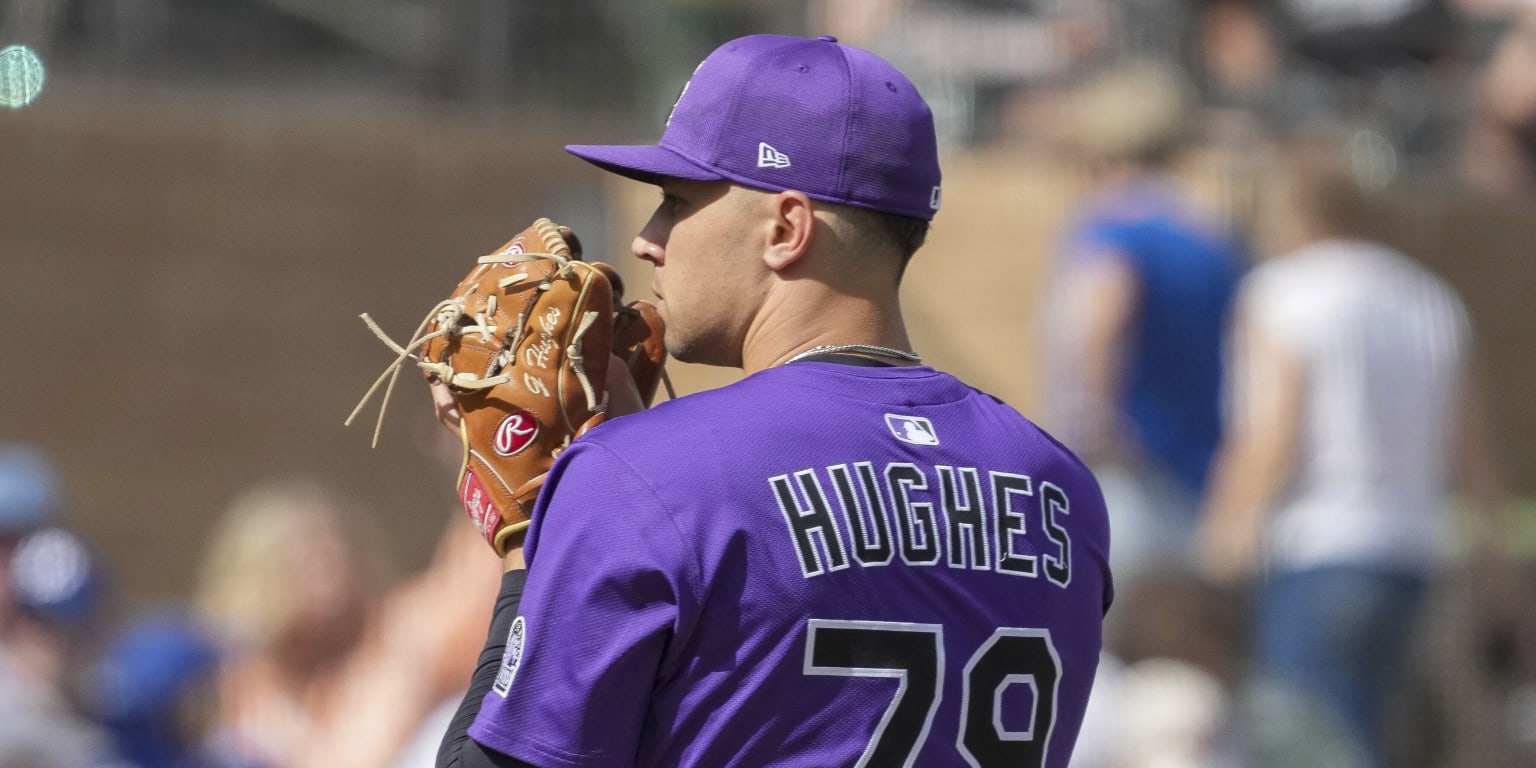
Gabriel Hughes is in a Colorado Rockies uniform now. The right-hander, the team's top 2022 pick and MLB Pipeline's No. 16 prospect, was called up Wednesday after three starts back in Triple-A Albuquerque following a left oblique injury. The headline numbers—16 strikeouts in 15 2/3 innings, zero runs allowed—read like a prospect ready to impose. The actual story is more measured, and more interesting.
Hughes has spent the better part of four years rebuilding. A Tommy John surgery in 2023 cost him velocity that scouts once drooled over at Gonzaga. An early-season oblique strain interrupted his 2026 comeback arc. What the setbacks have given him, paradoxically, is clarity. When he returned to Triple-A, Hughes threw two games that produced clean results but sloppy execution—low first-pitch-strike rates, predictable counts, outcomes that masked mediocre sequencing. Rather than lean into the superficial success, he flagged his own process. This matters because surface performance at the minor-league level—especially over a three-start window—is high-variance noise. Execution rate (first-pitch strikes at 70-71 percent, attack-zone discipline on two-strike counts) is the structural indicator that translates to the majors.
The Rockies' investment in expanded pitching information and Hughes's partnership with mental skills coach Brian Cain suggest the organization is building for sustainability rather than the short-term pop. His most recent start—six scoreless innings, six strikeouts, 93.2 mph average on his four-seam fastball—showed health and consistency without requiring a return to pre-surgery velocity. At 24, turning 25 on August 22, Hughes is not raw. He is not a velocity chalker chasing his old self. He is a pitcher constructing a repeatable game.
For betting purposes, Hughes's strikeout prop becomes relevant only if he gets extended run in the rotation, and that calculus depends on whether Colorado views him as a 2026 developmental asset or an in-season contributor. Triple-A strikeout rates inflated by limited exposure (16 K in 15 2/3 IP against AAA hitters) will compress sharply in the majors. His actual swing-and-miss rate—built on execution, not just stuff—is the floor. If Hughes opens with spot starts or relief usage, K-line props should be avoided entirely; the sample is too small. If he slots into the rotation long-term, his ability to maintain 70-percent-plus first-pitch-strike rate against MLB hitters becomes the binding constraint. Process-focused prospects who ignore surface variance tend to sustain better than velocity-dependent arms, especially post-injury. Watch his first two starts for command consistency, not strikeout totals.
The Rockies are betting on a pitcher who learned to ignore his own numbers. The market should do the same.