Cholowsky's Early Pro Success Signals a Patient Approach to Prospect Development
By Justin Erickson ·
The White Sox's No. 1 pick delivers a two-RBI double in his second professional game, but the real story is what his controlled swing path says about his long-term hit-tool projection.
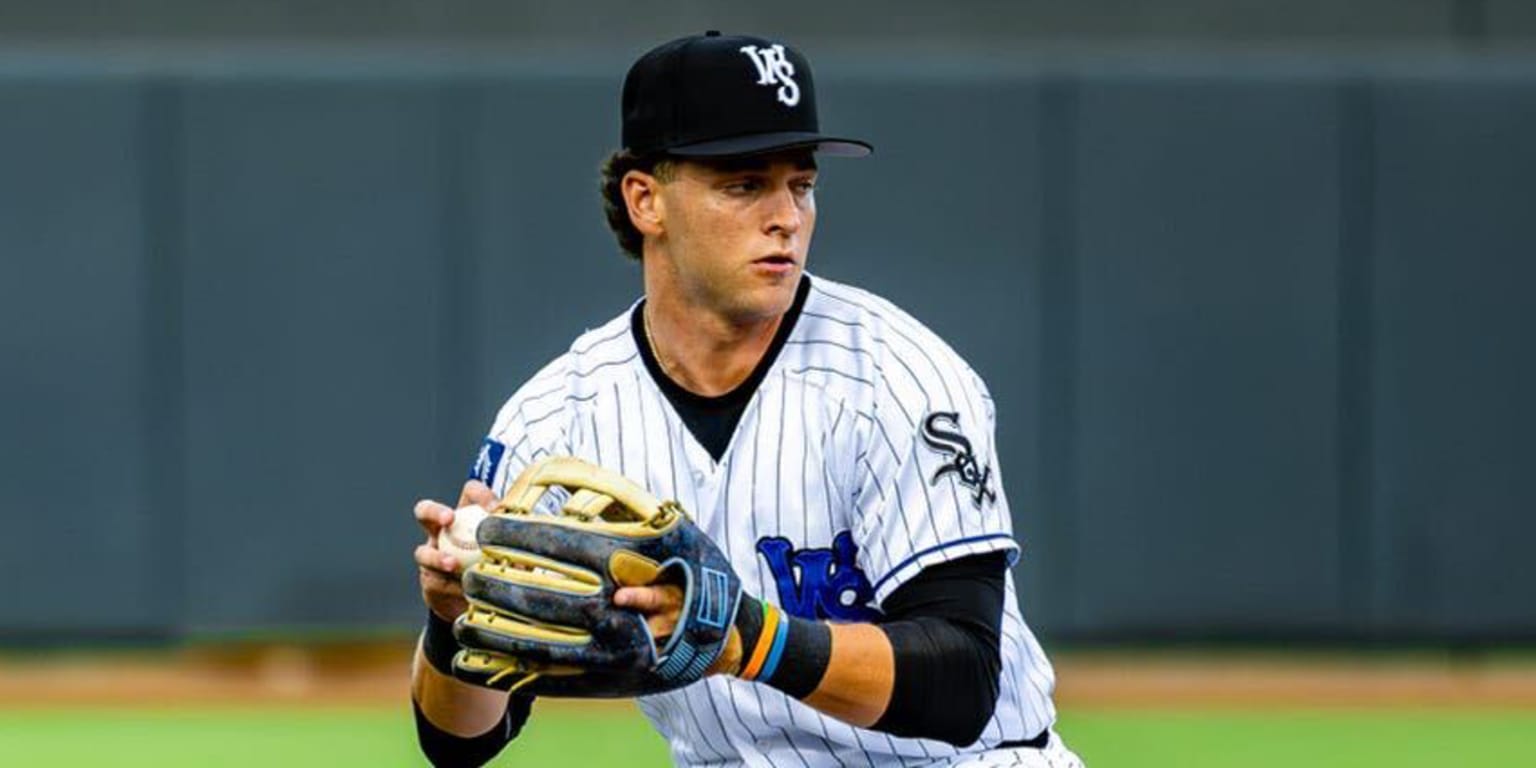
Roch Cholowsky collected his first professional hit on Wednesday in High-A Winston-Salem's 7-4 win over Asheville—an RBI double that also accounted for a second run via an error-induced ground ball in the third inning. In just his second game as a pro, the 21-year-old UCLA product already showed the barrel control that made him the consensus top shortstop prospect entering the 2026 Draft. The headline moment is clean: first hit, two RBIs, no strikeouts in four at-bats. What matters more is the mechanism behind it.
Cholowsky's college profile reads like a hitter who doesn't need to chase to create damage. Over three seasons at UCLA, he slashed .329/.448/.624 with a 1.086 OPS during his final year, ranking fifth in the SEC. His four tools graded 60 or above pre-Draft, with a 70-grade pull-side raw power assessment—elite bat control paired with legitimate thump. He doesn't whiff or chase often, a trait that compounds when scouts project him as a plus defender at short. The 2026 prospect rankings haven't fully integrated the draft class yet, but his profile suggests he'll rank among the White Sox's top three prospects on mechanical grounds alone: he finds the barrel consistently, doesn't expand the zone, and has the athleticism to impact games on both sides.
The second at-bat—the error-induced RBI with bases loaded—matters less than it appears. Cholowsky didn't barrel that one; he hit a ground ball to the left side that Xavier Neyens misplayed. In minor league betting or prospect-production props, you're always fighting a noise problem: errors, ballpark dimensions, relief pitchers facing tired defenses. The double off Astros prospect Adam Shoemaker, though, is the high-signal event. Cholowsky put a ground ball up the middle off a breaking ball, and the swing path was clean enough to thread the outfield. That's repeatable.
For bettors tracking White Sox minor league affiliates or prospect-pool health, the takeaway is architectural rather than tactical. Cholowsky's approach—walk rate support, low strikeout rate, contact-heavy at-bats—suggests he's a long-term compounding asset, not a boom-or-bust swing profile. If you're modeling White Sox organizational depth or weighing long-term team-total win projections that factor in prospect acceleration timelines, Cholowsky's patient, controlled early tape reinforces that the front office's top-of-the-order rebuild can lean on internal development rather than relying on external free-agent volatility. His two-RBI night is a single-game event; his refusal to chase is a multi-year signal.