Herz Returns After 23 Months: Washington's Rotation Gamble Enters Live Testing
By Justin Erickson ·
The Nationals activate their young left-hander for the first time since September 2024, carrying injury risk and innings-limit constraints into stretch-run starts.
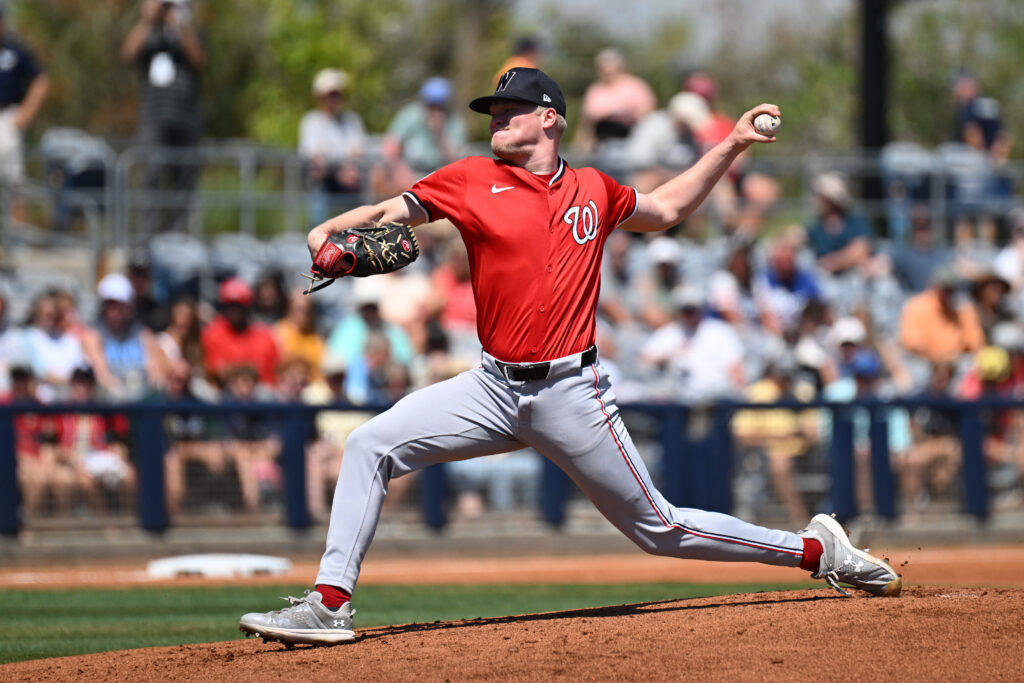
DJ Herz takes the mound Monday against Detroit for the first time in 23 months, marking the culmination of a brutal recovery arc that consumed his entire 2025 season and nearly derailed his 2026 arc as well. The 23-year-old left-hander last pitched on September 25, 2024—a five-inning outing in a Nationals loss to Kansas City—before a spring training UCL sprain forced Tommy John surgery. A flexor strain during his minor league rehab assignment this summer created another obstacle, but Herz has since completed seven more rehab appearances, posting a 4.00 ERA across 18 innings with his most recent outing yielding 4⅓ innings on a 65-pitch budget.
Herz's rookie 2024 was genuinely promising: 4.16 ERA, 27.7% strikeout rate, 9.4% walk rate across 88⅔ innings suggested a usable fourth or fifth starter in a rebuild. But two-year injury absences flatten prospect trajectories, and the longer the layoff, the steeper the volatility in early-season performance. The Nationals are managing his Monday workload with a similar pitch cap—expect 60-70 pitches max—meaning he'll likely exit after four innings regardless of performance. That's not a traditional starter's load, and any aggressive deployment before season's end is gambling with a pitcher who just cleared major surgery and secondary soft-tissue damage.
The strikeout profile is what caught Washington's original attention: a 27.7% K-rate as a 22-year-old rookie is franchise-building material. But two years away from competition, even in a controlled rehab setting, introduces real uncertainty about whether he'll replicate that swing-and-miss stuff immediately or need several weeks to fully rebuild velocity and feel. His 2024 walk rate (9.4%) was also clean, suggesting command wasn't the issue—but command often takes longer to restore than velocity after UCL reconstruction.
For bettors, Herz represents a classic uncertainty tax. The Nationals will face temptation to lean on him down the stretch if he stays healthy, but his 60-70 pitch cap on Monday and likely similar constraints in his next start mean traditional pitcher props (strikeout lines, ERA) are largely useless. The real angle sits with team totals and run-line bets: Washington will face both offensive and pitching uncertainty with a pitch-limited, newly-activated arm making his first real test since 2024. If the Tigers' lineup exploits the early-return moment—which teams often do against returning arms—the Nationals' underdog positioning Monday night could worsen. Conversely, if Herz executes through his limited innings, the narrative shifts toward the Nationals' ability to survive the stretch run with a functional rotation, which could tighten lines in their favor for the final 10 games. Neither direction is a bankable edge; instead, this is a volatility flag. Wait for his Monday performance before committing capital to Nationals totals or run lines.