MLB
Nationals Shift Abrams to Second Base: What It Means for His Offensive Profile
Washington demotes its star shortstop to second base, a positional move that signals both organizational concern and potential opportunity for fantasy and prop bettors.
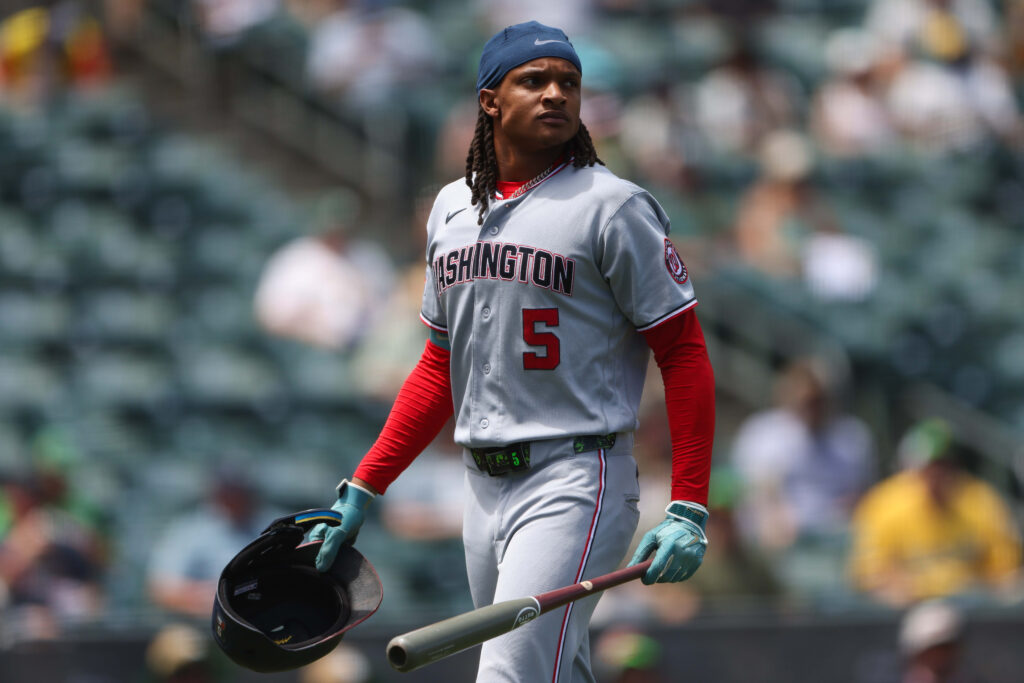
CJ Abrams is moving from shortstop to second base, effective immediately in the Nationals' lineup. Manager Blake Butera confirmed the shift to reporters, indicating that Nasim Nuñez will take over as the primary shortstop while Abrams transitions to a regular second-base role, with occasional fill-in work at short. The move arrives mid-August with no injury explanation, suggesting a tactical or developmental decision rather than a forced substitution.
On the surface, positional shifts are routine roster management. But when a franchise moves a young, high-ceiling player away from the most premium defensive position, the underlying calculus matters. Shortstop in modern baseball demands both elite athleticism and offensive ceiling; second base is more forgiving defensively but carries lower positional value in public perception. The fact that Butera is moving Abrams to second—rather than promoting a prospect from second—tells you the organization may be recalibrating expectations around his defensive profile or growth trajectory. Nuñez, the incoming starter at short, becomes the team's bet on long-term positional stability there.
For offensive production, the positional swap is largely neutral. Second baseman don't see meaningfully different pitch selection or plate appearances than shortstops on the same team—both touch the same opposing rotations and hit in the same lineup slot. What can change is workload and leverage. If Abrams loses at-bats to platoons or reduced playing time as he "gets comfortable" at the new position, his per-game and season-long totals could compress. Conversely, if the positional move removes defensive pressure or mental load, his offensive focus may sharpen. Early-season patterns matter more here than position name.
Prop bettors should monitor Abrams' playing-time percentages and strikeout rate closely over the next two weeks. If he's drawing down to 4–5 games per week while adjusting, season-long prop lines (runs, RBI, hits) should already be adjusting downward at the book level. But if he maintains full-time ABs with no spike in strikeouts—meaning the shift is purely positional, not load-management—then his per-game props are probably fairly valued and the move is noise. The mechanism here is workload, not position.
MLB Intelligence — Baseball intelligence beyond the box score. Open MLB Intelligence →