Schmitt's Utility Value Reaches Peak Expression—But All-Star Case Remains Fragile
By Justin Erickson ·
San Francisco's defensive Swiss Army knife launched his first leadoff homer Thursday, but positional fluidity that makes him valuable to the Giants may paradoxically limit his All-Star odds.
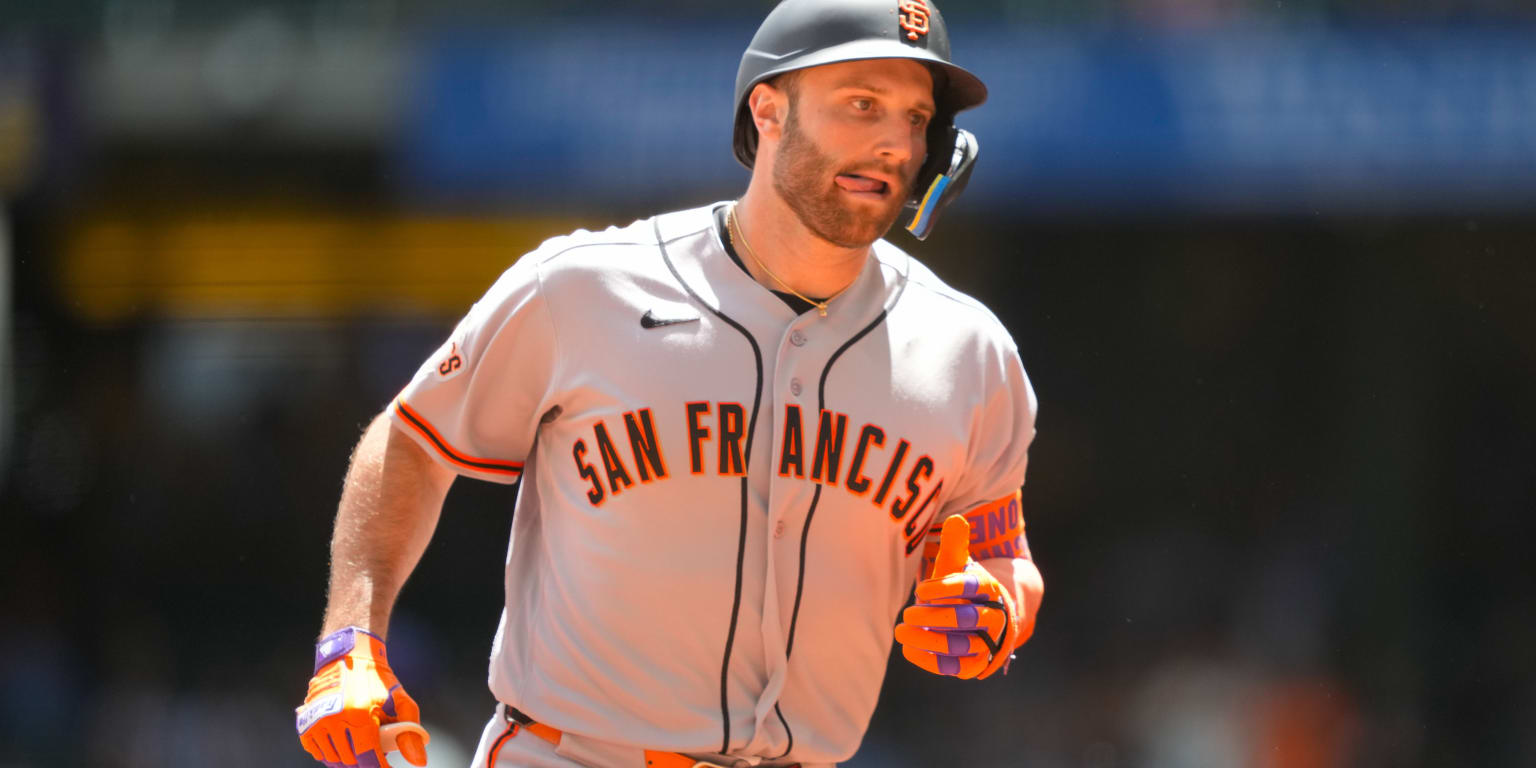
Casey Schmitt ripped the first pitch he saw from Coleman Crow into left field Thursday afternoon, launching his first career leadoff home run in the Giants' 12-9 win over Milwaukee. The blast—a 379-foot liner that sparked a three-run first-inning burst—represented less a career milestone and more a snapshot of the role Schmitt has carved out in San Francisco's lineup: a player willing to occupy whatever position, spot in the batting order, or circumstance the roster demands on any given day.
That flexibility has concrete value. Through 63 games, Schmitt leads the Giants in home runs (13), OPS (.844), and RBIs (35). He's played all four infield positions, the outfield, and DH. He's logged five consecutive games batting leadoff, and Thursday's first-inning output showed he can function in that role without pause. The team's offense exploded for 20 hits—every starter recording at least one—with Jung Hoo Lee continuing a 12-game hitting streak while slashing .522/.532/.696 over that span. The Giants' depth and offensive balance is genuine.
But here's where the proposition darkens: Schmitt's positional fluidity, the very asset that makes him indispensable to Tony Vitello, may sabotage his All-Star candidacy. The voting electorate and media voters respond to narrative clarity—a player who owns a position, racks up 500+ plate appearances at that spot, and carries the team on his back. Schmitt is instead diffused. He's 13 homers and 35 RBIs distributed across multiple positions and lineup spots, which blurs his identity to casual voters who cast the All-Star ballot in early July. A player with his aggregate production would be a lock at a single position; split across six roles, he becomes a curiosity rather than a centerpiece.
For prop bettors, Schmitt's home-run trajectory is worth isolating. He's carrying a 13 HR pace through 63 games—roughly 33 HR over 162 games, a career-high projection for a player who hit 18 homers across all of 2025. The recent surge (leadoff bomb off Crow, career-high 13 through a run-light June schedule) could accelerate bettors toward his season-total homer props or next-game power lines. However, leadoff hitters—even in the Giants' spacious ballpark—don't maintain 33 HR paces over a full season. Schmitt's positional volatility, combined with the mathematical regression from June-July hot streaks, suggests the home-run line market likely hasn't fully priced in the baserunning risk of attrition. Take unders on Schmitt's season home-run total if the sportsbooks have inflated it past 32 based on his recent hot week; the Midsummer break and subsequent cold stretches will compress his final total below a pace born from a small sample leading off in June.
The Giants themselves offer a cleaner angle. Their 12-run outburst Thursday was built on depth and contact quality, not three-true-outcome volatility. Lee, Chapman, Eldridge, and Haase all contributed multiple hits. If San Francisco's run-production offensive shape persists—a team that manufactures runs through consistent contact rather than home-run clustering—totals and run-line props lean over, especially in parks that reward line-drive efficiency. The next dozen games will test whether Thursday's 20-hit performance signals a structural improvement or a single-game anomaly.