Schwarber's Home-Field Advantage Masks a Structural Derby Weakness
By Justin Erickson ·
The favorite in tonight's Home Run Derby carries the worst odds of any league-leading power hitter in the event's recent history, and the format change may have just widened that gap.
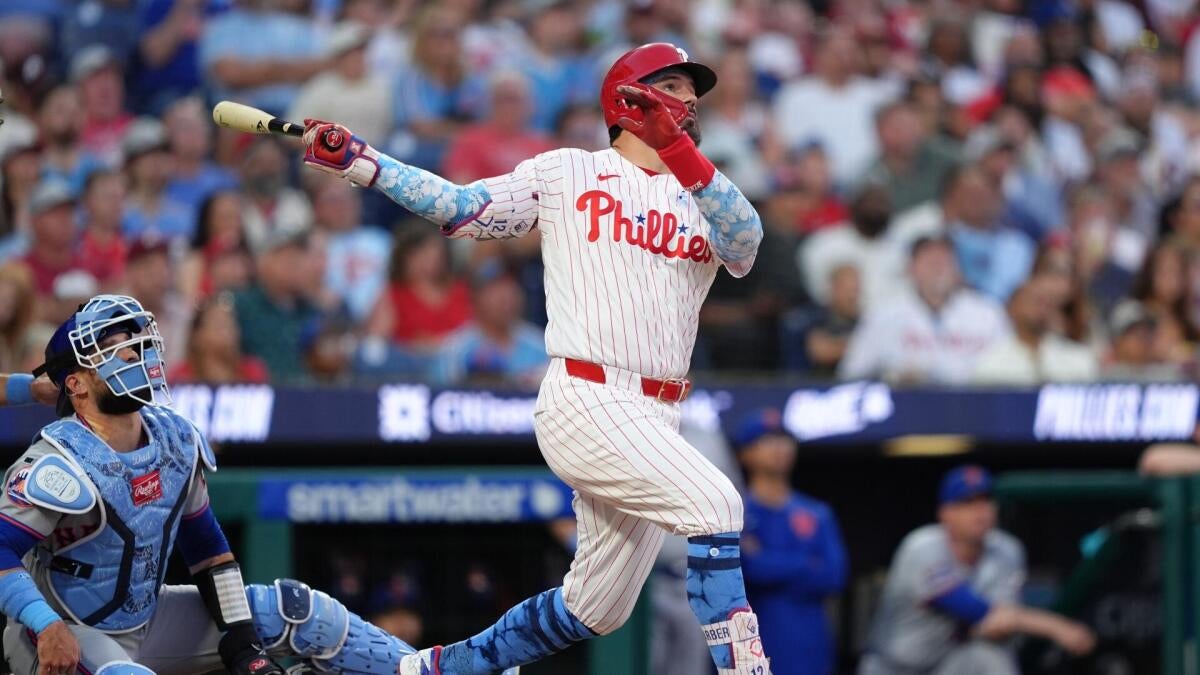
Kyle Schwarber enters tonight's Home Run Derby at Citizens Bank Park as the +330 favorite, riding 32 home runs—the most in baseball—and the comfort of his home ballpark. On paper, that looks like a lock. In practice, it's a trap. The data tells a cleaner story: the betting favorite has won this contest once in the last seven years. Cal Raleigh broke that drought in 2025, but before him, you'd have to rewind to 2018 to find a chalk winner. At 33 years old, Schwarber would rank among the oldest champions in Derby history, behind only David Ortiz, Dave Parker, and Luis Gonzalez. Home Run Derby is a skill that correlates poorly with regular-season power production—distance over consistency, round-to-round stamina, and the specific mechanics of a shortened swing matter far more than batting average or seasonal home-run pace.
The 2026 format amplifies this gap. Baseball eliminated the round timer this year in favor of fixed swing allotments: 20 swings in Round 1, 15 in Round 2, and 15 in the final. The bonus-round carryover rule—where a player can keep swinging if he hits a homer on his last swing—now functions as the only pressure relief. This shift favors efficiency and rhythm over the ability to sustain performance under artificial time pressure. Schwarber's power profile is genuine, but his Derby track record and age work against him in a format that now explicitly rewards batters who can string together consecutive long balls without clock-watching urgency.
The field includes multiple angles with cleaner value. Munetaka Murakami, the White Sox rookie sensation, carries +500 odds and represents a structural edge: younger players with explosive bat speed tend to outperform in Derby because they can adjust swing mechanics round-to-round without fatigue creeping in. Jordan Walker at +550 and Junior Caminero at +380 both offer more durable odds-to-age-and-mechanics profiles than the favorite. Willson Contreras at +2000 is a pure variance play—at 34, he's betting against recency; but his track record includes a 2021 All-Star Game home-run competition win, proof the skill persists.
The real sharps are looking at the longshots. Ben Rice at +950 has the advantage of anonymity—he won't carry the mental baggage of being hunted as a threat—and the format's swing-count structure favors players who can maintain contact consistency over distance variance. Contreras' +2000 price is less about his age and more about the fact that he's not a power-league leader, which means oddsmakers have already priced out the narrative. For a Derby where the favorite loses seven times in eight attempts, fading chalk and targeting value in the mid-range—players like Walker or Murakami—is the only edge that survives repeat events.