Misiorowski's Managed Return Sets Pattern for Brewers' Second-Half Rotation
By Justin Erickson ·
Milwaukee deployed a pre-planned four-inning cap on its ace's first post-break start, signaling a workload strategy that will reshape fantasy and pitching prop valuation for the stretch run.
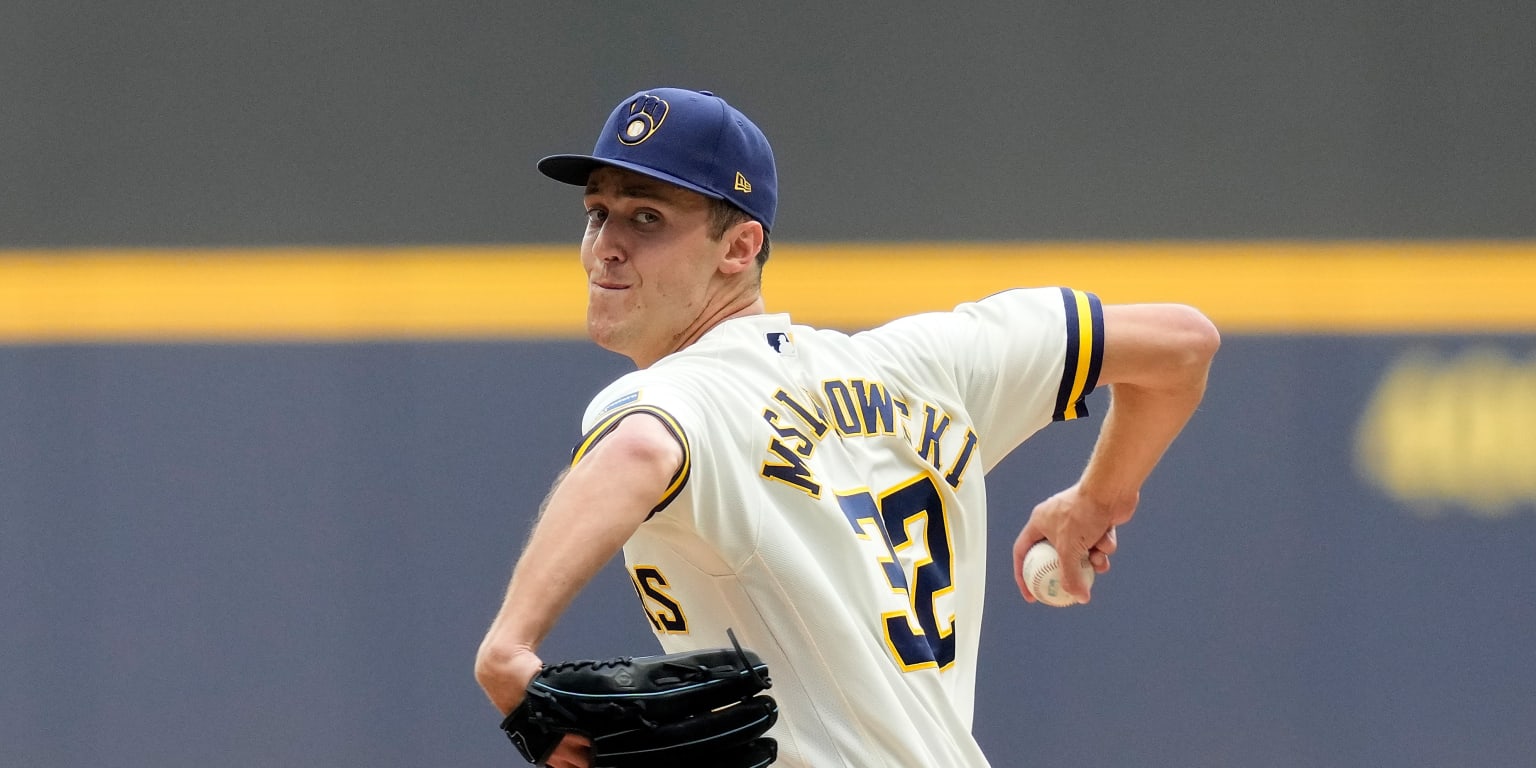
Jacob Misiorowski returned to action Monday at American Family Field following a 13-day All-Star break, but not in the way most starting pitchers resume their regular workload. The Brewers' 24-year-old right-hander took the mound against the Mets with explicit instructions to exit after four innings and 65 pitches, a truncated outing designed as the first step in a carefully orchestrated ramp-up plan. He delivered: four hits allowed (all singles), one walk, six strikeouts, and only one earned run in a Milwaukee victory that padded the Brewers' lead to 5-1 when he departed.
The shortened start wasn't reactive—it was foundational. Manager Pat Murphy acknowledged the decision stemmed from extensive biomechanical review, strength testing, and collaborative planning during the break, all aimed at preserving Misiorowski's durability while pushing him toward a World Series-caliber workload in the final 10 weeks. At 115 innings pitched through Monday, Misiorowski is 26 1/3 innings shy of his combined total from last season across the minors, majors, and postseason. Teams historically targeted a 20 percent year-over-year innings increase; modern evaluators now employ individualized thresholds informed by wearable data and granular mechanical monitoring. The Brewers' approach signals they're treating his remaining availability as finite and precious.
The strategic choice between skipping starts versus shortened outings favors the latter for Milwaukee. Murphy stated the team leans toward keeping Misiorowski on a consistent five-day schedule while deploying aggressive early exits, preserving his feel for the mound and competitive rhythm without accumulating excess volume. This framework will govern his IP totals and appearance patterns through the postseason. In Monday's matchup against Juan Soto, Misiorowski fired fastballs at 103.4, 104.0, 103.8, and 103.6 mph—each registering triple-digit velocity—generating three swinging strikes in a single sequence that underscored his ceiling as a legitimate frontline arm when deployed in short bursts.
For bettors, the implications are straightforward: Misiorowski's strikeout ceiling remains elite, but innings-per-start and total bases allowed props require recalibration. A pitcher capped at 65 pitches and four frames is unlikely to accumulate the volume necessary for overs on lines set for traditional six-inning starts. His K rate (6 K in 4 IP = 13.5 K/9) tracks with his season baseline, meaning strikeout props should remain competitively priced if sportsbooks haven't yet adjusted for the managed workload. Conversely, team totals and opponent run-line markets could prove vulnerable; a starter who guarantees early exit creates extended bullpen exposure and fatigue patterns that favor teams with deeper relief arms.
The durability-first approach also signals confidence in Milwaukee's deadline acquisitions and rotation depth—a quiet statement about their competitive timeline. As long as Misiorowski remains on the scheduled short-start regimen, his per-appearance ceiling is lowered but his consistency within that cap is increased. Wait for market lines to lag behind the operational reality, then exploit strikeout props at their normal season rate while fading any overs tied to innings or earned run totals.