MLB
Misiorowski's 200-K Blitz Rewrites the Strikeout Timeline
The Brewers' flamethrower hit 200 strikeouts in just 129 innings, second-fastest in MLB history, and his velocity floor keeps resetting what elite means.
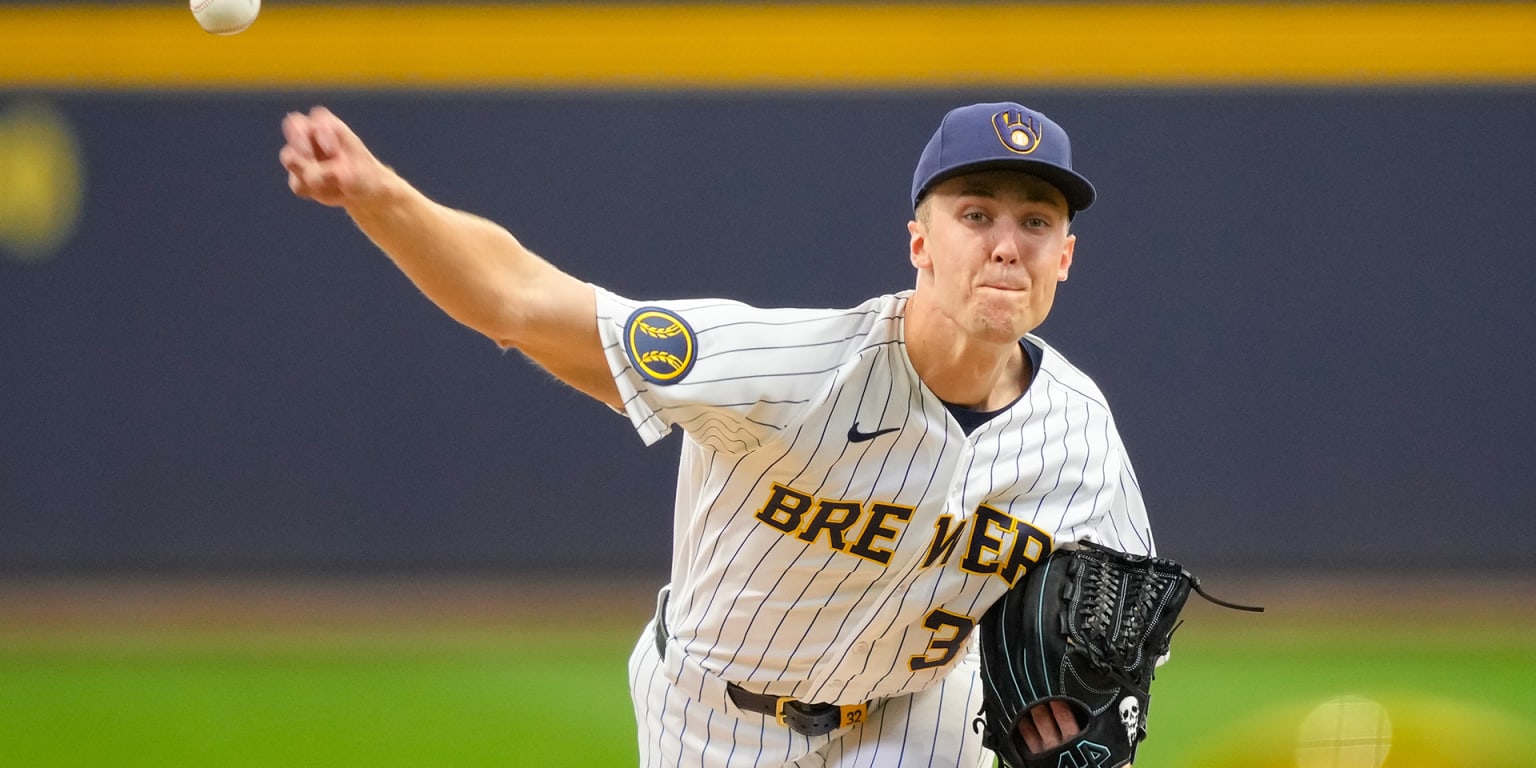
Jacob Misiorowski struck out Alan Roden on Sunday to reach 200 strikeouts in 129 1/3 innings, becoming only the second pitcher since the pitch-tracking era began to hit that mark so quickly. Spencer Strider set the record at 123 1/3 innings in 2023; Misiorowski beat everyone else by a margin that matters. He also demolished the Brewers' franchise record—Corbin Burnes needed 145 2/3 innings in 2021—by a gap of more than 16 frames. This isn't noise. The strikeout efficiency tells you something real about pitch design and hitter weakness.
Misiorowski's velocity distribution is the engine. He's thrown 66 pitches registered at 100+ mph in a single season, a pitch-tracking era record. His four-seamer sits 100+ consistently; his slider and curveball ride elite movement with high-velocity bases. When you're hitting 101.7 as a floor, even mediocre command generates empty swings. Against a Twins lineup that doesn't feature top-tier contact rates, Misiorowski recorded five strikeouts on the day, tacking another layer onto a season already loaded with historical markers: 15 strikeouts in a complete-game shutout on fewer than 100 pitches; sustained performance over 129 innings without a collapse in velocity or control.
The prop implication threads through strikeout betting. Misiorowski's K-rate (13.9 per nine innings) sits in the 95th percentile for qualified starters. His next scheduled start arrives against a lineup that will likely feature weaker contact quality or higher swing-and-miss rates than the league average. The key variable isn't just his stuff—it's matchup. If Milwaukee faces a team with elevated strikeout rates (Kansas City, Oakland, Chicago White Sox all rank in the bottom ten in contact rate), his strikeout totals move higher. His current season average of 8.2 strikeouts per start reflects the competition level; against passive lineups, that number pushes to 9-10.
Market pricing on Misiorowski's K props has likely risen after 200 strikeouts in 129 innings became public information. Books will shade his next three starts accordingly. But the edge isn't in chasing the headline—it's in identifying which opponent he faces next. If his next start slots against a contact-challenged lineup, the over on his strikeout line (likely 8.5 or 9.0 depending on book adjustments) carries value. His velocity floor is too high and his command too precise for regression bets; the question is whether the specific opponent carries enough strikeout risk to justify the line movement.
With two months remaining in the season, Misiorowski has runway to push strikeout totals even higher. The velocity isn't dropping. The competence is crystalline. The angle: fade the market overcorrection on his strikeout props after today's headlines fade, and target starts against passive contact profiles where his actual skill edge widens beyond what the adjusted line reflects.
MLB Intelligence — Baseball intelligence beyond the box score. Open MLB Intelligence →