Misiorowski's Historic Streak Ends at 25; Command Issues Surface Against Elite Lineups
By Erik Schwartz ·
The Brewers ace's run of 25 straight starts with three earned runs or fewer snapped Wednesday at Wrigley, signaling vulnerability to top-tier offenses that could reshape how books price his next several outings.
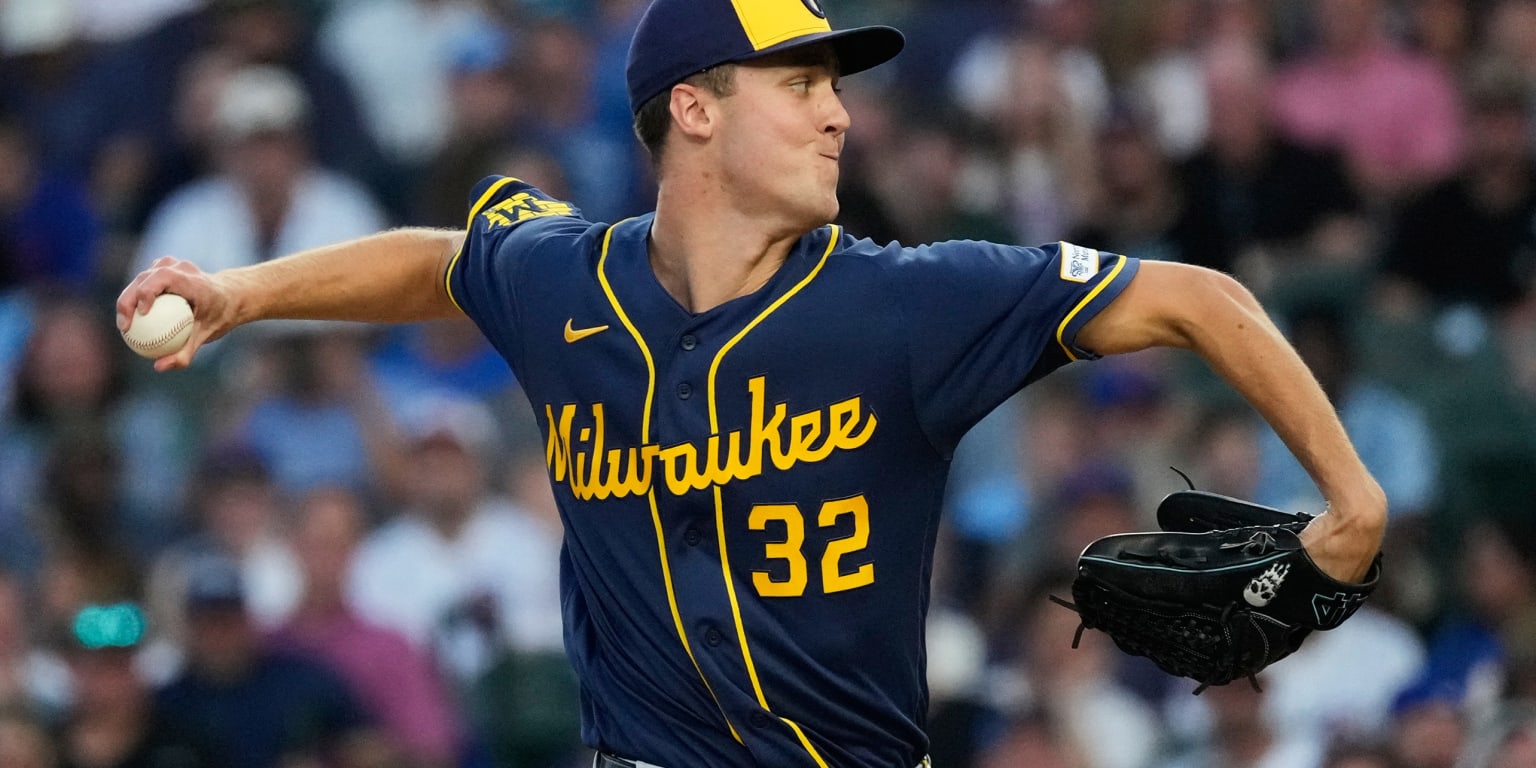
Jacob Misiorowski's 25-game streak of allowing three earned runs or fewer came to an end Wednesday night at Wrigley Field, as the Cubs shelled the Brewers' ace for five runs on five hits across four innings. Misiorowski walked four and struck out five in a 92-pitch outing marked by command issues early—particularly against Cubs third baseman Alex Bregman, who drove in four runs with a two-run homer in the first and a go-ahead two-run single in the second. The Brewers clawed back to a 6-5 lead by the fourth inning with help from a Brice Turang squeeze bunt, and Misiorowski stabilized thereafter, pitching a clean fifth before exiting with the lead intact. But the damage was already done: for the first time this season, Misiorowski surrendered more than three earned runs in a single start.
The streak itself was historic—tied for the third-longest to open a season since earned runs became official in 1913. That level of consistency over 25 starts is not noise; it reflects elite command and pitch sequencing that has been working against most MLB competition this year. But the Cubs lineups that breaks streaks do so because they expose something real: either a pitcher's fastball is getting hit harder at a specific park, or the quality of plate discipline he faces rises sharply. Bregman and the Cubs, one of the league's most potent offenses entering the night, represent the latter. His 0-for-12 record with nine strikeouts against Misiorowski prior to Wednesday included both regular season and playoff matchups—a sample size small enough to flip on variance, yet large enough to suggest Misiorowski had been making pitches. Once the Cubs adjusted, they made him pay.
Misiorowski took an unusual step before this outing: rather than use a covered bullpen area, he threw a between-starts session on the actual Wrigley Field mound on Monday to replicate game conditions more closely. Pitching coach Chris Hook cited it as part of a league-wide trend toward live-condition practice. That preparation didn't prevent the early struggles, though it may have helped stabilize him in the fifth. The real question for prop bettors is whether this streak's end signals a regression to a sustainable baseline or an isolated blip against a top-10 offense. The answer matters enormously for strikeout, earned-run, and innings-pitched lines going forward.
Books will be forced to recalibrate Misiorowski's pricing for his next two to three starts, particularly if the Cubs sequence repeats in a playoff scenario or if the Brewers face similarly patient, power-oriented lineups. His K prop and ER prop will both tighten and move higher at open—sportsbooks already know that 25-game stretches at this volume require a correction. But the mechanism behind the streak's breakage is worth isolating: Misiorowski was serviceable against league-average lineups all season, but elite contacts (high-velocity, selective hitters who wait for mistakes) can still exploit his occasional wildness. His four walks Wednesday weren't flukes; they were part of the same command variance that allowed him to post such low earned-run totals. Against offenses ranked outside the top 15 in wRC+, his ER prop should stabilize closer to his season mean. Against top-10 offenses, lean toward overs on earned-run props at current market numbers, as the books have already begun adjusting but may not have priced in the full magnitude of the Cubs' competitive advantage.