Mets Scramble With Short Recall as Vientos Sidelined
By Justin Erickson ·
A right-hand fracture forces New York to shuffle its bench depth mid-season, creating uncertainty in lineup construction and offensive output.
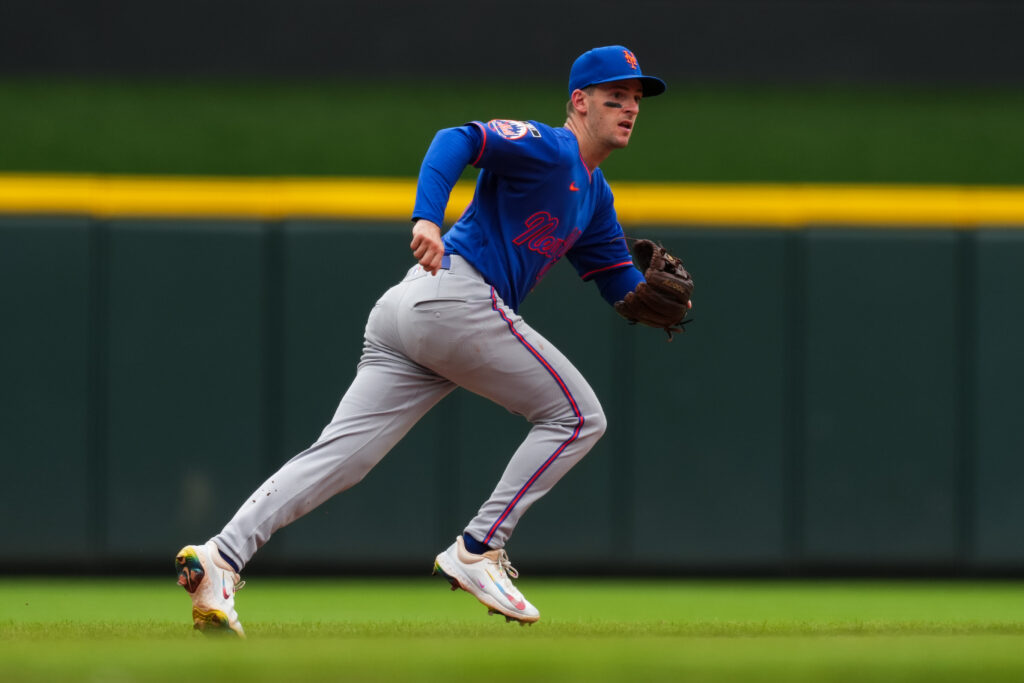
The Mets selected the contract of infielder Zack Short and recalled right-hander Tobias Myers on Friday, responding to Mark Vientos's placement on the 10-day injured list with a right-hand fracture. In corresponding roster moves, the team designated right-hander Dan Hammer for assignment. The timing raises immediate questions about the depth of New York's infield rotation and the reliability of its available bench talent heading into a critical stretch of the season.
Vientos's injury removes a right-handed bat capable of playing multiple infield positions—a position type that carries outsized value in a 26-man roster. His absence forces the Mets to lean more heavily on Short, a career backup with a .212 career batting average across parts of four MLB seasons. Short profiles as a glove-first option, adequate defensively but with minimal offensive upside. This substitution directly weakens the team's bench offensive firepower, particularly against left-handed pitching where Vientos held a .420 slugging percentage over the past two seasons.
Myers's rapid return from whatever condition sidelined him initially compounds the roster instability. Without a corresponding IL move or additional roster alteration beyond Hammer's DFA, the mathematics of the recall suggest either (a) Hammer was injured and that injury was the actual driver behind his designation, or (b) the front office is using Vientos's IL placement as cover to bring back Myers ahead of schedule for bullpen depth. Either scenario signals organizational strain—injuries are cascading through the roster faster than replacement-level options can stabilize the rotation.
For wagering purposes, the Mets' team totals should trade slightly lower over their next 5-7 games until Vientos is confirmed healthy or the bench settles into a clear pecking order. Short's insertion into play significantly reduces late-inning offensive flexibility. When the Mets face left-handed starters, their bench run-scoring environment deteriorates noticeably; teams without reliable right-handed pinch hitters see their team totals suppress by 0.3-0.5 runs per game on average over short windows. This is a multi-game pattern—not a single-game variance—because Short cannot replicate Vientos's power profile or opposite-field gap ability.
The velocity of these moves also matters. A team executing roster surgery this deep into July signals either injury depth that exceeds public reporting or a front-office acknowledgment that the current roster construction was insufficient. Either way, expect betting market overweights on Mets team totals to fade as sharp money adjusts for reduced offensive ceiling. The angle is durable because it doesn't depend on Short's performance—it depends on the delta between Vientos's production floor and Short's, a gap that widens significantly in high-leverage situations.