Ewing's 405-Foot Debut HR Exposes the Limits of Minor League Power Grades
By Justin Erickson ·
A 21-year-old contact hitter with a 40-grade power forecast just launched a rope into the Citi Field upper deck, forcing a reckoning with how scouting projections age under big-league velocity.
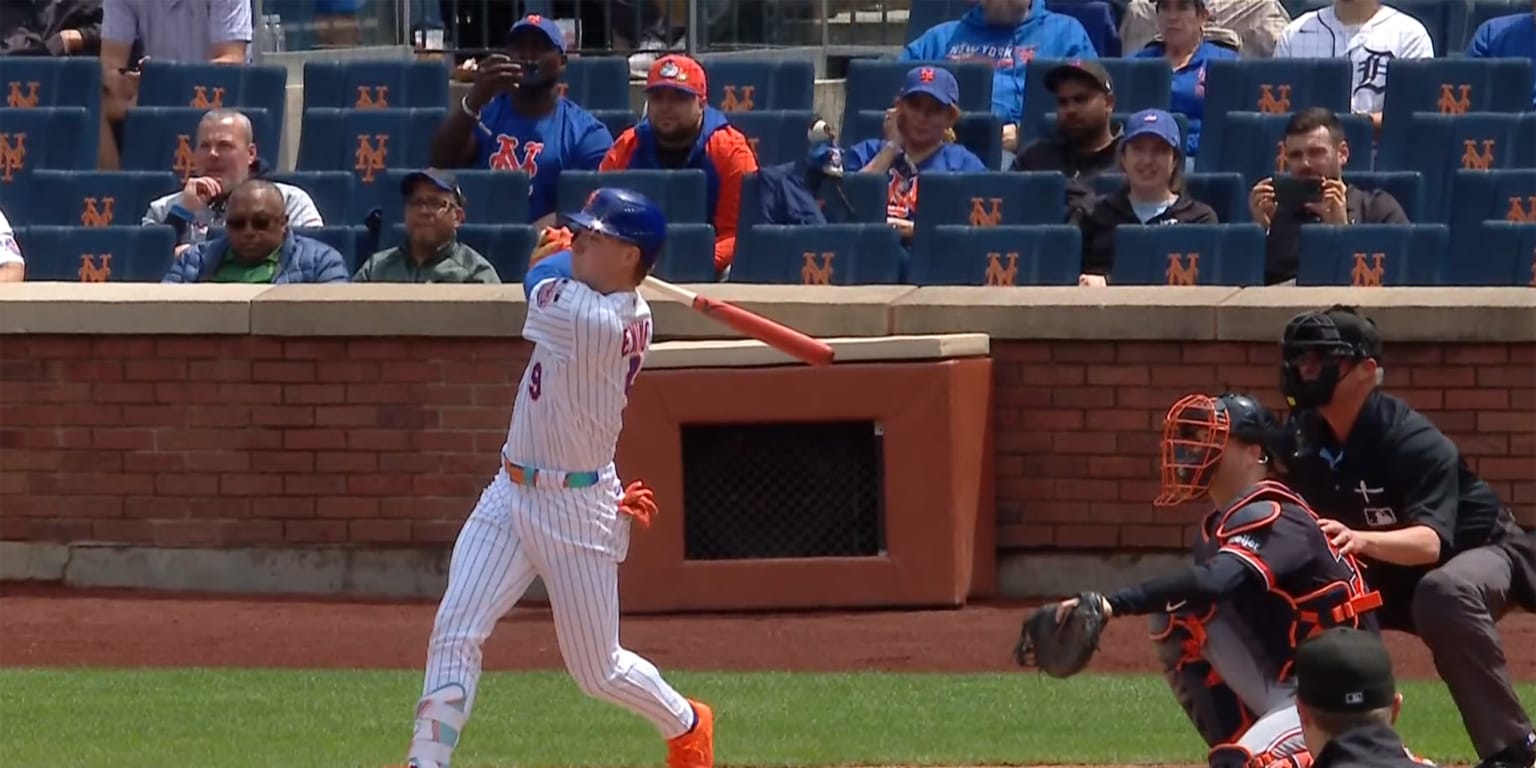
A.J. Ewing arrived in the majors with a reputation built on speed and plate discipline—not raw power. MLB Pipeline had pegged his long-ball potential at 40 on the 20-80 scouting scale, a below-average projection that tracked with his minor league résumé: 15 home runs across 1,099 plate appearances, a rate that screamed crafty hitter, not slugger. Then, in his third career game Thursday, the 21-year-old Mets callup took a 93.2 mph fastball from Tigers right-hander Keider Montero 405 feet into the Citi Field home bullpen roof. One swing erased the scouting narrative.
What makes Ewing's debut power display noteworthy isn't the outlier nature of the event—young hitters will occasionally embarrass forecasts—but the mechanics that preceded it. In his first 10 major league plate appearances, Ewing reached base safely six times, including an RBI triple in his debut and now this home run. His minor league profile leaned heavily on gap-to-gap distribution: 49 doubles and 15 triples across his time in the system. That shape (consistent extra-base contact directed to the corners rather than over the fence) can shift dramatically when a hitter moves from Triple-A mound to big-league heat. Velocity in the upper 90s can flatten approach angles and extend leverage on fastballs he saw at lower velocities.
The honest read: one home run doesn't invalidate a four-year minor league footprint. Ewing's power grade may have been undercooked, but he's still not a 50-grade slugger. What's changed is the context. A contact hitter with elite speed and on-base instincts moving into an environment where fastballs carry 3-5 mph more velocity than he's used to can unlock dormant pop—not through a transformation in swing mechanics, but through physics. The balls he was lining into left-center field last season in the minors now carry an extra 50 feet of hang time and velocity.
For prop bettors, the angle is narrow but real: Ewing's home run rate will likely settle somewhere between the 40-grade forecast and this opening salvo. Monitor his strikeout-to-walk ratio in the next 15-20 games. If his whiff rate climbs sharply as he adjusts to big-league spin and sequencing, the home run spike is sample noise. If he maintains the 60-percent on-base rate he's posted so far while striking out at or below his minor league frequency, the scouting grade was genuinely low. The betting market will eventually price Ewing's props based on early volume, which will likely overcorrect upward after one 405-foot blast. The real edge—if one emerges—will depend on whether his strikeout profile holds steady as pitchers begin attacking the lower part of the zone more aggressively than they did in Memphis or Syracuse.