Mets' Bullpen Carries Load as Rotation Stumbles—Series Win Over Braves Exposes Market Inefficiency in Relief Usage
By Justin Erickson ·
New York's relief corps is operating at elite efficiency while the starting rotation burns early—creating a structural betting advantage in games where the bullpen enters before the fifth inning.
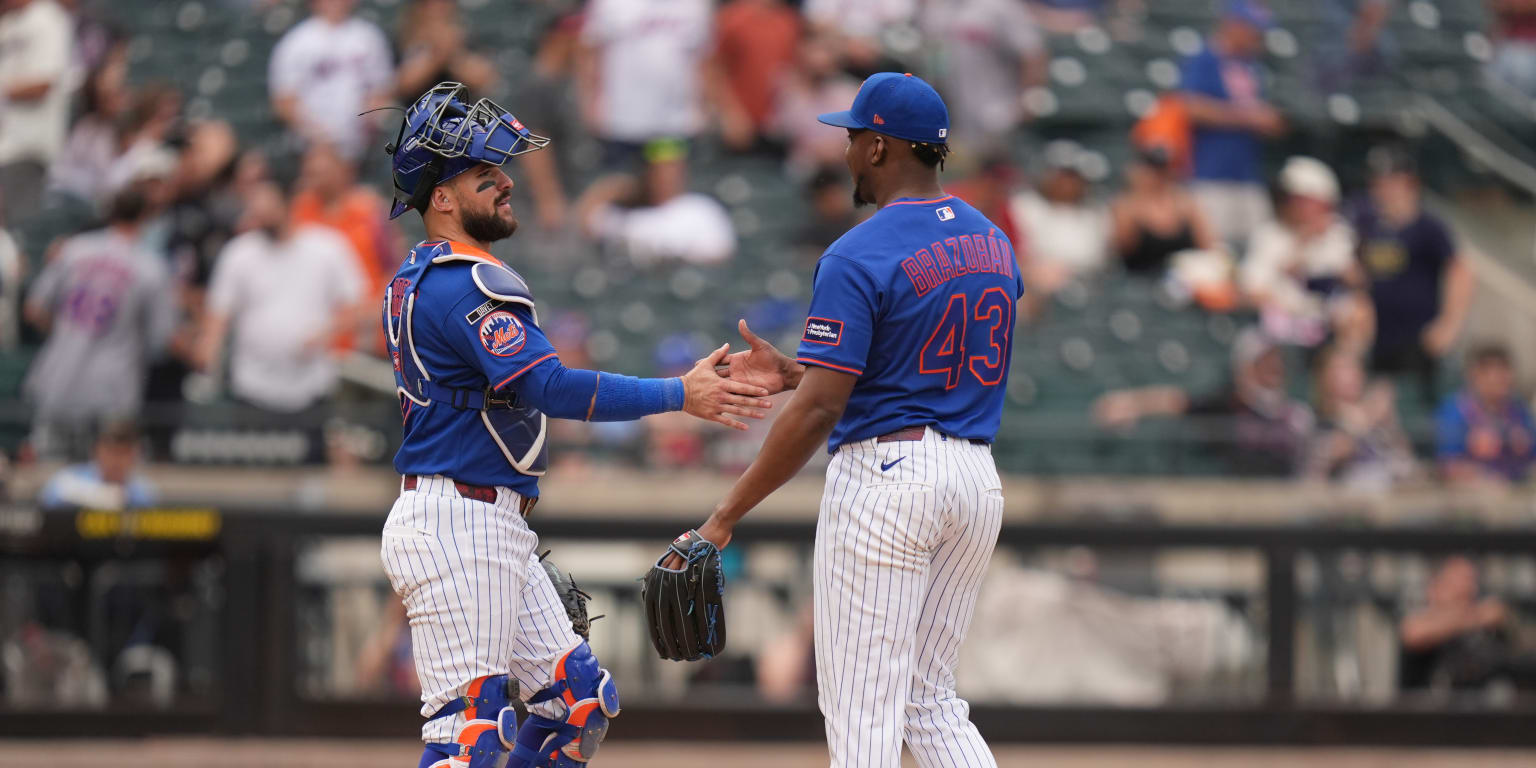
The Mets defeated the Braves 8-1 on Sunday to secure a series win, but the margin of victory masks a deeper operational split: their starting pitchers are failing to deliver depth, forcing the bullpen into heavy early-game leverage. Freddy Peralta's brief outing against Atlanta—a persistent pattern this season—handed the game to relievers with a five-run cushion in place of the seventh inning. That's not a luxury; it's a necessity born from rotation failure. And it's working.
New York's relief ERA sits at 3.30, fourth-best in baseball and well within elite territory. The Braves, despite carrying the majors' best bullpen ERA, conceded eight runs in a game where their offense generated just one. A.J. Minter and Huascar Brazobán shut the door in high-leverage spots—the eighth and ninth—while lower-leverage arms (Cionel Pérez, Daniel Duarte) logged scoreless work in the middle frames. This is the structural advantage: the Mets have built a bullpen capable of absorbing fifth-inning entry points without catastrophic ERA inflation, while rotation weakness has made that a recurring need rather than an aberration.
The betting market hasn't fully priced this asymmetry. Mets games in which the starting pitcher is projected to exit early (a reasonable forecast given Peralta, David Peterson, and Sean Manaea's recent track records) should trade at lower over/under totals than comparable matchups with deeper rotation depth. Instead, oddsmakers often hang Mets lines as though their rotation were functional, then adjust only after game-time adjustments reveal the bullpen in the fifth. A disciplined edge exists in fading overs in Mets games where the starter has a sub-five-inning projection—the bullpen will limit damage that would otherwise inflate run totals, and the rotation weakness has already been factored into the lead itself.
The series win over Atlanta also signals that Mendoza's bullpen deployment is efficient enough to withstand early fire. Brazobán's "Swiss Army knife" role—available in multiple innings, high or low leverage—is the model modern relief construction should follow. When tracking Mets props in the next 10-15 games, lean unders on team totals in spots where the starting pitcher has averaged fewer than 4.5 innings pitched this season. The bullpen will do the heavy lifting, but that heavy lifting operates at a lower run-production rate than market-neutral bullpen performance.