Padres Capitalize on Cardinals Mistakes to Avoid Sweep; Tatis and Merrill Deliver Late Power
By Justin Erickson ·
San Diego's offensive breakthrough in the series finale reveals a deeper pattern about how run-starved teams can weaponize opponent errors when timely contact finally arrives.
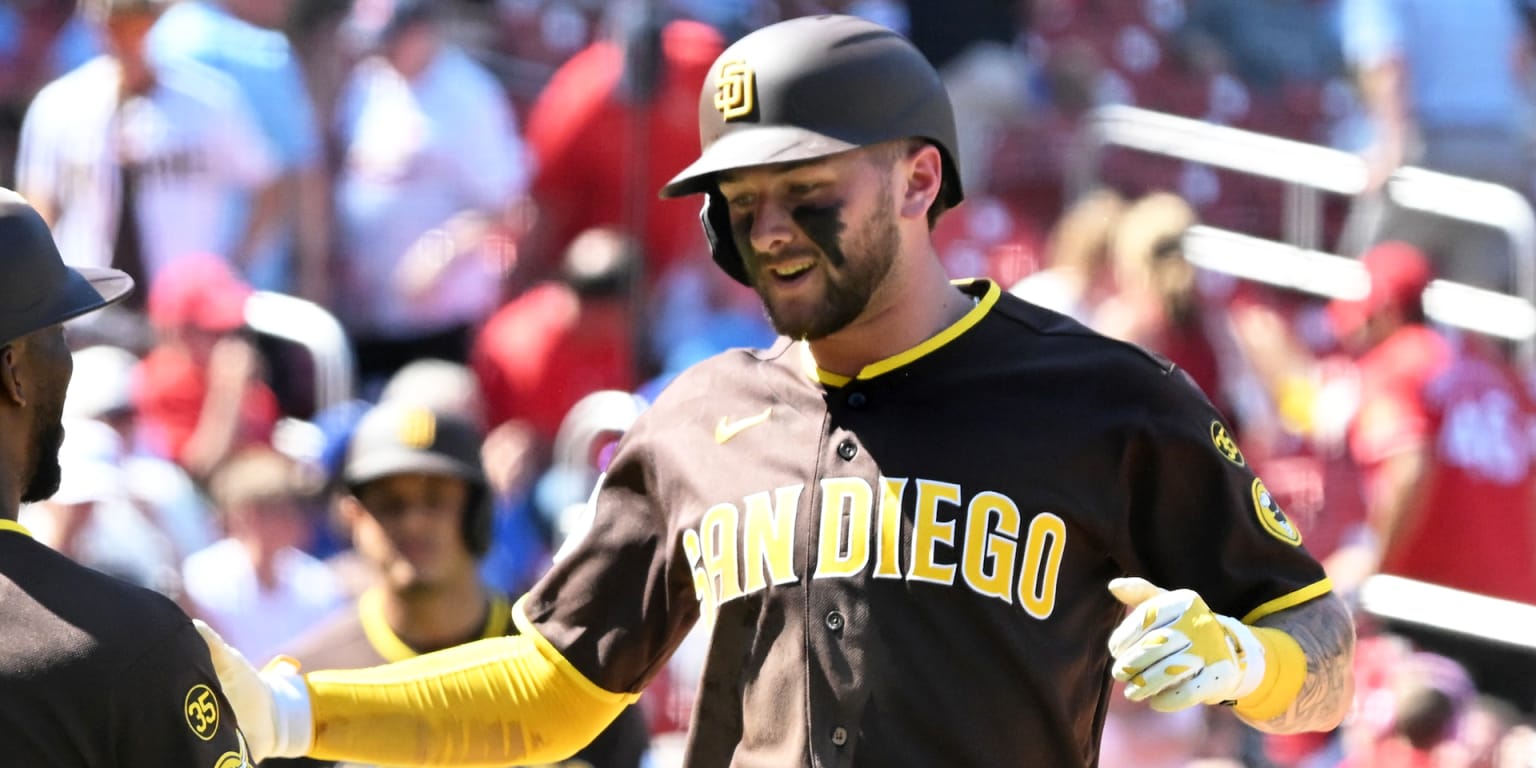
The Padres escaped St. Louis with a 6-1 win Wednesday, avoiding a sweep despite managing just one run through the first four innings of their previous two games. Early inefficiency followed by late-inning explosion—this is how teams survive road stretches when they can't generate consistent offensive pressure. San Diego's hitters combined to go 0-for-24 in the opening frames Monday and Tuesday, a drought that invited the Cardinals to control game tempo. Wednesday's first-inning run broke that seal, and the psychological shift mattered as much as the run itself.
The Padres' margin of victory came from something more revealing than lineup depth: they made St. Louis pay for two discrete mistakes. Nathan Church misplayed a Fernando Tatis Jr. line drive to center in the fourth—listed as a potential out on a windy afternoon but recorded as an RBI double. In the sixth, Masyn Winn overran second base on a steal attempt and was picked off by reliever Kyle Hart, neutralizing what could have been a momentum swing. These weren't close plays; they were clear defensive lapses. When a team trails in the early innings and its pitching holds, opponent miscues become conversion opportunities. The Padres took both. Griffin Canning's performance—one run in 4⅓ innings, his third such outing this season—gave San Diego enough runway to benefit from the Cardinals' generosity. By the time the ninth inning arrived, the game's outcome was already determined, which is precisely when Tatis and Jackson Merrill broke open a three-run inning with timely contact. Tatis drove in a run on a single; Merrill followed with a two-run homer.
For bettors tracking Padres unders, Wednesday's script matters less than the underlying volatility it exposes. San Diego's offense has been feast-or-famine through this stretch—0-for-24 to open two games, then 6 runs by the ninth inning. That whipsaw pattern doesn't disappear in one afternoon. More important: the team's willingness to lean on late-inning offensive outbursts (the three-run ninth happened with the game already decided) suggests that when they do build early leads, those leads tend to hold. Canning's efficiency—consistent one-run outputs over shallow innings—points to a bullpen that isn't being asked to cover nine innings of heavy lifting. That matters for over/under calculus in future Padres matchups, particularly on the road where they faced 0-for-24 dryness and still avoided offensive disaster.