McClanahan's Shutdown Stretch Reshapes Rays' Ace Calculus
By Justin Erickson ·
Tampa Bay's left-hander has now strung together 21 2/3 scoreless innings with elite strikeout efficiency, transforming a team that was supposed to rebuild into a legitimate October contender.
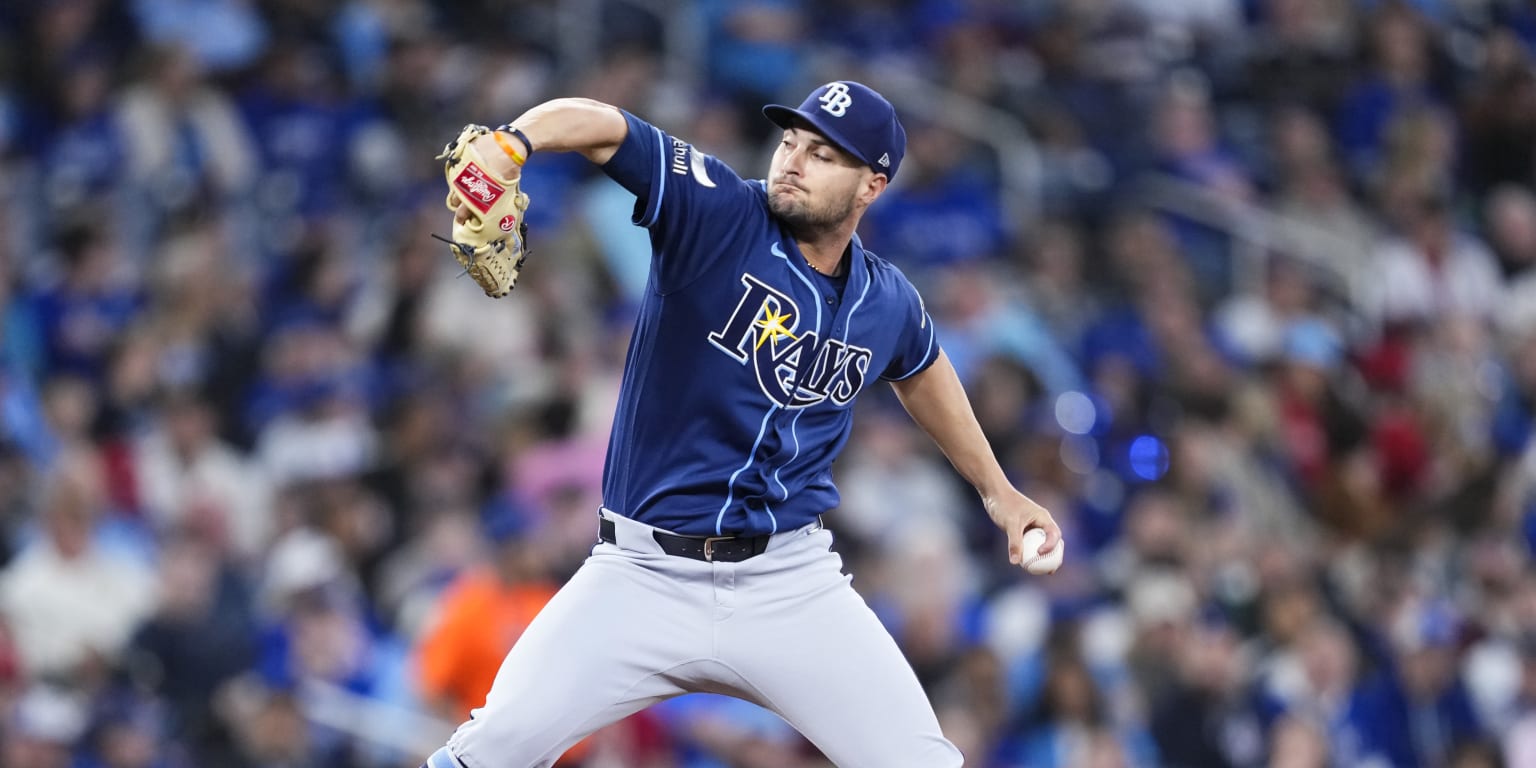
Shane McClanahan delivered five scoreless innings Tuesday in Toronto, striking out seven and allowing just one hit through five frames—his fourth consecutive start of at least five innings without a run. The performance extended his scoreless streak to 21 2/3 innings, a stretch that has coincided with the Rays' 16-2 run over their last 18 games. What matters more than the streak itself is the underlying architecture: McClanahan is finishing hitters (41 strikeouts in 39 2/3 innings), walking almost nobody (four walks across his last five starts after issuing 11 in his first three), and generating chase on his offspeed pitches at a rate that rivals his pre-injury peak. Against Toronto's right-handed hitters on Tuesday, his changeup generated a 50% whiff rate on 14 swings—the kind of stuff-based efficiency that survives across opponents and formats.
The Rays are managing McClanahan's workload deliberately: five innings, 80 pitches was the cap, even with the game heading to extras. That's not a sign of caution born from concern. It's a sign that Tampa Bay's front office views him as a multi-month asset worth preserving. His ERA sits at 2.27, fifth-best in the American League among pitchers with 35+ innings. That efficiency is real, not variance-dependent. He's inducing swings-and-misses on all four pitches, proving he's not overreliant on a single offering.
The broader Rays context matters for props: this team has won 28 of its last 43 games, a win rate that doesn't sustain for 162 games, but their pitching infrastructure—Martinez at 1.70 ERA, McClanahan now embedded in this run—is the foundation of a legitimate October contender. Games where McClanahan starts carry intrinsic value beyond the box score. He's not just lowering run expectancy; he's creating margin for error in a clubhouse that proved Tuesday it can scrap out wins in tight, extended games.
For bettors, the edge sits at the intersection of McClanahan's velocity tick, his walk rate compression, and the Rays' win-probability context. When McClanahan starts and goes five or more innings, Tampa Bay's bullpen enters with a clean slate and lower leverage. That structural advantage hasn't yet fully migrated into his strikeout lines—books are still pricing him at single-digit K rates typical of his pre-injury baseline—but his per-nine rate over the last 15 days sits at 9.3 K/9, well above the 8.1 he averaged earlier in his return. The discrepancy between recent stuff and current lines exists because the sample was volatile early (injury return, workload ramping) and the market hasn't yet locked in the new baseline. That durable edge fades within two to three starts as volume stabilizes.