Martinez's Command Clinic Signals Rays Rotation Stability Amid Lineup Questions
By Justin Erickson ·
Nick Martinez delivered exactly what Tampa Bay needed after Boston's rough stretch—dominant contact management that rewrites expectations for pitching-dependent moneyline recovery.
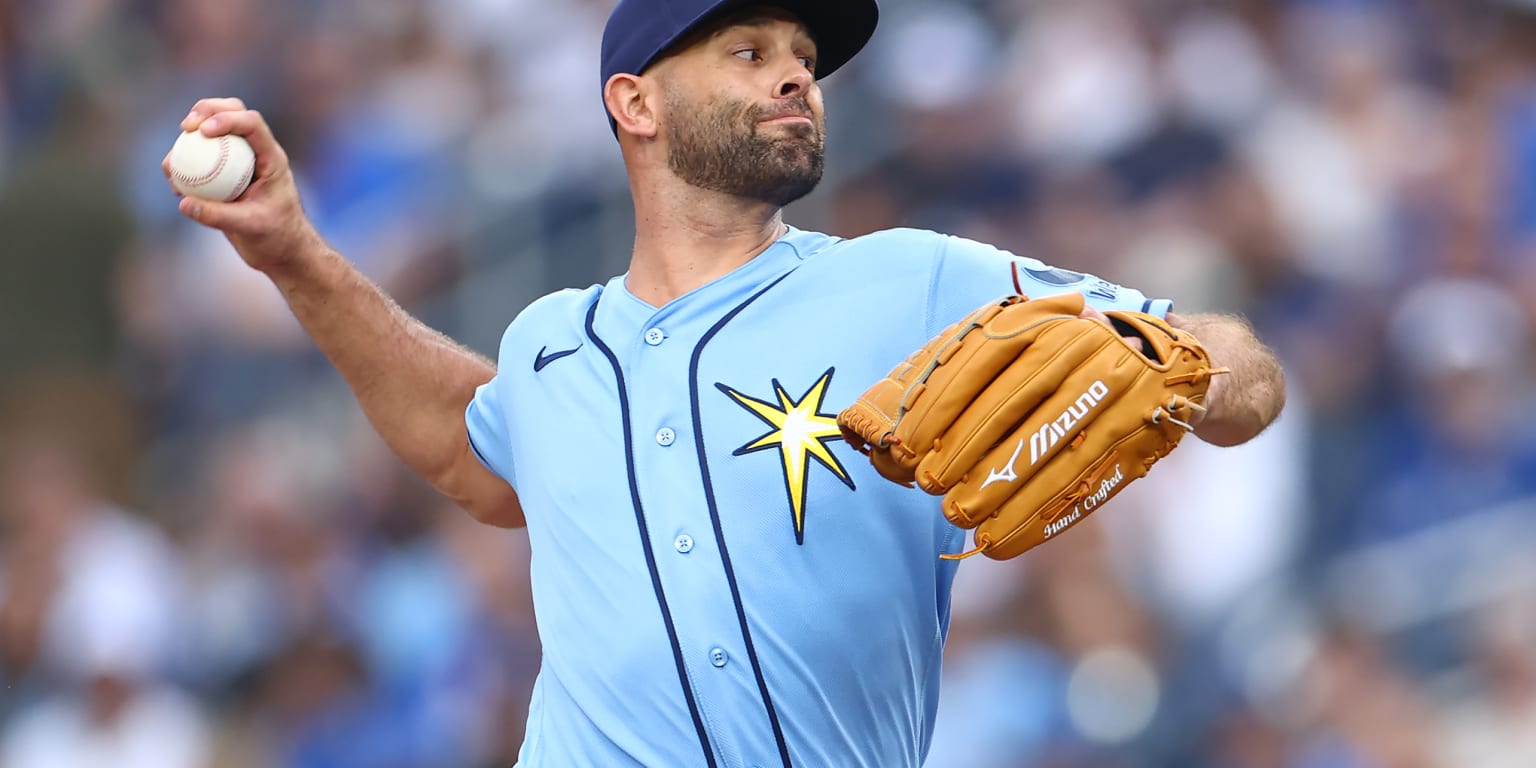
The Rays ended a five-game losing streak Monday night in Toronto behind Nick Martinez, who held the Blue Jays to a single run across six innings in a 7-1 victory. Fresh off his first All-Star selection, the 35-year-old right-hander put the rotation's recent turbulence behind him with a masterclass in ground-ball efficiency: 82 pitches, zero strikeouts, 23 balls in play against a contact-heavy lineup, only five registering hard contact at 95 mph or higher. The Rays' rotation had hemorrhaged during the Boston series, setting up what looked like another coin flip against Toronto. Instead, Martinez served notice that when Tampa Bay's anchor takes the mound, the team's win probability shifts dramatically. The Rays are now 15-4 this season when Martinez starts—a 78.9% win rate—and specifically 6-1 when he pitches the day after a loss. That's not randomness; that's a closer operating in high-leverage moments.
The striking feature of Martinez's outing wasn't strikeout velocity—he didn't punch out a single batter, the first time this season—but command geometry. Six hits allowed, all singles. One walk. The contact profile tells the real story: Toronto's hitters couldn't elevate against him, couldn't find barrels, and couldn't sustain pressure through six frames. Martinez ranked tied for the most sub-3.00 ERA outings in MLB this season (18 of 19 starts) alongside Yankees ace Cam Schlittler and Brewers starter Jacob Misiorowski. That consistency matters when analyzing Rays moneylines going forward, particularly in the second half when playoff positioning tightens.
For prop bettors, the angle lives in the rotation's reliability tier. Martinez has delivered 10 quality starts this season, tied with Drew Rasmussen for the team lead. More important: his ability to suppress hard contact—the measurable that predicts ERA regression—sits at an elite level. When a pitcher allows sub-95 mph contact on 78% of batted balls against a lineup specifically built to put the ball in play (Toronto ranks top-10 in contact rate), that's a signal that his performance line carries lower variance than the market prices. The Rays' win probability spikes when he starts, especially after losses. Bettors should track his next few opponents' contact tendencies, not their raw slugging marks.