Marlins Pivot to Seller's Market as Trade Deadline Looms
By Justin Erickson ·
Miami's six-game winning streak masks a fundamental organizational reset—Hicks and Stowers on the block signals a deeper shift in deadline strategy.
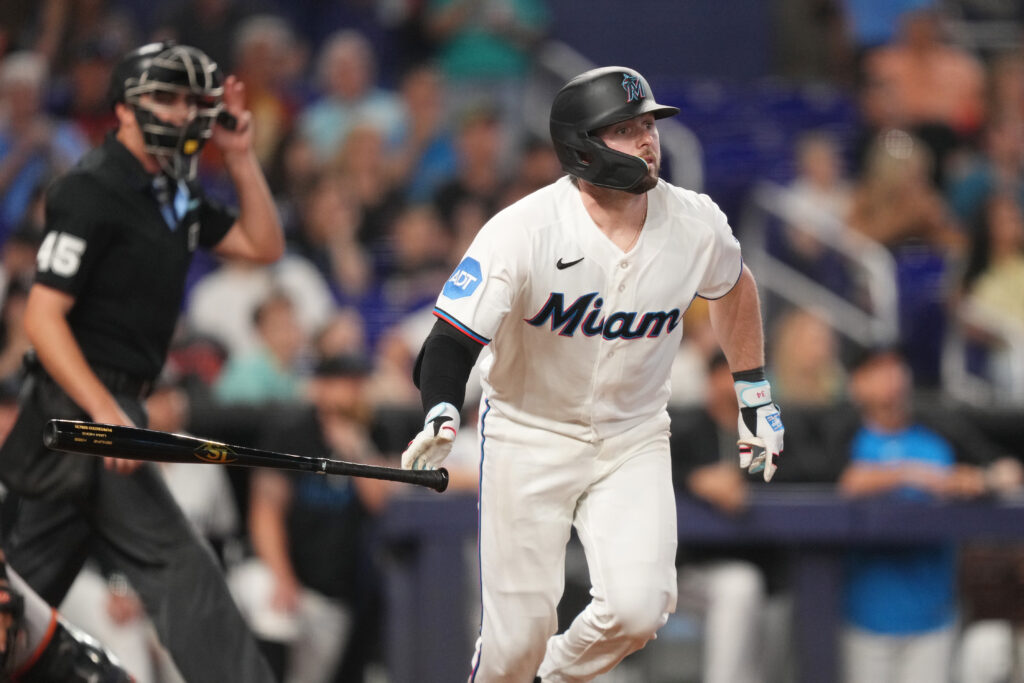
The Marlins have won six of their last seven games to climb back to 58-55, a record that keeps them mathematically alive in a muddled National League wild-card race. But internal discussions around trading Kyle Stowers and Liam Hicks suggest Miami's front office has already made its playoff calculus—and decided the present roster doesn't pencil out as a contender. The Rays and Rangers have both expressed interest, per MLB Trade Rumors, indicating there's market appetite for both players despite the timing.
This represents a sharp reversal from the surface narrative. A 12-game losing streak earlier in the season appeared to have buried Miami's hopes, yet the organization clawed back to respectability over the past two weeks. That recovery, however, appears to have convinced the front office not that they can make a run, but that they can extract maximum value from pending free agents and trade-eligible roster pieces before the deadline passes. Stowers (28) and Hicks (26) are both still on team-friendly contracts with multiple years of control remaining—the exact profile clubs scramble to acquire at deadline time.
The strategic shift also signals what Bloom and the Marlins likely see in their remaining schedule and roster construction: a team that can win series but can't sustain the consistency required to reach October. Trading established position players rather than doubling down on rotation reinforcement or bullpen depth is a seller's move dressed in the clothes of a mid-season pivot. For sportsbooks and bettors, this matters acutely. The Marlins' implied win total for the remainder of the season will compress if these trades land; any bettor who seized on their recent six-game tear to buy overs on Miami team totals or playoff probability was essentially fading the front office's own confidence level.
From a prop-betting lens, Stowers' departure—if it materializes—removes a 0.290 ISO bat from a lineup that already lacked offensive depth. Hicks provides speed and defensive versatility, but his offensive profile (.320 OBP, .700 OPS last 30 days) doesn't anchor run production. Miami's team total for games in the next two weeks should trade lower as these conversations become concrete. The Marlins' next opponent will also factor in lineup depth; any book that hasn't yet adjusted win probability or over-under totals for the possibility of both departures is leaving value on the table.
The real angle here is momentum vs. organizational intent. The market sees six straight wins and a return to .500 baseball; Bloom's phone calls reveal he sees a team better served by retooling now than limping to a meaningless October. For bettors, the play is to fade Miami overs and lean team total unders for any remaining August matchups until the deadline passes and the dust settles. The winning streak was real; the front office's confidence wasn't.